Histoire & héritage
À Dubaï, la notion d’héritage hôtelier ne s’écrit pas toujours en siècles. Elle se lit souvent dans la manière dont une adresse s’inscrit dans une ville en mouvement permanent, et dans la capacité d’une maison à imposer un langage de service reconnaissable au premier regard. The St. Regis Downtown Dubai appartient à cette catégorie d’hôtels qui ne cherchent pas à imiter un passé local qu’ils n’auraient pas connu, mais à traduire, dans un contexte contemporain, les codes d’une grande tradition internationale de l’hospitalité. Le nom St. Regis évoque en effet une certaine idée du séjour haut de gamme : attention portée au détail, cérémonial discret, service individualisé et sens de l’anticipation plutôt que démonstration.
Dans le paysage de Dubaï, cette filiation prend une résonance particulière. La ville s’est construite en quelques décennies comme une destination globale, à la fois centre d’affaires, escale de loisirs et capitale du voyage de luxe au Moyen-Orient. Dans cet environnement, les grandes enseignes internationales jouent un rôle structurant : elles apportent des repères à une clientèle cosmopolite tout en adaptant leurs standards à un rythme urbain très spécifique, fait d’efficacité, de verticalité et d’ouverture sur le monde. The St. Regis Downtown Dubai s’inscrit dans cette logique avec une identité claire : offrir une lecture raffinée du luxe urbain, dans un quartier central, avec l’assurance d’un service calibré pour des voyageurs habitués aux meilleures adresses.
L’héritage ici n’est donc pas celui d’un palais historique, mais celui d’un art de recevoir. Il se manifeste dans la place accordée aux espaces communs, pensés comme des décors de transition élégants entre la ville et l’intimité de la chambre ; dans la présence d’un service de majordome, signature emblématique de l’univers St. Regis ; et dans une certaine manière de rendre le séjour fluide, sans rigidité apparente. Cette continuité de style compte autant, pour beaucoup de voyageurs, qu’une date de fondation ou qu’une légende architecturale.
À Dubaï, où l’hôtellerie haut de gamme rivalise souvent d’effets spectaculaires, The St. Regis Downtown Dubai adopte une posture plus mesurée. Son héritage est celui d’une maison qui privilégie la précision à l’esbroufe, la constance à l’effet d’annonce. Cela se ressent dans l’expérience globale : accueil, rythme du service, confort des chambres, tenue des lieux, qualité de l’accompagnement. L’adresse s’adresse ainsi à des hôtes qui apprécient moins la mise en scène que la cohérence d’ensemble.
C’est sans doute ce qui fait sa pertinence aujourd’hui. Dans une ville où tout peut sembler neuf, l’idée de tradition passe par la répétition maîtrisée de gestes justes. Un bagage pris en charge sans attente, une chambre préparée avec soin, une demande traitée avec exactitude, un conseil donné au bon moment : autant de signes qui constituent, au fond, la véritable mémoire d’un grand hôtel. The St. Regis Downtown Dubai s’inscrit dans cette continuité-là, celle d’un luxe international qui trouve à Dubaï un terrain d’expression naturel.
L’établissement
Séjourner au St. Regis Downtown Dubai, c’est choisir une adresse urbaine avant tout. L’hôtel se distingue par sa position centrale, un atout essentiel dans une métropole où les distances se mesurent moins en kilomètres qu’en temps de trajet et en fluidité d’accès. Depuis cette implantation au cœur de Dubaï, il devient plus simple d’organiser une journée mêlant rendez-vous professionnels, shopping, découverte architecturale et dîner en ville. Pour un visiteur qui souhaite comprendre la cadence de l’émirat sans renoncer au confort d’un grand hôtel, cette centralité change concrètement l’expérience du séjour.
Le quartier s’inscrit dans le Dubaï contemporain, celui des grands axes, des tours de verre, des adresses de destination et des lieux de vie animés du matin jusqu’au soir. À proximité, les sites emblématiques de la ville rappellent à quel point Dubaï a fait de son paysage urbain un élément de son identité. On vient ici pour voir, circuler, observer, passer d’un univers à l’autre avec une facilité presque chorégraphiée : un centre commercial monumental, une promenade aménagée, un point de vue sur la skyline, un quartier d’affaires, puis le calme relatif d’un hôtel qui fait office de refuge en fin de journée.
L’établissement lui-même cultive cette idée de transition maîtrisée entre intensité extérieure et confort intérieur. Les espaces communs raffinés jouent un rôle important dans cette mise à distance. Ils ne sont pas seulement décoratifs : ils organisent le rythme du séjour. Hall, salons et zones de passage offrent des respirations visuelles et une sensation d’ordre appréciable dans une ville qui peut impressionner par son énergie constante. Le vocabulaire esthétique reste contemporain, avec ce qu’il faut de sophistication pour rappeler le positionnement de la maison, sans tomber dans une surcharge visuelle.
L’intérêt de cette adresse tient aussi à sa polyvalence. Un voyageur d’affaires y trouvera un point d’ancrage efficace, avec les services attendus d’un grand hôtel international et une localisation compatible avec des agendas serrés. Un couple y verra une base élégante pour découvrir Dubaï à deux, entre visites, tables et moments de détente. Une famille appréciera la simplicité logistique qu’offre un établissement bien situé, capable de faciliter les déplacements et de rendre le quotidien plus fluide. Cette capacité à convenir à plusieurs usages, sans dilution de l’identité, est souvent le signe d’une maison bien pensée.
L’atmosphère générale reste fidèle à l’esprit St. Regis : un luxe lisible, mais jamais tapageur. On y retrouve une certaine retenue dans la mise en scène, compensée par la qualité perçue des finitions, l’attention du personnel et la sensation d’être pris en charge avec sérieux. À Dubaï, où certaines adresses misent avant tout sur la démesure, The St. Regis Downtown Dubai propose une autre lecture du séjour haut de gamme : plus urbaine, plus structurée, plus centrée sur le confort réel du voyageur.
En pratique, cela signifie qu’on peut y vivre la ville intensément sans en subir la fatigue. L’hôtel sert de point d’équilibre entre exploration et repos, entre représentation et intimité. C’est une qualité précieuse dans une destination qui sollicite sans cesse le regard et l’agenda. Pour beaucoup d’hôtes, cette capacité à offrir un centre de gravité stable au milieu d’un Dubaï en perpétuel mouvement constitue l’un des arguments les plus convaincants de l’adresse.
Chambres et suites
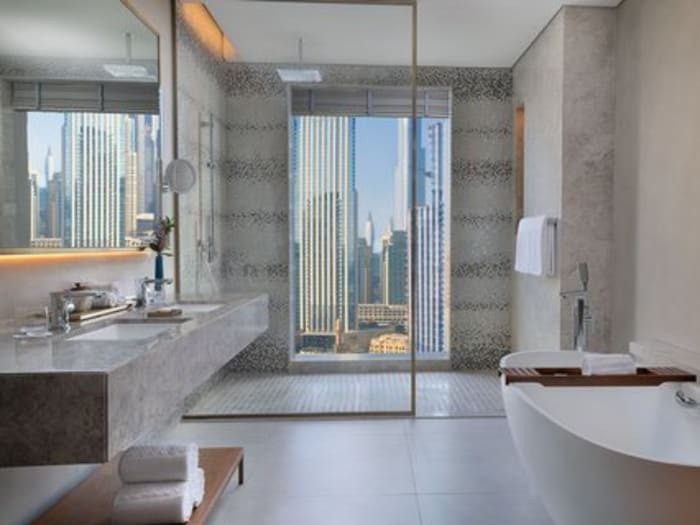
Dans un hôtel urbain de cette catégorie, la chambre n’est jamais un simple lieu de passage. Elle doit fonctionner comme un espace de récupération, de préparation et parfois même de travail, avec une qualité d’exécution suffisante pour faire oublier la densité de la ville. Au St. Regis Downtown Dubai, les chambres et suites sont présentées comme confortables et contemporaines, une définition qui dit l’essentiel : ici, le luxe s’exprime d’abord par l’aisance d’usage, la lisibilité du décor et la sensation d’ordre.
Le style intérieur privilégie généralement les lignes nettes, les matières soignées et une palette pensée pour apaiser plutôt que pour impressionner. Dans une destination où l’extérieur peut être saturé de lumière, de circulation et de stimuli visuels, cette retenue est bienvenue. On attend d’une chambre St. Regis qu’elle offre une atmosphère feutrée, propice à la décompression après une journée de rendez-vous, de visites ou de déplacements. Le confort ne tient pas seulement à la literie ou à la superficie perçue, mais à l’équilibre entre esthétique et fonctionnalité : éclairages bien répartis, rangements intuitifs, circulation fluide, assise agréable, salle de bains conçue pour un usage quotidien sans friction.
Les suites prolongent cette logique avec davantage d’espace et une séparation plus marquée des fonctions. Pour certains voyageurs, cette configuration change tout : elle permet de recevoir brièvement, de travailler dans de meilleures conditions, ou simplement de préserver un rythme personnel plus souple pendant le séjour. Dans une ville comme Dubaï, où les séjours mêlent souvent affaires et loisirs, disposer d’un hébergement capable d’absorber ces différents usages devient un vrai avantage.
L’expérience en chambre est aussi renforcée par les services associés. Le service de couverture, le ménage quotidien et, plus largement, l’attention portée à la préparation de l’espace participent à cette impression de continuité haut de gamme. Le service de majordome, lorsqu’il accompagne le séjour, ajoute une dimension supplémentaire : celle d’une relation plus personnalisée à l’hôtel, où certaines demandes peuvent être prises en charge avec une discrétion et une efficacité qui allègent réellement la logistique du voyage.
Ce qui distingue souvent une bonne chambre d’une grande chambre, ce n’est pas l’accumulation d’éléments spectaculaires, mais la qualité du silence, la cohérence des volumes, la douceur des transitions entre les différents moments de la journée. Se réveiller sans heurt, pouvoir travailler un moment, revenir se changer avant un dîner, retrouver le soir une pièce remise en ordre : cette succession de gestes simples compose la vraie valeur d’un hébergement réussi. The St. Regis Downtown Dubai semble l’avoir compris en misant sur un confort contemporain sans rigidité, adapté à une clientèle internationale habituée à des standards élevés.
Pour un court séjour, cette qualité garantit une efficacité appréciable. Pour plusieurs nuits, elle devient un facteur de bien-être durable. On s’installe plus vite, on récupère mieux, on profite davantage de la destination parce que la chambre remplit parfaitement son rôle de base arrière. Dans une ville aussi active que Dubaï, ce n’est pas un détail. C’est souvent ce qui détermine la réussite concrète d’un séjour.
La table
À Dubaï, la gastronomie hôtelière occupe une place centrale dans l’expérience du voyage. La ville vit tard, reçoit une clientèle internationale exigeante et a fait de la restauration un véritable marqueur de style de vie. Dans ce contexte, la table d’un hôtel comme The St. Regis Downtown Dubai ne se résume pas à une commodité interne : elle participe pleinement à l’identité de l’adresse. Sans multiplier les effets de langage, on peut dire qu’un établissement de cette catégorie est attendu sur plusieurs registres à la fois : qualité d’exécution, amplitude horaire, cadre soigné et capacité à répondre à des usages très différents, du petit-déjeuner d’affaires au dîner plus posé.
Le conseil de réserver sa table dès l’arrivée dit quelque chose de concret sur le rythme de la maison. Il suggère une fréquentation régulière et une restauration qui compte dans l’organisation du séjour. Pour l’hôte, cela signifie qu’il vaut mieux penser la dimension culinaire comme une composante à part entière de l’expérience, et non comme une solution de repli. Dans une ville où les agendas se remplissent vite et où les bonnes tables attirent autant les résidents que les visiteurs, cette anticipation est souvent judicieuse.
Le restaurant principal d’un grand hôtel urbain doit généralement répondre à une équation délicate : offrir un niveau de raffinement cohérent avec le standing de la maison tout en restant suffisamment lisible pour convenir à une clientèle internationale très diverse. Cela suppose un service précis, une carte pensée pour différents moments de la journée et une atmosphère capable d’évoluer selon les heures. Le matin, on attend de la fluidité, de la fraîcheur et une organisation sans faille. À midi, l’efficacité devient essentielle pour ceux qui disposent de peu de temps. Le soir, le cadre reprend de l’importance, avec une lumière plus travaillée, un tempo plus lent et une attention accrue portée au détail.
Dans l’univers St. Regis, la restauration s’inscrit aussi dans une certaine idée du rituel. Même lorsque l’on ne connaît pas dans le détail l’ensemble des concepts de l’hôtel, on peut raisonnablement attendre une mise en scène mesurée, un sens de l’accueil constant et une volonté de faire du repas un moment distinct de la simple consommation. Cette approche convient particulièrement bien à Dubaï, où l’on passe facilement d’une journée très active à une soirée plus sociale, parfois improvisée, parfois codifiée.
Pour les voyageurs qui préfèrent la discrétion, le confort de la chambre et la qualité du service hôtelier redonnent aussi de l’intérêt aux repas pris dans un cadre plus privé. Après une journée dense, nombreux sont ceux qui apprécient la possibilité de prolonger la soirée sans ressortir, dans un environnement maîtrisé et calme. Là encore, la valeur d’un grand hôtel se mesure à sa capacité à rendre ces moments simples parfaitement fluides.
En définitive, la table au St. Regis Downtown Dubai doit se comprendre comme un prolongement naturel du séjour : élégante sans affectation, pratique sans banalité, adaptée à la diversité des rythmes contemporains. Dans une destination où l’offre culinaire est abondante, cette cohérence interne compte beaucoup. Elle permet de choisir, selon l’humeur, entre l’exploration de la ville et le confort d’une adresse qui sait déjà recevoir.
Spa & bien-être
Dans une ville comme Dubaï, le bien-être hôtelier ne relève pas seulement du plaisir accessoire. Il répond à un besoin très concret de rééquilibrage. Entre les vols long-courriers, le climat, les journées de rendez-vous, les déplacements et le rythme soutenu des visites, le corps encaisse plus qu’on ne le croit. Un hôtel 5 étoiles bien conçu doit donc offrir, au-delà du confort de la chambre, des possibilités réelles de récupération. Même lorsque tous les détails d’un spa ne sont pas explicités, on peut attendre d’une adresse St. Regis une approche structurée du bien-être, fondée sur la discrétion, le soin et la qualité de l’environnement.
Le premier niveau de cette expérience tient à l’atmosphère générale de l’hôtel. Les espaces communs raffinés, le service attentif et la sensation d’être accompagné sans friction participent déjà d’une forme de détente. Dans les meilleures maisons, le bien-être ne commence pas à la porte du spa : il se construit dès l’arrivée, dans la manière dont le séjour est pris en charge, dans la fluidité des circulations, dans le calme relatif que l’on retrouve après l’intensité extérieure. À Dubaï, cette qualité de transition est particulièrement précieuse.
Le spa, lorsqu’il est intégré à l’expérience d’un grand hôtel urbain, joue ensuite un rôle de sas. On y vient moins pour s’extraire totalement du monde que pour retrouver un rythme plus juste. Un soin après un vol, un massage en fin de journée, un moment de calme entre deux engagements : ces usages correspondent parfaitement au profil des voyageurs qui fréquentent ce type d’adresse. L’intérêt n’est pas seulement thérapeutique ou esthétique ; il est aussi temporel. Le spa permet de remettre de l’espace dans un agenda dense.
Le bien-être contemporain inclut également une attention plus large à l’hygiène de vie pendant le séjour. Cela peut passer par la qualité du sommeil, favorisée par une chambre bien pensée ; par la possibilité de maintenir certaines routines ; ou par l’accès à des services qui réduisent la charge mentale du voyage. Dans cette perspective, le service de couverture, la préparation attentive de la chambre et l’assistance personnalisée prennent un sens nouveau : ils contribuent eux aussi à la récupération.
Pour les voyageurs d’affaires, cette dimension est souvent décisive. Un séjour réussi ne se mesure pas seulement à l’efficacité des rendez-vous, mais à la capacité à rester disponible, concentré et reposé. Pour les couples, le bien-être devient un temps à deux, une manière de ralentir dans une ville qui encourage sans cesse le mouvement. Pour les familles enfin, il peut simplement signifier la possibilité pour chacun de retrouver un peu de calme après une journée très sollicitante.
Au St. Regis Downtown Dubai, l’idée de bien-être s’inscrit donc dans une logique globale de confort maîtrisé. Elle ne dépend pas d’un discours spectaculaire, mais d’une série d’éléments cohérents : qualité des espaces, attention du service, intimité préservée, rythme ajustable. Dans l’hôtellerie de luxe contemporaine, c’est souvent cette cohérence, plus que la multiplication des promesses, qui fait la différence. Le vrai luxe du bien-être consiste peut-être simplement à rendre le séjour plus léger, plus reposant et plus habitable.
Conciergerie & services
Le véritable niveau d’un grand hôtel se lit souvent moins dans son décor que dans sa capacité à résoudre les détails. À ce titre, The St. Regis Downtown Dubai s’appuie sur un socle de services qui correspond aux attentes d’une clientèle internationale habituée à voyager souvent et à demander beaucoup, parfois dans des délais très courts. Réception et conciergerie 24h/24, bagagerie, blanchisserie, service de couverture, ménage quotidien, réveil à la demande, service de majordome : cette liste n’a rien d’ornemental. Elle dessine au contraire l’infrastructure invisible d’un séjour réussi.
La conciergerie, en particulier, joue un rôle central dans une ville comme Dubaï. L’émirat est spectaculaire, mais il peut aussi être très codifié dans ses usages, ses distances, ses horaires et ses points d’accès. Un bon concierge ne se contente pas de réserver une table ou d’organiser un transfert ; il aide à hiérarchiser les priorités, à éviter les pertes de temps et à adapter le programme au profil du voyageur. Pour un premier séjour, cette médiation est précieuse. Pour un habitué, elle permet d’affiner l’expérience et d’aller plus directement à l’essentiel.
Le service 24h/24 répond quant à lui à une réalité simple : Dubaï est une ville internationale, traversée par des arrivées tardives, des départs matinaux et des agendas décalés. Le luxe, ici, consiste à ne jamais faire sentir au client que son rythme est un problème. Pouvoir récupérer un bagage, demander une assistance, faire traiter un vêtement ou obtenir une information à toute heure participe de cette tranquillité d’esprit qui distingue les meilleures maisons.
Le service de majordome mérite une attention particulière, car il constitue l’une des signatures les plus identifiables de l’univers St. Regis. Au-delà du prestige attaché au terme, son intérêt est très concret : personnaliser le séjour, simplifier certaines demandes, créer une relation de confiance avec l’hôtel. Dans la pratique, ce type de service peut faire gagner un temps considérable et rendre l’expérience plus fluide, surtout pour les voyageurs qui combinent obligations professionnelles et moments de détente.
La qualité d’un service se mesure aussi à sa discrétion. Dans l’hôtellerie de luxe contemporaine, l’excellence n’est pas dans la démonstration permanente, mais dans l’ajustement. Savoir être présent sans être intrusif, anticiper sans surjouer, répondre vite sans précipitation : ces nuances comptent énormément. Elles transforment une série de prestations standardisées en véritable hospitalité.
Pour les familles, ces services rendent le séjour plus simple. Pour les couples, ils libèrent du temps et de l’énergie. Pour les voyageurs d’affaires, ils sécurisent l’organisation quotidienne. Dans tous les cas, ils permettent de consacrer davantage d’attention à la destination elle-même. C’est là, au fond, la fonction la plus noble d’un grand hôtel : non pas se substituer au voyage, mais en retirer les aspérités inutiles.
À The St. Regis Downtown Dubai, cette promesse de fluidité semble au cœur de l’expérience. Le service personnalisé mentionné parmi les points forts n’est pas un slogan ; c’est une méthode. Et dans une ville aussi rapide que Dubaï, cette méthode fait toute la différence entre un séjour simplement confortable et un séjour véritablement maîtrisé.
L’art de vivre à Dubaï
Comprendre Dubaï demande de dépasser les clichés les plus immédiats. Oui, la ville impressionne par sa verticalité, son goût de l’architecture manifeste, ses infrastructures et sa capacité à condenser en peu d’espace des expériences très différentes. Mais son art de vivre ne se réduit ni à la démesure ni au shopping. Il tient aussi à une forme d’efficacité hédoniste : tout semble organisé pour permettre de passer rapidement d’un registre à l’autre, du travail au loisir, de l’intérieur climatisé à la promenade, du café matinal à la soirée élégante. Séjourner au St. Regis Downtown Dubai, au cœur de la ville, permet précisément d’observer cette mécanique de près.
Le Dubaï contemporain est une ville de circulation. On y compose ses journées comme des séquences, avec une attention constante portée au temps, au confort et à la qualité des lieux. Un séjour réussi ne consiste pas nécessairement à multiplier les activités, mais à choisir les bons enchaînements. Commencer tôt pour profiter d’une lumière plus douce, réserver les visites les plus denses aux heures les plus favorables, ménager une pause au milieu de la journée, reprendre en fin d’après-midi avec un autre regard sur la skyline : cette gestion du rythme fait partie intégrante de l’expérience locale.
La proximité des sites emblématiques constitue ici un avantage évident. Elle permet d’aborder la ville non comme une liste d’obligations touristiques, mais comme un territoire à parcourir avec méthode. On peut alterner les grands marqueurs de Dubaï et des moments plus simples : un café dans un cadre soigné, une promenade, un temps de repos à l’hôtel, un dîner planifié sans précipitation. Cette souplesse est essentielle dans une destination qui peut vite devenir fatigante si l’on cherche à tout voir trop vite.
L’art de vivre dubaïote repose aussi sur la qualité des intérieurs. Dans un climat exigeant une grande partie de l’année, les hôtels, restaurants, galeries et espaces commerciaux deviennent de véritables lieux de vie, où le confort thermique, l’esthétique et le service jouent un rôle central. Cela explique l’importance accordée aux espaces communs raffinés dans les meilleurs établissements. Ils ne sont pas de simples décors, mais des prolongements de la ville elle-même, adaptés à un mode de vie très mobile.
Pour les voyageurs français, Dubaï peut d’abord sembler fonctionner à un autre tempo. Pourtant, une fois les codes compris, la ville révèle une forme de lisibilité remarquable. On y apprécie la ponctualité, la qualité d’exécution, la propreté des environnements, la diversité des publics et la facilité avec laquelle on peut construire un séjour sur mesure. Dans ce contexte, un hôtel central et bien servi comme The St. Regis Downtown Dubai devient plus qu’un hébergement : un poste d’observation privilégié sur une manière très contemporaine d’habiter la ville.
Ce qui séduit durablement, au fond, c’est cette capacité de Dubaï à offrir plusieurs voyages en un seul. Une destination d’affaires, une scène gastronomique internationale, un laboratoire architectural, une ville de loisirs, une escale hivernale au soleil. L’art de vivre local consiste à faire coexister ces dimensions sans les opposer. Et c’est précisément ce que permet une adresse comme celle-ci : entrer dans le rythme de Dubaï avec confort, méthode et une certaine élégance de mouvement.
Réserver via MyConciergeHotel
Réserver The St. Regis Downtown Dubai via MyConciergeHotel, c’est aborder le séjour avec une logique de conseil plutôt que de simple transaction. Dans une destination comme Dubaï, où l’offre hôtelière haut de gamme est vaste, très visible et parfois difficile à comparer au-delà des images, l’accompagnement éditorial et la mise en perspective des adresses prennent une valeur particulière. Toutes les belles chambres ne produisent pas la même expérience, tous les emplacements centraux ne répondent pas aux mêmes usages, et tous les services annoncés ne se traduisent pas avec la même qualité d’exécution. Le rôle de MyConciergeHotel est précisément d’aider à lire ces nuances.
Pour cette adresse, l’intérêt est clair : un hôtel 5 étoiles au cœur de Dubaï, proche des sites emblématiques, porté par les codes de service St. Regis et pensé pour une clientèle qui attend à la fois confort, efficacité et raffinement. Réserver avec discernement, c’est donc se demander si cette combinaison correspond à son propre projet de voyage. Un court séjour d’affaires ? Une escapade à deux avec envie de découvrir les grands repères de la ville ? Un voyage mêlant obligations et temps libre ? Dans chacun de ces cas, la centralité de l’hôtel, la qualité attendue du service et la fluidité des prestations peuvent faire une différence très concrète.
Passer par MyConciergeHotel permet aussi de préparer le séjour avec davantage de méthode. À Dubaï, certains détails ont un impact immédiat sur l’expérience : horaires d’arrivée et de départ, stratégie de visites selon la saison, réservation des tables, organisation des transferts, équilibre entre temps à l’hôtel et temps en ville. Un bon séjour commence souvent avant même l’enregistrement, par une préparation réaliste et bien hiérarchisée. C’est particulièrement vrai dans une métropole qui récompense les itinéraires pensés avec précision.
L’un des avantages d’une approche concierge est justement de replacer l’hôtel dans son contexte. The St. Regis Downtown Dubai n’est pas seulement une chambre et une adresse ; c’est une base urbaine à partir de laquelle on peut construire un programme cohérent. Selon les priorités du voyageur, on insistera davantage sur la proximité des sites majeurs, sur la qualité des espaces communs pour se poser entre deux rendez-vous, sur le service de majordome pour alléger la logistique, ou sur la capacité de l’établissement à convenir à des profils variés.
Réserver intelligemment, c’est aussi savoir anticiper. Le conseil de réserver la table du restaurant principal dès l’arrivée en est un bon exemple : il rappelle que les meilleures expériences sont souvent celles que l’on sécurise au bon moment, sans pour autant rigidifier tout le séjour. La bonne préparation ne tue pas la spontanéité ; elle lui donne un cadre.
En choisissant MyConciergeHotel, le voyageur recherche donc plus qu’un tarif ou qu’une disponibilité. Il cherche une lecture fiable de l’adresse, une compréhension de ses points forts réels et une aide pour transformer une réservation en séjour réussi. Pour The St. Regis Downtown Dubai, cette approche est particulièrement pertinente : l’hôtel se prête à des usages multiples, mais c’est dans l’ajustement fin entre ses qualités et votre manière de voyager que se joue la vraie réussite du séjour.