History & heritage
In Beijing, certain luxury addresses are best understood as privileged vantage points over the city’s transformation. The St. Regis Beijing belongs to that category of hotels that have accompanied the Chinese capital’s international opening while preserving the codes of classical hospitality: discretion, service and continuity. The property is part of the St. Regis world, a name associated with a cosmopolitan idea of refinement: interiors designed for receiving, a precise rhythm of service, and almost ceremonial attention to the details of a stay.
In the Beijing context, that identity takes on a particular resonance. The city is one of contrasts, where monumental avenues, administrative districts, office towers and traces of imperial history coexist within short distances. The St. Regis Beijing does not attempt to imitate the local past in a decorative way; instead, it offers an international reading of luxury in a capital long frequented by business travellers, diplomats, cultural visitors and couples on a city break. It is precisely this position, between urban anchoring and grand-hotel culture, that gives the property its appeal.
The St. Regis heritage is most visible in the way a stay is lived. The brand’s butler service is not merely a marketing signature: it refers to a tradition of hospitality in which needs are anticipated, practical matters are simplified, and the experience is personalised without becoming intrusive. In a city as dense and energetic as Beijing, that quality of support makes particular sense. It creates a form of organised calm, almost domestic in feeling, within an intense urban environment.
The hotel also speaks to a moment in luxury hospitality when refinement is no longer defined by ornament alone. Naturally, a five-star address is expected to offer polished public spaces, fine materials, comfortable lounges and well-kept rooms. Yet what endures over time is often less visible: the smoothness of the welcome, the consistency of housekeeping, the ability to handle an early departure as well as a late return, or the way the teams support a stay that blends meetings, sightseeing and rest.
The St. Regis Beijing is therefore best understood as an address of continuity rather than effect. Its heritage is not that of a historic palace in the European sense, but that of an international grand hotel firmly established in the Chinese capital. For the traveller, this translates into a clear promise: in Beijing, a structured, elegant and dependable setting, with that discreet touch of ceremony that distinguishes hotels able to remain relevant over the years.
The property
Staying at The St. Regis Beijing means choosing an urban address designed for travellers who wish to combine efficiency with comfort. The hotel stands in Beijing’s central business district, a location that says much about its identity. It appeals as much for its proximity to decision-making hubs and offices as for the ease with which several of the capital’s major landmarks can be reached. That dual reading, both professional and cultural, is one of its most convincing strengths.
The district does not have the intimate character of the historic hutongs, nor the theatrical quality of the immediate surroundings of imperial monuments. It offers something else: a contemporary vision of Beijing, shaped by broad avenues, institutional buildings, corporate headquarters, embassies and constant movement. For many travellers, this setting is particularly practical. It allows dense days to be organised efficiently, moving from a meeting to dinner and from sightseeing back to the hotel without losing excessive time in transit. In Beijing, where distances and traffic can quickly reshape an itinerary, that advantage is far from incidental.
The property itself answers this logic of controlled centrality. One imagines public spaces conceived as pauses within the city: a structured lobby, lounges in which to wait, read, work or meet, and smooth circulation between the hotel’s various services. In grand hotels of this category, interior design is not there merely to impress; it must also support a frictionless experience. That is especially true here, where the clientele often blends business stays, short stopovers and more leisurely city visits.
The relationship with the city is essential. From this part of Beijing, it becomes easier to envisage a day alternating heritage and modernity: a landmark in the morning, lunch in town, a few hours of work or shopping, then a return to the hotel for a more contained atmosphere. The St. Regis Beijing is not a retreat removed from the world; it is an elegant base in the heart of a major metropolis. That nuance matters, because it defines the kind of stay the address encourages.
For couples, the location offers welcome freedom: discovering Beijing without straying far from a comfortable anchor point. For business travellers, it allows a high level of service while remaining close to what matters. And for all guests, it provides access to a version of the city in which urban intensity is very real, yet always tempered by returning to a hotel that understands calm, hospitality and discretion. In a capital city, that is often where true luxury lies: not in withdrawing from urban life, but in moving through it with ease.
Rooms and suites
In a major capital, the quality of a room is measured as much by immediate comfort as by its ability to restore a personal rhythm. At The St. Regis Beijing, rooms and suites follow this logic of the urban refuge: they are meant to allow deep sleep, effective work, unhurried preparation, and at day’s end, a sense of order and continuity. It is a demanding yet very practical definition of luxury.
The St. Regis universe generally favours a classical, legible elegance without theatrical disruption. Here one expects well-considered proportions, furniture that is both functional and polished, high-quality bedding, lighting suited to different moments of the day, and bathrooms conceived as genuine transition spaces. In a hotel of this category, the room is not simply where one spends the night; it becomes a place for preparation, recovery and, at times, discreet work between appointments.
Suites extend that experience with more space and a clearer separation of uses. On a business stay, they allow for a brief meeting, the review of documents, or the continuation of a conversation in a setting calmer than a public lounge. For couples, they chiefly provide an added sense of breathing room, valuable in a city as vast and stimulating as Beijing. Luxury here lies less in display than in fluidity: movement is easier, settling in feels more natural, and one’s habits return more quickly.
Turndown service and daily housekeeping fully contribute to this impression. In the best hotels, the comfort of a room does not depend solely on its original design, but on the way it is maintained throughout the stay. A room properly prepared in the evening, personal belongings respected, a bathroom reset, a bed ready to receive rest: these often invisible gestures create the true quality of the experience.
The butler service adds a further dimension. Depending on the guest’s needs, it can simplify arrival, assist with practical requests and make the stay notably smoother. This presence is not ostentatious; it belongs to an art of attention. For someone arriving tired after a long flight, for a tight schedule of meetings, or simply for travellers who appreciate traditional hospitality, such support changes the perception of time in a meaningful way.
Ultimately, the rooms and suites at The St. Regis Beijing answer a very contemporary expectation: to offer calm, structured luxury capable of absorbing the pressures of the city. One comes here less for surprise than for the assurance of controlled comfort. And it is often that consistency, more than any decorative flourish, that makes an address memorable.
Dining
In a high-end urban hotel, dining plays a more complex role than it may first appear. It must respond to very different uses: an efficient breakfast before a day of meetings, a measured lunch, tea or an informal pause, a more settled dinner, or simply the wish to remain in the hotel after a dense day in the city. At The St. Regis Beijing, one expects dining to extend the identity of the house: elegance, precision, attentive service and the ability to adapt to the traveller’s rhythm.
The first important moment is often the morning. In Beijing, days begin early, and the hotel must know how to welcome both early risers and travellers dealing with jet lag. A good breakfast in a property of this category is not merely about abundance; it depends on the clarity of the offering, the quality of ingredients, the speed of service when needed, and the possibility of taking one’s time when the schedule allows. For some, it will be coffee and fruit before heading out. For others, a proper table moment, almost a ritual, before entering the movement of the city.
The rest of the day calls for the same flexibility. In a grand international hotel, dining must be able to support guests with varied expectations without losing coherence. Business travellers often look for reliability: the ability to have lunch on site, arrange a meeting over tea, or dine without having to redesign the entire evening. Couples, meanwhile, appreciate a more hushed interlude, especially after hours spent in Beijing’s intensity. In both cases, the quality of the experience depends as much on atmosphere as on what is on the plate.
The St. Regis spirit suggests a particular idea of table service: measured gestures, personalised welcome, attention to detail, and that blend of light formality and discreet warmth that characterises great houses. One does not come merely to eat; one comes to return to a stable setting where the rhythm will feel right. That is especially valuable in a city where the outside world can be fast, dense and at times noisy.
Room service, even when not explicitly highlighted, also forms part of this implicit grand-hotel promise. After a late arrival, between calls, or simply from a wish to preserve the privacy of one’s room, it becomes a natural extension of the experience. At an address such as The St. Regis Beijing, dining is therefore not a secondary service. It helps structure the day, supports the traveller’s practical needs, and turns a stay into something smoother, more comfortable and more fully lived.
Spa & wellness
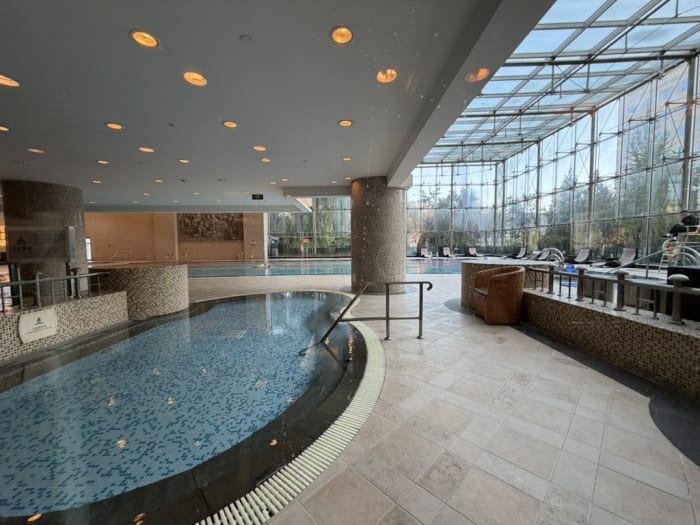
In a city such as Beijing, hotel wellness is not merely an amenity; it becomes a genuine counterpoint to the urban rhythm. Between transfers, meetings, sightseeing and the general intensity of the capital, having spaces devoted to release can profoundly change the quality of a stay. At The St. Regis Beijing, the wellness dimension belongs to this logic of rebalancing: offering the traveller a slower, quieter moment centred on recovery.
In five-star hospitality, the spa is no longer simply a collection of treatments. It represents a way of thinking about the stay as a whole. Guests seek not only gentle restoration but also a mental transition between outside and inside. After a long-haul flight, a day of appointments or several hours spent exploring the city, a little time devoted to rest, water, calm or body care can be enough to restore real coherence to the trip.
The expected experience in a property of this category rests on several simple yet decisive elements: a serene welcome, well-kept spaces, a hushed atmosphere, experienced therapists and the ability to adapt the pace of a treatment to the guest’s actual condition. Some travellers seek muscular recovery, others a facial before dinner or an event, and others still a moment of pure disconnection. The best spa is one that does not over-standardise the experience and knows how to recognise these differing expectations.
Wellness also depends on everything surrounding the treatment itself. The quality of silence, the temperature of the spaces, the softness of the linen, the time allowed before and after a treatment, the possibility of not feeling rushed: these elements often matter more than any narrative. In a grand international hotel, they contribute to that rare feeling of being cared for without being managed.
For business travellers, the spa often represents a very practical way of preserving energy. For couples, it can become a shared moment, a pause that gives the stay a more intimate tone. And for those discovering Beijing at a brisk pace, it provides an essential form of breathing space. Luxury here is not spectacular; it is restorative.
At The St. Regis Beijing, the wellness area therefore forms part of a broader promise: that of a hotel capable of supporting the body as much as the schedule. In a capital that constantly demands attention, returning to a place where one can slow down, recover and recentre is among the most valuable privileges of a well-designed stay.
Concierge & services
What sustainably distinguishes a grand urban hotel is not only the quality of its rooms or the elegance of its public spaces, but the precision of its services. At The St. Regis Beijing, this dimension is central. The presence of a 24-hour concierge and front desk, butler service, daily housekeeping, turndown service, laundry and luggage storage forms a coherent whole: that of a hotel designed to absorb the unexpected and lighten the logistics of travel.
In a capital as vast as Beijing, concierge service takes on particular value. It is not there solely to answer exceptional requests; it also helps make the city more legible. Organising a transfer, recommending a realistic departure time, helping structure a day, directing guests towards landmark sights or practical solutions: all these interventions, when well handled, concretely change the experience of a stay. True service is not demonstrative; it often consists in preventing wasted time and unnecessary fatigue.
The St. Regis butler service remains one of the property’s most distinctive signatures. Its value lies in its ability to personalise the stay with discretion. Depending on the guest’s needs, it can facilitate arrival, support certain preferences, simplify everyday requests or smooth the departure. In a business context, such assistance allows one to remain focused on what matters. On a leisure stay, it brings an appreciable sense of continuous attention without ever imposing excessive proximity.
The quieter services matter just as much. Daily housekeeping keeps the room in a constant state of comfort; turndown prepares the evening and rest; laundry becomes invaluable on longer stays or trips combining meetings and social engagements; luggage storage allows guests to make full use of their first or last hours in the city. Even the simple wake-up service, often overlooked in descriptions, retains its relevance for early departures or tightly structured schedules.
What truly makes the difference is the way these services work together. A convincing grand hotel does not merely stack amenities; it orchestrates a seamless journey. One arrives, settles in, goes out, returns, requests, adjusts and departs: at each stage, the hotel should reduce friction. That is especially important in Beijing, where the intensity of the city can quickly saturate one’s attention.
At The St. Regis Beijing, the idea of luxury therefore passes through this mastery of operational detail. For the traveller, it means less mental load, more useful time and a sense of continuity rarely achieved elsewhere. In high-end hospitality, that is often where true distinction lies.
The art of living in Beijing
A stay in Beijing is never only about ticking off monuments. The city reveals itself in layers, between imperial heritage, monumental urban planning, neighbourhood life, contemporary culture and economic energy. Choosing a hotel such as The St. Regis Beijing makes it possible to approach that complexity with method. Its central location provides an efficient starting point from which to understand several faces of the capital, without giving up the comfort of returning to an ordered and calming setting.
For a first visit, the major landmark sights naturally remain essential. They convey Beijing’s scale and its relationship to power, history and space. Yet the experience of the city gains depth when these major reference points are alternated with more everyday moments: a walk through an older district, time spent on a shopping avenue, a pause in a café, careful observation of how residents occupy public space. Beijing is a city of rhythms, not merely a postcard backdrop.
From the central business district, this reading becomes particularly compelling. One sees a capital in motion, oriented towards exchange, institutions and business, yet always crossed by older historical layers. The contrast between vertical modernity and urban memory forms part of its deeper identity. For the traveller, this means that a single day can combine contemporary architecture, heritage, gastronomy and local life without contradiction. It does, however, require an anchor point reliable enough to organise these transitions: that is where a grand hotel fully comes into its own.
Beijing also demands a certain intelligence of tempo. Spring and autumn are often the most pleasant seasons in which to enjoy the city, walk more and combine visits without excessive fatigue. Yet whatever the time of year, it helps to plan days with flexibility: leaving early for certain sites, allowing for a pause back at the hotel, then resuming the programme later. This alternation between outside intensity and interior comfort allows the capital to be appreciated rather than merely endured.
For couples, Beijing offers a rare blend of grandeur and intimacy, provided one knows where to look. For business travellers, it offers the advantage of a stay in which professional time can be extended by genuine cultural discovery. In both cases, The St. Regis Beijing supports a way of living the city without unnecessary haste. The address does not claim to summarise Beijing; it allows one to navigate it with elegance.
Perhaps that is, ultimately, the Beijing art of living in grand-hotel form: accepting the density of the capital, preserving what matters most, and returning each evening to a place that restores order to the journey. A city of this scale is best savoured when one knows where to find one’s centre again.
Book with MyConciergeHotel
Booking The St. Regis Beijing through MyConciergeHotel means approaching the stay not as a simple transaction, but as an experience to be prepared with care. In a city as vast and coded as Beijing, the quality of a trip often depends on details decided in advance: the nature of the stay, the desired pace, arrival and departure times, the balance between business appointments and discovery, the need to recover after a flight, or a preference for a more discreet or more supported experience. A well-considered booking immediately changes the way one inhabits the hotel.
That is precisely where editorial and concierge guidance becomes valuable. It is not only about comparing rates or confirming a room category, but about understanding whether the address truly matches the travel brief. The St. Regis Beijing is particularly well suited to travellers seeking an international grand hotel in the heart of the capital, with a strong service culture, a location relevant for both business and sightseeing, and the reassuring presence of St. Regis butler service. For a short stay, this brings welcome fluidity. For a longer trip, it ensures precious continuity.
Booking with discernment also means anticipating sensitive moments. A very early arrival after a long-haul flight, a late departure, a dense programme from the first day, or specific needs in terms of laundry or logistics: all these elements deserve to be flagged. In high-end hospitality, comfort depends not only on the room assigned, but on the way the entire stay is orchestrated. The more clearly preferences are expressed, the more likely the experience is to feel seamless.
For couples, MyConciergeHotel can help shape the stay towards a more nuanced reading of Beijing: a gentler pace, wellness time, dining moments and visits organised according to mood. For business travellers, the objective is often different: securing a frictionless stay, optimising movements, preserving time to rest and ensuring that essential services are properly activated. In both cases, the added value lies in preparation.
The St. Regis Beijing is not an address chosen at random. It is selected for its centrality, the reliability of its service, its ability to host both a demanding schedule and a stay for two, and for that form of classical luxury that reassures as much as it appeals. Booking through MyConciergeHotel gives that promise the framework it deserves: clear selection, precise reading of the hotel and genuine attention to the quality of the stay before arrival.
In Beijing, where time is precious and days fill quickly, that preparation makes all the difference. The right hotel does more than accommodate; it structures the journey. And the right booking begins well before check-in.