History & sense of place
Kempinski Hotel Das Tirol Kitzbühel Alps reflects a very specific vision of contemporary Alpine hospitality: the comfort of an international grand hotel without losing touch with the pace, materials and light of the mountains. In Jochberg, within the wider Kitzbühel Alps, the property does not rely on folklore. Instead, it favours a more measured reading of the mountain stay, where elegance is shaped by generous volumes, warm textures and a restrained sense of design. This gives the hotel its personality: an Alpine address conceived to last, more concerned with lived experience than decorative effect.
Its affiliation with Kempinski provides a recognisable framework. The European hotel group, historically associated with a classic art of service, cultivates a form of refinement based less on display than on precision. In an Alpine setting, that signature takes on a particular tone. It is expressed through a welcoming atmosphere, discreet attention to detail and an overall rhythm designed for stays that alternate physical activity, rest and sociability. The result is a hotel able to accommodate very different kinds of travel: a winter break focused on skiing, a wellness-led weekend, a family holiday or a business stay in a setting far removed from the city.
The spirit of the place is also shaped by its relationship with Jochberg. More peaceful than some of the region’s better-known social hubs, the village allows for a more breathable approach to the mountains. It offers that direct connection to the landscape which defines the best Alpine hotels: the sense of being rooted in a territory rather than merely lodged in a destination. The peaks, forests, winter snow and summer meadows form a living backdrop, never just a view. The hotel responds to this environment through an Alpine character free from excess. It borrows essential codes — wood, natural tones, enveloping comfort — and translates them into a contemporary hospitality language.
This way of inhabiting the mountains helps explain the loyalty inspired by well-conceived Alpine addresses. Guests return for the consistency of the welcome, for the ease of a seamless stay, but also for something harder to define: the feeling of a sophisticated refuge that makes each day simpler. After the slopes, after a hike, after the journey itself, the hotel becomes an anchor point. One returns to it for the firelit lounge, the spa, the table, or simply the view. In that continuity between outdoors and indoors, between energy and repose, Kempinski Hotel Das Tirol expresses its true signature: elegant, warm and distinctly contemporary mountain hospitality.
The hotel in its landscape
A stay at Kempinski Hotel Das Tirol means choosing a property where the landscape is central to the experience. Jochberg lies within the wider orbit of Kitzbühel, yet retains a calmer scale, more directly connected to the mountains themselves. This position is valuable for travellers seeking both access to Alpine activities and a genuine sense of retreat. Here, the surroundings are not merely a backdrop: they shape the rhythm of the day, influence the light within the interiors and give the stay its natural tempo. In winter, the proximity of the slopes places the hotel firmly within a practical skiing routine. In the milder seasons, the surrounding relief invites walking, contemplation and a slower rediscovery of the region.
The architecture and public spaces extend this relationship with the site. The elegant design associated with the hotel does not oppose its Alpine character; it interprets it. One can expect warming materials, lines restrained enough to let the views breathe, and lounges conceived as transitional spaces between the brisk outdoors and the shelter of the interior. In a well-designed mountain hotel, this articulation is essential. The lobby, corridors, relaxation areas and dining rooms are not simply functional: they organise the return from outdoors into comfort. Kempinski Hotel Das Tirol appears to work precisely with this idea of a refined refuge, where guests leave behind equipment, cold air and the pace of the day before settling into a more intimate atmosphere.
Its location in Jochberg will appeal as much to skiers as to less sport-focused travellers. For the former, proximity to the slopes greatly simplifies the stay. For the latter, it allows them to enjoy the atmosphere of the mountains without having to build the entire day around performance. This is one of the strengths of well-positioned Alpine hotels: they suit different rhythms within the same trip. Some leave early, while others linger over breakfast, spend time in the spa or opt for a gentler walk. Everyone meets again later in shared spaces designed for conviviality and rest.
The address also benefits from what might be called a broader après-ski geography. The day does not end when one returns from the slopes or trails. It continues through the rituals of return: a visit to the wellness area, tea or a drink in the lounge, an unhurried dinner, the simple pleasure of watching snowfall or following the changing light across the mountains. This quality of stay, Alpine in its essence, depends as much on the setting as on the hotel itself. In Jochberg, Kempinski Hotel Das Tirol brings these two dimensions together: access to a sought-after mountain region and the promise of a warm, elegant setting deeply attuned to guest comfort.
Rooms and suites
In a mountain hotel of this standing, the room is never merely a place to sleep. It becomes the second landscape of the stay, the one to which guests retreat after the intensity of the outdoors. At Kempinski Hotel Das Tirol, the declared spirit — elegant design, Alpine character, warm atmosphere — suggests accommodation conceived for exactly this role: enveloping without confining, evoking the mountains without slipping into cliché, and offering the comfort expected of a five-star hotel while preserving a genuine sense of intimacy. Luxury here likely lies in balance. Neither too urban nor too rustic; neither overly demonstrative nor impersonal.
Rooms and suites in such an address are generally designed to accompany the different moments of the stay. In the morning, they should allow for a gentle start, with light entering gradually and a layout fluid enough to prepare for an active day. By late afternoon, they become spaces of recovery: guests return to warm up, rest, read, contemplate the landscape or simply enjoy the quiet. In the evening, they resume their most essential function, that of a comfortable cocoon where bedding quality, insulation, temperature and attention to detail matter as much as the overall aesthetic. This dimension is especially important in an Alpine setting, where one expects a grand hotel to orchestrate the contrast between outdoor energy and indoor calm.
Contemporary Alpine style lends itself particularly well to this task. Wood, substantial textiles, a natural palette, restrained lines and measured decorative touches create a reassuring atmosphere without heaviness. When properly handled, this visual language gives rooms real sensory depth: the warmth of materials, the comfort of seating, the softness of carefully considered lighting. Elegance does not come from a dramatic gesture but from overall coherence. At Kempinski Hotel Das Tirol, that coherence appears to extend the identity of the public spaces: a refined interpretation of the mountains, international in tone yet rooted in its surroundings.
Suites, meanwhile, often serve different purposes: longer stays, family travel, the need for more space or simply the desire for a more residential setting. In a hotel of this category, they generally allow for a clearer separation between rest, reading, conversation and work. This is a real advantage for travellers who wish to experience the hotel as more than a base for the slopes. It becomes possible to enjoy a coffee before heading out, a quiet moment after the spa, or a more private evening facing the landscape. Whether in a room or a suite, the essential remains the same: after the mountains, one returns to a space that immediately soothes. That is often where the success of a great Alpine hotel is measured, and it is precisely the implicit promise of an address such as Kempinski Hotel Das Tirol.
Dining and the Rhythm of Your Stay
In a grand alpine hotel, dining is a cornerstone of the experience, marking the highlights of your stay. In the morning, it prepares you for the day’s adventures or leisurely strolls. At midday, it provides a welcome pause between activities. In the evening, it often becomes the focal point of the day.
At the Kempinski Hotel Das Tirol, the dining experience naturally reflects the identity of the establishment: elegance without stiffness, comfort, warmth, and a keen sense of service. In such venues, the gastronomic experience relies as much on the atmosphere as it does on the plate.
Breakfast is a pivotal moment in mountain hotels, catering to a diverse range of expectations: early risers ready to ski, leisurely travellers, families, and wellness guests. In an alpine setting, it opens the day to breathtaking views. The crisp morning light, the peaks visible from the dining room, and the calm before heading out to the slopes all contribute to making this first meal a true highlight of your stay. In a five-star hotel, attentive service, meticulous presentation, and a varied selection are to be expected.
Dinner brings forth different expectations. After a day spent outdoors, travellers seek not so much a show of culinary prowess but rather authenticity. A pleasant dining room, seamless service, straightforward yet well-executed cuisine, and seasonal pairings often form the essence of the experience. In the mountains, conviviality also plays a significant role. Guests appreciate spaces where they can extend their evening, enjoy a drink, reflect on the day, or revel in a more intimate atmosphere.
For international travellers as well as European clientele accustomed to major alpine resorts, the appeal of a venue like Kempinski lies in its ability to blend high standards with flexibility. The dining experience should accommodate both a formal dinner and a simpler meal, a romantic evening or a family gathering. This discreet versatility makes a significant difference in the best-conceived mountain hotels. At the Kempinski Hotel Das Tirol, the dining experience is an integral part of this refined alpine hospitality.
Spa & Well-being After the Mountains
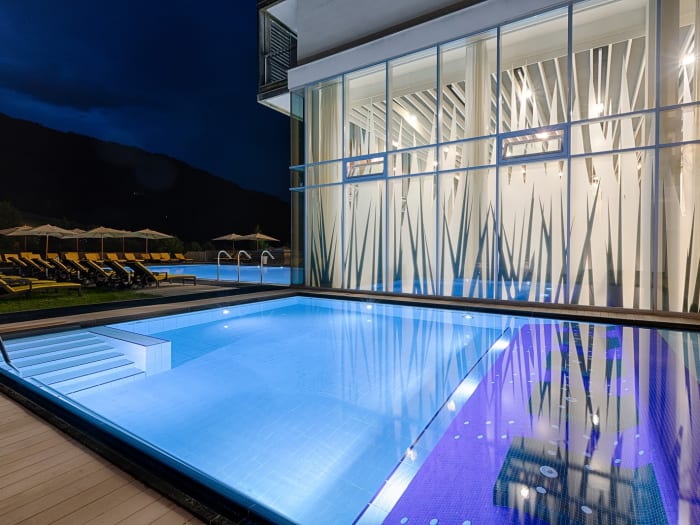
At the Kempinski Hotel Das Tirol, the wellness facilities are among the key elements of the stay. Conveniently located near the slopes, the spa is an integral part of the experience.
The mountains challenge the body and impose their own rhythm. Well-being becomes the natural counterpoint, extending the benefits of the day while alleviating fatigue.
This is true not only after skiing but also following a hike, travel, or a day spent in the crisp mountain air.
In a grand mountain hotel, the wellness space facilitates a gradual unwinding. It is not just a place for treatments; it is where one shifts gears.
The warmth, water, tranquillity, materials, and softer light create a different sense of time. The body relaxes, attention shifts, and the day is restructured.
This transition is at the heart of the alpine experience. A successful spa does not compete with the landscape; it offers an inner response to it.
Where the mountains stimulate, it soothes. Where the cold invigorates, it warms. Where effort shapes the day, it reintroduces slowness.
At the Kempinski Hotel Das Tirol, the spa caters to various needs. Whether for relaxation, muscle recovery, a romantic interlude, or a quieter moment for non-skiers, it becomes a place of convergence. Some guests gather there in the late afternoon, others return from a walk, and some visit at the start of the day.
This flexibility broadens the hotel experience beyond mere sporting activities.
In the mountains, well-being also takes on a more sensitive dimension. After being outdoors, the hot water and resting areas gain intensity.
Here, one finds a sense of refuge, expressed in the language of a grand hotel. The elegance of the space is reflected in the quality of relaxation it allows.
For couples, the spa adds a more intimate dimension. For families, it balances the rhythms. For business travellers, it offers a welcome respite.
Thus, at the Kempinski Hotel Das Tirol, the wellness facilities are indeed among the pillars of the experience.
Concierge & Services
The true luxury of a mountain stay often lies in what is not immediately visible: fluidity. In an alpine destination, where days start early, where the weather can alter plans, and where equipment, transfers, and reservations require careful coordination, the quality of services becomes crucial. The Kempinski Hotel Das Tirol boasts a 24-hour concierge service, a continuously open reception, daily room service, a turndown service, luggage storage, laundry facilities, a wake-up service, and multilingual staff. Individually, these elements meet the expected standards of a five-star establishment. Together, they create a promise of a frictionless stay.
The concierge is not merely an information desk; it acts as an interface between the traveller and the region. In the mountains, this can mean practical organisation of daily activities, assistance with booking experiences, managing transport requests, or the ability to adjust an itinerary based on the weather, current energy levels, or the composition of the group. This service takes on particular significance in Jochberg, where visitors come to enjoy a rich alpine environment without being burdened by logistics. A good concierge simplifies, anticipates, guides, and allows the stay to maintain its lightness.
The 24-hour reception addresses another demand of contemporary travel: flexibility. Late arrivals, early departures, occasional assistance needs, practical queries in the evening, last-minute service adjustments—all contribute to a sense of security and comfort. The turndown service and daily room maintenance enhance this impression of continuous, almost silent care that distinguishes the best-managed establishments. Nothing extravagant, but a constant attention to quality of use. Here, we find the idea of precise hospitality, where every detail aims to make the stay simpler and more restful.
For international travellers, the multilingual staff is a significant asset. It facilitates communication, reduces hesitation, and fosters a more natural relationship with the team. As for the laundry, luggage services, and wake-up calls, they take on very practical utility in the mountains: managing an active stay, organising a departure day, and keeping control of the pace without wasting time. It is often in this sum of well-executed services that the true quality of a grand hotel is measured. At the Kempinski Hotel Das Tirol, the overall impression is that of a home that understands the needs of an alpine stay and responds with availability, discretion, efficiency, and a sense of welcome.
The art of living in Jochberg and the Kitzbühel Alps
The appeal of a stay at Kempinski Hotel Das Tirol extends beyond the hotel itself. It also lies in what Jochberg and the Kitzbühel Alps make possible around it. This region belongs to one of Europe’s most enduring Alpine imaginaries: that of an inhabited mountain landscape, cultivated, marked by distinct seasons and shaped by ways of life that do not reduce it to tourism alone. That is what gives it depth. One comes here to ski, walk or breathe the high-altitude air, certainly, but also to discover a different way of occupying time — one more attentive to landscape, weather, light and the quality of transitions between activity and rest.
In winter, the local art of living naturally organises itself around snow. Days begin early, with that particular clarity of mountain mornings, then unfold between exertion, pauses, the return to warmth and the sociability of evening. Even for those who do not ski intensively, there is a strong outdoor culture: walks, observation of the relief, the simple pleasure of watching the mountains change from hour to hour. Jochberg, by virtue of its scale and atmosphere, encourages a less demonstrative approach than some more exposed resorts. One can seek a form of discretion here, a more immediate proximity to the territory, without giving up the comfort of a major international address.
In the warmer months, the scenery changes but the logic remains. The Kitzbühel Alps become a landscape for walking, discovery and breathing space. Meadows, forests, mountain paths and wide views give the stay a more contemplative dimension. The Alpine summer, often underestimated, has a particular elegance: milder temperatures, long light, a sense of space and a rhythm less tense than during the height of winter. For travellers already familiar with snow-covered mountains, it offers another way to appreciate the relief. For others, it is a chance to discover a destination that does not depend on a single season to exist.
What ultimately makes this part of Tyrol so appealing is its balance between tradition and contemporary comfort. Local architecture, landscapes shaped by human activity, a culture of mountain hospitality and the presence of high-level hotels together form a coherent whole. One does not come only for activities, but for an overall atmosphere: a stay lived to the rhythm of the terrain, days with a clear structure, and each evening’s return to the hotel taking on the value of a ritual. Kempinski Hotel Das Tirol fully belongs to this art of living. It offers an elegant, international interpretation of it while remaining connected to what makes Jochberg distinctive: a mountain environment more sensitive than spectacular, more inhabited than staged, and all the more attractive for leaving travellers the space to feel it.
Book with MyConciergeHotel
Booking Kempinski Hotel Das Tirol through MyConciergeHotel means approaching the stay not as a simple transaction but as an experience to be prepared with care. In an Alpine destination, that difference matters. The choice of dates, the rhythm of the trip, the composition of the stay and expectations in terms of wellness, activities or comfort do not produce the same experience depending on whether they are considered in advance or left to chance. A hotel such as this one, located in Jochberg close to the slopes and designed to welcome couples, families and business travellers alike, deserves thoughtful preparation. That is precisely where a concierge-led approach becomes meaningful.
MyConciergeHotel allows the booking to be placed within a more editorial and personalised framework. The aim is not merely to secure a room, but to choose the right moment, the right tempo and, where relevant, the right complements to the stay. In winter, this may involve shaping the days around skiing and après-ski. In summer, it is more about building a mountain interlude focused on walking, rest or discovery of the region. In both cases, the value of guidance lies in overall coherence: avoiding overpacked stays, anticipating logistical needs, allowing time for recovery and making full use of the hotel’s strengths, notably its warm atmosphere, elegant Alpine design and wellness facilities.
For discerning travellers, the value of a well-supported booking is often measured in very practical details. A smooth arrival, a stay adapted to the traveller’s profile, a clearer reading of the destination’s highlights, help in planning activities without over-scheduling: all these elements change the overall perception of the trip. In a grand mountain hotel, a successful experience rarely depends on a single component. Rather, it emerges from a well-balanced whole: location, service quality, room comfort, access to activities, moments of relaxation and the sense that everything flows naturally. Booking with MyConciergeHotel means seeking that coherence.
The property lends itself particularly well to this kind of support because it combines several strong promises: proximity to the Kitzbühel Alps, practical access to the world of skiing, a refined yet welcoming atmosphere, and services designed to make the stay easy. Whether one comes for a winter escape, a wellness break, a few family days away or a trip combining work with Alpine air, the objective remains the same: to turn the stay into a harmonious composition rather than a list of options. That is the spirit of MyConciergeHotel: to select, advise, clarify and help book places with genuine personality, ensuring that the experience lives up to the setting.