L’établissement
À Playa del Carmen, Alila Mayakoba s’inscrit dans l’un de ces paysages tropicaux où l’architecture n’a de sens que si elle sait se faire discrète. Ici, l’adresse ne cherche pas à dominer son environnement : elle s’y glisse. Le propos est clair dès l’arrivée, avec cette sensation de retrait feutré qui distingue les hôtels conçus comme des refuges plutôt que comme des scènes. Le rapport à la nature n’est pas décoratif. Il structure l’expérience, du rythme des circulations à l’ouverture sur la végétation, en passant par la proximité de la plage et cette impression de continuité entre intérieur et extérieur qui appartient pleinement aux grands hôtels de climat chaud lorsqu’ils sont bien pensés.
L’identité du lieu repose sur un équilibre subtil entre lignes contemporaines, matières naturelles et atmosphère apaisée. Rien d’ostentatoire, rien de figé non plus. L’hôtel cultive une forme de luxe silencieux, où le confort s’exprime moins par l’accumulation que par la justesse : des espaces aérés, une implantation respectueuse du site, une sensation de calme qui accompagne le séjour sans jamais l’alourdir. Cette retenue donne à l’ensemble une élégance particulière. Elle convient à ceux qui recherchent une adresse capable d’offrir un haut niveau de service tout en préservant une relation sensible au paysage.
Le cadre naturel joue ici un rôle central. Dans cette partie de la Riviera Maya, la lumière, l’humidité, la végétation et la proximité du littoral imposent leur tempo. Alila Mayakoba en tire parti en privilégiant une immersion douce, presque méditative, plutôt qu’un spectaculaire facile. On y vient pour ralentir, pour retrouver une forme d’attention aux éléments, pour habiter quelques jours un environnement où l’air, les sons et les perspectives participent pleinement de l’expérience hôtelière. Cette manière d’envisager le séjour explique aussi l’attrait du lieu pour les couples et pour les voyageurs en quête de tranquillité.
L’adresse se distingue également par une sensibilité affirmée aux questions de durabilité. Là encore, le sujet n’est pas traité comme un argument de façade, mais comme une orientation de fond, cohérente avec l’esprit général de la maison. Dans un territoire où l’équilibre écologique est précieux, cette approche donne une profondeur supplémentaire au séjour. Elle rappelle qu’un hôtel de grand standing peut aujourd’hui conjuguer confort, attention au bien-être et conscience de son environnement.
À cela s’ajoute la commodité d’une implantation qui permet de profiter de Playa del Carmen tout en restant à l’écart de son agitation. La destination conserve ainsi sa double promesse : celle d’un accès aisé aux attraits de la côte caraïbe, et celle d’un retour, en fin de journée, vers un lieu qui protège le silence, la lenteur et l’intimité. C’est sans doute là que réside le caractère le plus convaincant d’Alila Mayakoba : dans cette capacité à offrir une expérience de villégiature contemporaine, profondément ancrée dans son site, sans jamais céder à l’effet de démonstration.
Une vision contemporaine de l’hospitalité
Certaines adresses s’appuient sur un passé aristocratique, d’autres sur la mémoire d’un grand voyage ou d’une maison de famille. Alila Mayakoba raconte une autre histoire, plus contemporaine : celle d’une hôtellerie de luxe qui a choisi de replacer le paysage, le bien-être et la responsabilité environnementale au centre de l’expérience. Cette orientation n’a rien d’anecdotique. Elle traduit une évolution profonde du voyage haut de gamme, désormais moins attaché à la seule démonstration de prestige qu’à la qualité du temps vécu, à la cohérence d’un lieu et à la sensation d’y être justement accueilli.
Dans cette perspective, l’hôtel s’inscrit dans une génération d’établissements conçus pour dialoguer avec leur territoire plutôt que pour s’en abstraire. Le choix d’une architecture intégrée, l’attention portée aux matières, la recherche d’une atmosphère paisible et la place accordée au bien-être composent une forme d’héritage immédiat : non pas celui des siècles, mais celui d’une certaine idée du luxe contemporain. Un luxe plus attentif, plus sensoriel, plus conscient aussi de la fragilité des environnements qui l’accueillent.
Le nom Alila est souvent associé à cette manière de penser le séjour comme une expérience de connexion — à soi, au lieu, au rythme local. À Mayakoba, cette philosophie trouve un terrain particulièrement cohérent. La Riviera Maya n’est pas seulement une destination balnéaire ; c’est un territoire de contrastes, où la densité de la nature tropicale, la proximité de la mer et l’intensité de la lumière invitent à repenser la notion même de villégiature. L’hôtel répond à cette géographie par une hospitalité qui privilégie l’espace, le calme et l’attention portée aux détails essentiels.
Ce qui fait héritage ici, ce n’est donc pas une chronologie spectaculaire, mais une manière d’habiter le présent. L’établissement participe à une redéfinition du grand hôtel de bord de mer : moins théâtral, plus ancré ; moins démonstratif, plus réfléchi. Cette évolution se lit dans l’importance donnée aux expériences de bien-être, dans la valorisation d’une gastronomie sensible au territoire et dans une approche du service qui vise la fluidité plutôt que la formalité excessive. Le raffinement ne se mesure pas à la distance créée, mais à la qualité de l’attention.
Pour le voyageur, cette vision change la nature du séjour. On ne vient pas seulement chercher une chambre confortable près de la plage, mais une adresse qui propose une certaine manière d’être au monde pendant quelques jours. Le silence y a une valeur, la lenteur aussi. Le rapport au temps se transforme, tout comme la perception du confort, désormais lié à la respiration des espaces, à la douceur du service et à la cohérence d’ensemble.
Ainsi, l’histoire d’Alila Mayakoba est celle d’un hôtel qui s’inscrit pleinement dans son époque sans céder à ses effets de mode. Son héritage est en train de s’écrire dans cette fidélité à quelques principes simples mais exigeants : respecter le site, prendre soin du voyageur, donner du sens au séjour. Dans l’univers du luxe international, cette clarté d’intention compte souvent davantage qu’un récit trop appuyé.
Chambres et suites
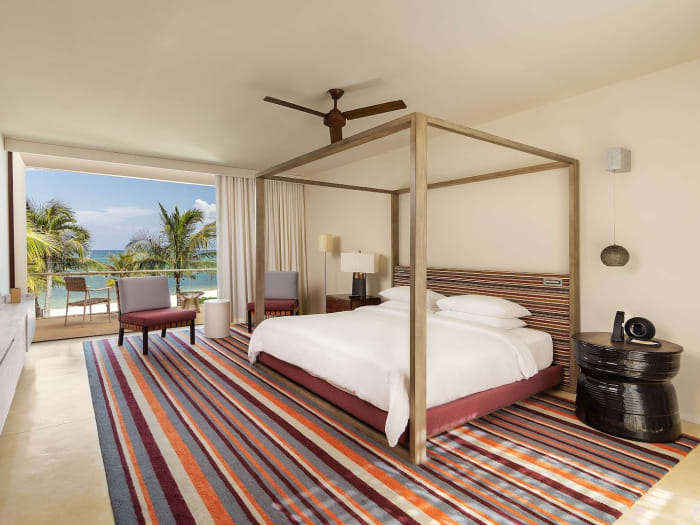
À Alila Mayakoba, l’hébergement prolonge naturellement la philosophie générale du lieu : créer des espaces de retrait où le confort n’interrompt jamais la relation au paysage. Dans ce type d’adresse, la chambre n’est pas un simple point de chute entre deux activités ; elle devient un territoire à part entière, pensé pour ralentir le rythme, retrouver de l’intimité et laisser entrer la lumière, l’air et la sensation de nature environnante. Même sans emphase décorative, tout concourt à cette impression de refuge contemporain, à la fois sobre et enveloppant.
Le vocabulaire esthétique semble privilégier la clarté des lignes, les matières tactiles et une palette apaisée, en accord avec l’esprit tropical de la destination. On attend ici des volumes respirants, une circulation fluide entre les différents espaces de vie et cette manière très actuelle de faire dialoguer l’intérieur avec l’extérieur. Dans un environnement comme celui de Mayakoba, la réussite d’une chambre se mesure aussi à sa capacité à ménager des seuils : une terrasse, une ouverture généreuse, un coin où s’installer pour lire, prendre le temps ou simplement regarder la lumière changer au fil de la journée.
Ce rapport au calme est essentiel. Les voyageurs qui choisissent cette adresse recherchent souvent une forme de décompression immédiate, particulièrement appréciable lors d’un séjour à deux. La chambre doit alors offrir plus qu’un haut niveau d’équipement : elle doit produire une sensation. Celle d’être protégé sans être coupé du monde, d’être servi sans être dérangé, d’habiter un espace où chaque détail semble avoir été retenu pour sa pertinence plutôt que pour son effet. C’est dans cette économie de gestes et de signes que se reconnaît le vrai raffinement.
Le service hôtelier vient soutenir cette expérience avec discrétion. L’entretien quotidien, le service de couverture et la disponibilité continue des équipes participent à cette impression de fluidité qui fait les séjours réussis. Rien de spectaculaire, mais cette somme d’attentions silencieuses qui permet au voyageur de se sentir attendu, compris, accompagné. Dans un hôtel orienté vers le bien-être, cette qualité de service prend une importance particulière : elle conditionne la capacité à réellement se détendre.
Les chambres et suites s’adressent ainsi à plusieurs usages du voyage. Certaines conviendront à ceux qui veulent vivre la destination en douceur, entre plage, repas et promenades ; d’autres répondront davantage au désir de se retirer, de prolonger les matinées, de faire de l’hébergement lui-même le centre du séjour. Dans tous les cas, l’esprit reste le même : offrir un luxe de respiration. Un luxe qui ne tient pas à la seule sophistication visible, mais à la qualité des proportions, à la sérénité de l’ambiance et à la sensation d’équilibre.
C’est sans doute ce qui rend l’expérience particulièrement convaincante dans un contexte balnéaire contemporain. Là où tant d’hôtels misent sur l’effet immédiat, Alila Mayakoba semble privilégier la durée sensible : des espaces que l’on comprend vite, mais dont on apprécie la justesse de plus en plus au fil des jours. Les chambres et suites deviennent alors le cadre d’un séjour moins fragmenté, plus habité, où l’on retrouve ce que le grand voyage sait parfois offrir de plus précieux : la possibilité de se sentir, très simplement, à sa place.
La table
La proposition culinaire d’Alila Mayakoba s’articule autour de deux adresses qui, chacune à sa manière, traduisent l’esprit de la maison : une recherche de précision, une attention au territoire et le refus des effets convenus. Dans une destination où l’offre hôtelière peut parfois céder à la répétition, cette approche mérite d’être soulignée. Ici, la table ne se contente pas d’accompagner le séjour ; elle participe à son identité, en donnant une lecture sensible des saveurs régionales et en inscrivant l’expérience gastronomique dans une réflexion plus large sur le goût, la saison et la responsabilité.
Casa Amate occupe une place particulière dans cet ensemble. Présentée comme la table signature de l’hôtel, elle s’est fait remarquer pour son interprétation raffinée des saveurs régionales. L’intérêt d’une telle adresse tient précisément à cet équilibre : rester lisible, ancrée dans son territoire, tout en proposant une exécution suffisamment précise pour transformer un dîner en véritable moment de destination. On imagine volontiers une cuisine qui privilégie les produits, les assaisonnements justes et une forme d’élégance sans rigidité, dans un cadre propice aux longues soirées, aux conversations prolongées et à ce plaisir très particulier de dîner dans un lieu qui sait ménager l’intimité.
À l’autre extrémité du spectre, El Huerto propose une expérience plus confidentielle encore. Avec seulement douze couverts, cette table-atelier relève presque du laboratoire culinaire. Menée par le chef exécutif Michael Grau, elle s’appuie sur une philosophie head-to-tail et zéro déchet qui donne à l’expérience une densité rare. Ce n’est pas seulement une question de technique ou de créativité, mais une manière de penser la cuisine dans son ensemble : respecter le produit, explorer toutes ses possibilités, réduire le gaspillage et faire de cette contrainte apparente une source d’invention. Pour le voyageur, cela change profondément la nature du repas. On ne vient pas simplement consommer un menu, mais prendre part à une conversation plus large sur la cuisine contemporaine et sur les responsabilités qu’elle implique.
Cette dualité entre table signature et atelier intimiste reflète bien l’identité d’Alila Mayakoba. D’un côté, le plaisir d’un grand dîner dans une adresse structurée, élégante, tournée vers les saveurs régionales ; de l’autre, l’expérience plus pointue, presque immersive, d’une cuisine de recherche à petite échelle. Dans les deux cas, le fil conducteur reste le même : donner du sens à l’assiette sans sacrifier le plaisir.
Pour les hôtes, la gastronomie devient ainsi l’un des langages du séjour. Elle permet de découvrir la destination autrement, non par l’accumulation de références, mais par une attention portée aux textures, aux saisons, aux gestes et aux partis pris. Dans un hôtel qui revendique le bien-être et la durabilité, cette cohérence est particulièrement appréciable. Elle évite la dissonance entre le discours et l’expérience vécue.
Le conseil le plus juste consiste sans doute à aborder ces tables comme deux expressions complémentaires d’un même lieu. Casa Amate pour la générosité maîtrisée d’un dîner signature ; El Huerto pour la rareté d’un format intimiste où la cuisine se fait presque conversation. Ensemble, elles dessinent une scène culinaire resserrée mais pensée, capable d’ancrer durablement le souvenir du séjour.
Spa et bien-être
Le bien-être n’apparaît pas ici comme un simple département de l’hôtel, mais comme l’un de ses principes fondateurs. C’est ce qui donne à Alila Mayakoba une tonalité particulière parmi les grandes adresses balnéaires : le repos n’y est pas seulement une conséquence du séjour, il en constitue l’un des objectifs explicites. Cette orientation se ressent dans l’atmosphère générale, dans le rapport au silence, dans la manière dont les espaces semblent inviter à ralentir. Le spa, dans ce contexte, n’est pas un supplément agréable ; il devient l’expression la plus concentrée d’une philosophie plus vaste.
Dans un cadre tropical proche de la mer, le bien-être prend naturellement une dimension sensorielle. La chaleur de l’air, la présence de la végétation, la lumière changeante au fil de la journée et la proximité de l’eau créent un terrain particulièrement favorable aux rituels de détente et de rééquilibrage. L’intérêt d’un hôtel comme celui-ci réside précisément dans sa capacité à orchestrer ces éléments sans les surjouer. On ne vient pas seulement pour recevoir un soin, mais pour retrouver une qualité d’attention à soi que le quotidien rend souvent difficile.
Le spa s’inscrit vraisemblablement dans cette logique de retrait et de personnalisation. Dans les meilleures maisons, un soin réussi ne se résume jamais à son protocole : il dépend aussi de l’accueil, du temps laissé avant et après, de la qualité des gestes, du rythme imposé ou au contraire assoupli selon la personne. À Alila Mayakoba, l’accent mis sur le bien-être laisse attendre cette approche sur mesure, attentive à l’état du voyageur autant qu’à ses préférences. Pour un couple, l’expérience peut devenir un moment central du séjour, une parenthèse à partager ; pour un voyageur seul, elle peut prendre la forme d’une remise à niveau silencieuse, presque méditative.
La cohérence avec la démarche de durabilité ajoute une dimension intéressante. Dans l’hôtellerie contemporaine, le bien-être le plus convaincant est souvent celui qui ne se contente pas d’être agréable, mais qui s’inscrit dans une vision plus responsable du soin, des produits et de l’environnement. Sans discours appuyé, cette sensibilité contribue à rendre l’expérience plus juste. Elle rappelle que prendre soin de soi peut aussi aller de pair avec une attention portée au lieu qui nous accueille.
Il faut également compter avec le rôle du temps. Dans une adresse pensée pour la tranquillité, le spa invite à réorganiser la journée autour de séquences plus lentes : un soin en fin de matinée, un moment de repos ensuite, une marche jusqu’à la plage, puis un dîner. Ce type de rythme redonne au séjour sa valeur de cure douce, loin de l’agenda saturé que l’on reproduit parfois même en vacances. C’est pourquoi les créneaux les plus recherchés se réservent souvent rapidement, en particulier lors des périodes de forte affluence.
Au fond, le bien-être à Alila Mayakoba ne tient pas seulement aux installations ou à la carte des soins. Il tient à une ambiance, à une promesse tenue de calme, à une manière d’accueillir le corps et l’esprit dans un même mouvement. Pour qui voyage afin de se retrouver, de respirer davantage et de faire du repos un art plutôt qu’une simple pause, cette dimension constitue l’un des arguments les plus solides de l’adresse.
Conciergerie et services
Dans l’hôtellerie de grand confort, les services les plus précieux sont souvent ceux qui savent se faire oublier. Alila Mayakoba semble appartenir à cette catégorie d’adresses où l’efficacité n’a pas besoin d’être théâtralisée pour être ressentie. La présence d’une conciergerie disponible à toute heure, d’une réception ouverte en continu et d’un ensemble de services quotidiens bien rodés dessine un cadre de séjour particulièrement fluide. Pour le voyageur, cette fluidité change tout : elle permet de consacrer son attention au repos, au paysage, aux plaisirs du lieu, plutôt qu’à l’organisation pratique du quotidien.
La conciergerie joue ici un rôle central. Dans une destination comme Playa del Carmen, elle ne se limite pas à répondre à des demandes ponctuelles ; elle devient l’interprète du séjour. Réserver un dîner, organiser un moment de bien-être, ajuster le rythme des journées, faciliter une arrivée matinale ou un départ tardif dans la mesure du possible : autant d’interventions discrètes qui donnent au voyage une qualité de continuité. Le vrai luxe, dans ce contexte, n’est pas la multiplication des options, mais la capacité des équipes à comprendre rapidement le ton souhaité par chaque hôte — plus retiré, plus actif, plus romantique, plus centré sur le repos.
Les services de chambre participent de cette même logique. L’entretien quotidien, le service de couverture, la gestion des bagages, la blanchisserie ou encore le service de réveil relèvent d’un socle classique, mais essentiel. Lorsqu’ils sont bien exécutés, ils créent cette sensation presque imperceptible d’un séjour qui se déroule sans friction. On quitte sa chambre le matin, on la retrouve plus tard remise en ordre ; on rentre le soir et l’espace a déjà changé de tonalité, prêt pour la nuit. Ces gestes simples, répétés avec constance, constituent l’une des signatures les plus fiables des bonnes maisons.
La disponibilité d’un personnel multilingue renforce encore cette qualité d’accueil. Dans un hôtel international, la justesse de la relation passe aussi par la facilité d’échange, par la possibilité d’exprimer une préférence, une contrainte ou une envie sans approximation. Cette précision relationnelle compte particulièrement dans une adresse qui mise sur le bien-être et la personnalisation. Elle permet d’éviter toute lourdeur et de maintenir cette impression de naturel qui distingue les services vraiment maîtrisés.
Pour les couples, cette qualité d’accompagnement peut transformer le séjour. Une réservation au bon moment, une attention portée à l’intimité, une aide discrète pour coordonner une journée entre plage, spa et dîner suffisent souvent à faire basculer l’expérience du simple agréable vers le véritablement mémorable. Le service ne cherche pas à occuper l’espace ; il veille à ce que rien ne vienne l’encombrer.
C’est sans doute la meilleure définition du service dans une adresse comme Alila Mayakoba : une présence constante, mais légère ; une organisation précise, mais jamais rigide. Tout concourt à faire du séjour un temps protégé, où les nécessités pratiques sont absorbées par la qualité de l’hospitalité. Dans une époque saturée de sollicitations, cette discrétion efficace a quelque chose de profondément luxueux.
L’art de vivre à Playa del Carmen
Séjourner à Alila Mayakoba, c’est aussi découvrir une certaine manière d’habiter Playa del Carmen sans se laisser absorber par son énergie la plus immédiate. La ville et, plus largement, la Riviera Maya, exercent une attraction évidente : mer des Caraïbes, lumière franche, végétation tropicale, culture du plein air, rythme de journées qui s’étirent entre baignade, repas et promenades. Pourtant, tout l’intérêt d’une adresse comme celle-ci réside dans sa capacité à proposer une lecture plus calme, plus intérieure, de la destination. On ne renonce pas au littoral ni aux attraits locaux ; on les aborde depuis un point d’équilibre.
Playa del Carmen possède cette dualité propre aux grandes destinations balnéaires contemporaines. D’un côté, une vie animée, des plages recherchées, un mouvement constant de visiteurs ; de l’autre, la possibilité, pour qui choisit bien son adresse, de retrouver une relation plus apaisée au territoire. Alila Mayakoba se situe précisément dans cet entre-deux précieux. L’hôtel permet de goûter à la proximité de la plage et aux plaisirs de la côte tout en préservant une distance salutaire avec l’agitation. Cette position est idéale pour les voyageurs qui veulent sentir la destination sans en subir le bruit continu.
L’art de vivre local se comprend alors par touches. Il y a les matinées lumineuses, particulièrement agréables pendant la saison sèche, lorsque l’air semble plus net et que les activités extérieures prennent tout leur sens. Il y a les heures chaudes, propices au retrait, à un soin, à une lecture ou à un déjeuner pris sans hâte. Puis viennent les fins d’après-midi, lorsque la lumière s’adoucit et que le rapport au paysage change de texture. Dans les destinations côtières, ce sont souvent ces transitions qui donnent au séjour sa profondeur.
Pour les couples, cette région offre un terrain naturellement favorable à une escapade placée sous le signe de la lenteur. La proximité de la mer, l’abondance de la nature et la douceur des soirées créent un décor qui n’a pas besoin d’être surchargé pour devenir mémorable. Le luxe consiste alors à choisir le bon rythme : alterner les moments de découverte et les temps de retrait, accepter de ne pas tout voir, préférer la qualité d’une journée bien vécue à la quantité d’activités enchaînées.
La saison sèche, de novembre à avril, reste particulièrement recherchée pour profiter des plages et des activités en plein air. Cette période favorise les journées longues, les déplacements aisés et une expérience plus stable du littoral. Elle implique aussi une demande soutenue, ce qui invite à anticiper certaines réservations, notamment pour les expériences les plus convoitées. Cette préparation n’enlève rien à la spontanéité du voyage ; elle en garantit au contraire la douceur.
Au fond, l’art de vivre à Playa del Carmen, tel qu’on le découvre depuis Alila Mayakoba, repose sur une idée simple : laisser la destination venir à soi sans la brusquer. Prendre la mer, la lumière, la cuisine et le repos comme des éléments d’un même séjour. Se souvenir qu’un grand voyage n’est pas toujours celui qui accumule les images, mais souvent celui qui réapprend à regarder, à sentir et à respirer. Dans cette perspective, l’hôtel agit comme un filtre bienveillant entre l’intensité du monde extérieur et le désir très contemporain de retrouver un peu de silence.
Réserver via MyConciergeHotel
Réserver Alila Mayakoba par l’intermédiaire de MyConciergeHotel, c’est aborder cette adresse avec la méthode qui lui convient le mieux : celle d’un séjour pensé dans ses détails utiles, sans jamais perdre de vue l’essentiel, à savoir la qualité du temps passé sur place. Un hôtel orienté vers le bien-être, la tranquillité et les expériences à forte dimension sensorielle se prête particulièrement à une préparation attentive. Ce n’est pas tant une question de complexité que de justesse. Les meilleures conditions de séjour tiennent souvent à quelques arbitrages simples : choisir la bonne période, anticiper les réservations les plus demandées, organiser le rythme du voyage pour qu’il reste fluide du début à la fin.
Dans le cas d’Alila Mayakoba, cette préparation prend tout son sens. Les voyageurs viennent ici chercher un équilibre entre plage, repos, gastronomie et moments de retrait. Or cet équilibre se construit mieux lorsque certains points sont réglés en amont. Les créneaux de spa, par exemple, figurent souvent parmi les demandes prioritaires, surtout pendant les périodes de forte affluence. Il en va de même pour les expériences culinaires les plus confidentielles, notamment lorsqu’une table intimiste à capacité très limitée entre en jeu. Réserver tôt permet non seulement d’obtenir les horaires souhaités, mais aussi de dessiner un séjour plus harmonieux, sans impression de course ou de compromis permanent.
L’intérêt d’un accompagnement de conciergerie réside aussi dans sa capacité à adapter le voyage au profil des hôtes. Un séjour à deux n’appelle pas les mêmes priorités qu’une parenthèse de repos en solitaire. Certains souhaiteront maximiser le temps au spa et à la plage ; d’autres donneront davantage de place aux dîners, aux temps de lecture, aux journées peu remplies. La valeur d’une réservation bien accompagnée consiste précisément à traduire ces intentions en choix concrets : durée idéale du séjour, séquençage des expériences, moments à préserver libres, réservations à sécuriser dès l’amont.
La saison sèche, de novembre à avril, reste la plus recherchée pour profiter pleinement des activités extérieures et du littoral. Cette période offre des conditions particulièrement favorables, mais elle suppose aussi une demande plus soutenue. Anticiper devient alors un avantage réel, non seulement pour la disponibilité, mais pour la qualité globale de l’expérience. Un séjour bien préparé laisse davantage de place à l’imprévu heureux, parce qu’il a déjà absorbé les contraintes essentielles.
Réserver via MyConciergeHotel, c’est enfin choisir une approche éditoriale et humaine du voyage, particulièrement pertinente pour une adresse qui mise sur la nuance plutôt que sur l’effet. Alila Mayakoba ne se résume pas à une liste d’équipements ; c’est un lieu de rythme, d’atmosphère et d’attention. Pour en profiter pleinement, mieux vaut penser le séjour comme une composition : quelques temps forts, des respirations, une marge pour la spontanéité, et la certitude que les éléments les plus importants auront été organisés avec soin.
Dans un hôtel où la paix, le bien-être et la relation au paysage comptent autant que le confort lui-même, la réservation n’est pas une simple formalité. Elle constitue déjà la première étape du séjour. Bien menée, elle prépare non seulement l’arrivée, mais aussi la qualité de présence que l’on pourra s’offrir une fois sur place.