Hôtel Sofitel Paris Baltimore Tour Eiffel : une adresse discrète du 16ᵉ arrondissement
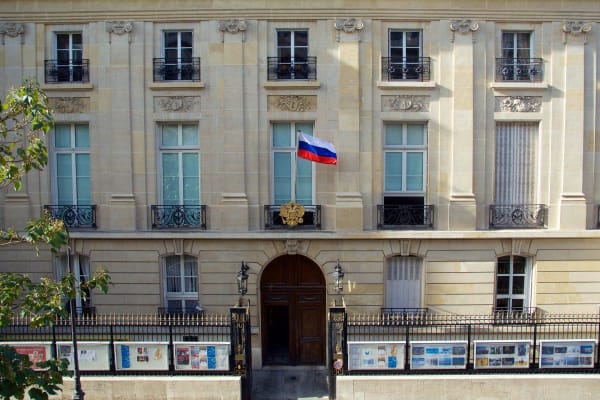
Le Sofitel Paris Baltimore Tour Eiffel appartient à cette catégorie d’hôtels parisiens que l’on remarque moins par l’ostentation que par la justesse de leur implantation. Dans le 16ᵉ arrondissement, entre l’avenue Kléber, les perspectives monumentales de l’ouest parisien et les rues plus résidentielles qui descendent vers la Seine, l’adresse cultive une forme de retenue très parisienne. On y vient pour séjourner à proximité immédiate de la Tour Eiffel sans renoncer au calme, pour retrouver un quartier qui reste habité, feutré, traversé d’ambassades, d’immeubles haussmanniens et de musées, plutôt que saturé par le seul rythme touristique.
Cette situation répond très directement à l’une des questions les plus fréquentes des voyageurs qui préparent un séjour dans la capitale : où dormir à Paris proche de la tour Eiffel ? Ici, la réponse n’est pas seulement géographique. Bien sûr, la silhouette de la Dame de fer fait partie du paysage mental du séjour, et l’on rejoint rapidement ses abords. Mais l’intérêt du Sofitel Paris Baltimore Tour Eiffel tient aussi au fait qu’il permet de vivre Paris depuis un quartier d’élégance ancienne, à distance raisonnable des grands axes, avec cette sensation rare d’être à la fois dans la ville monumentale et dans une enclave plus confidentielle.
Le voisinage immédiat renforce cette impression. Le Musée national des arts asiatiques - Guimet, à quelques minutes, apporte une dimension culturelle singulière à l’adresse. Plus loin, les promenades vers le Trocadéro, l’avenue George V ou les quais ouvrent plusieurs lectures de Paris : celle des grandes perspectives, celle des institutions culturelles, celle des cafés plus discrets où l’on s’attarde entre deux rendez-vous. À 229 mètres, Alain Ducasse Baccarat rappelle quant à lui que le quartier sait conjuguer art de vivre, design et gastronomie dans un même périmètre.
Le Sofitel y inscrit sa propre grammaire : une hospitalité française interprétée par une marque née dans les années 1960 et intégrée depuis au paysage du luxe international. L’ensemble donne une adresse qui ne cherche pas à rivaliser avec les palaces les plus théâtraux de la capitale, mais qui assume un autre registre, plus mesuré. C’est précisément ce qui rend le lieu pertinent pour des voyageurs qui veulent Paris dans sa version la plus habitable : proche des icônes, mais jamais prisonnier d’elles.
Pour un week-end culturel, une parenthèse romantique ou un séjour d’affaires prolongé, l’hôtel se prête à un usage souple. On peut y organiser des journées denses, faites de musées, de dîners et de promenades nocturnes, comme s’y ménager un refuge entre deux sorties. Cette dualité, très recherchée à Paris, explique l’attrait durable de l’adresse : elle offre moins une démonstration qu’un point d’équilibre, entre prestige de situation, discrétion résidentielle et confort d’un grand hôtel contemporain.
Histoire de l’hôtel Sofitel : l’élégance parisienne signée Sofitel
Parler du Sofitel Paris Baltimore Tour Eiffel, c’est aussi évoquer l’histoire d’une marque qui occupe une place particulière dans l’hôtellerie française. Sofitel naît en 1964, à un moment où le voyage international change d’échelle et où la France cherche à affirmer une vision du luxe hôtelier capable de conjuguer standards contemporains et culture nationale. L’identité de la marque s’est construite autour de cette idée simple mais exigeante : proposer un art de recevoir français lisible partout dans le monde, sans le réduire à un décor.
Cette filiation éclaire la personnalité de l’adresse parisienne. Ici, le mot luxe ne passe pas d’abord par la monumentalité, mais par une série de signes plus subtils : un sens du détail, une certaine manière d’orchestrer l’accueil, le goût des matières, la place laissée au silence et à l’intimité. À la question souvent posée, Sofitel est-il considéré comme un hôtel de luxe ?, la réponse se lit précisément dans cette cohérence. Oui, parce que la marque s’inscrit dans le segment haut de gamme international ; oui aussi parce qu’elle défend une interprétation française de l’hospitalité, où le confort se double d’un style et d’une tenue.
Le Sofitel Paris Baltimore Tour Eiffel transpose cette signature dans un contexte très spécifique, celui d’un quartier résidentiel de la rive droite où l’élégance se dit avec retenue. L’hôtel ne cherche pas l’effet de manifeste. Il préfère la continuité avec son environnement : une adresse urbaine, raffinée, pensée pour des voyageurs qui veulent une expérience parisienne crédible plutôt qu’un décor interchangeable. C’est sans doute ce qui répond le mieux à une autre interrogation récurrente : qu’est-ce qui rend le Sofitel Paris Baltimore unique ? Moins un élément spectaculaire qu’un assemblage juste entre emplacement, atmosphère et identité de marque.
L’histoire de Sofitel, intégrée au groupe Accor à partir de 1980, a accompagné l’internationalisation du luxe hôtelier tout en conservant ce tropisme français. Dans une ville comme Paris, où l’offre d’hébergement de prestige est particulièrement dense, cette appartenance compte. Elle garantit un niveau de service attendu par une clientèle internationale, tout en maintenant une relation forte à la culture locale. Le résultat, dans cette adresse du 16ᵉ, est un hôtel qui parle à la fois aux habitués de la marque et aux voyageurs qui cherchent avant tout un certain Paris : celui des belles proportions, des quartiers calmes, des institutions culturelles voisines et d’un service qui sait rester présent sans devenir intrusif.
Il faut enfin souligner la dimension temporelle de cette signature. Le luxe le plus durable n’est pas celui qui suit trop vite les effets de mode, mais celui qui sait traverser les années avec une certaine constance. Le Sofitel Paris Baltimore Tour Eiffel s’inscrit dans cette logique. Son intérêt ne tient pas à une promesse tapageuse, mais à une forme de permanence : celle d’un hôtel parisien de grand confort, porté par une marque française historique, et situé dans un quartier qui demeure l’un des plus équilibrés pour découvrir la capitale avec mesure.
Chambres et séjour : dormir à Paris proche de la Tour Eiffel
Choisir le Sofitel Paris Baltimore Tour Eiffel pour y dormir, c’est privilégier une certaine idée du séjour parisien : celle d’un hôtel où la chambre n’est pas un simple point de chute, mais une extension du rythme de la ville. Dans ce secteur du 16ᵉ arrondissement, la journée commence souvent tôt, avec une lumière claire sur les façades de pierre, puis se prolonge entre rendez-vous, expositions, promenades et dîners. Revenir à l’hôtel suppose alors de retrouver un espace capable d’absorber cette intensité sans la prolonger inutilement. C’est là que l’adresse trouve sa justesse.
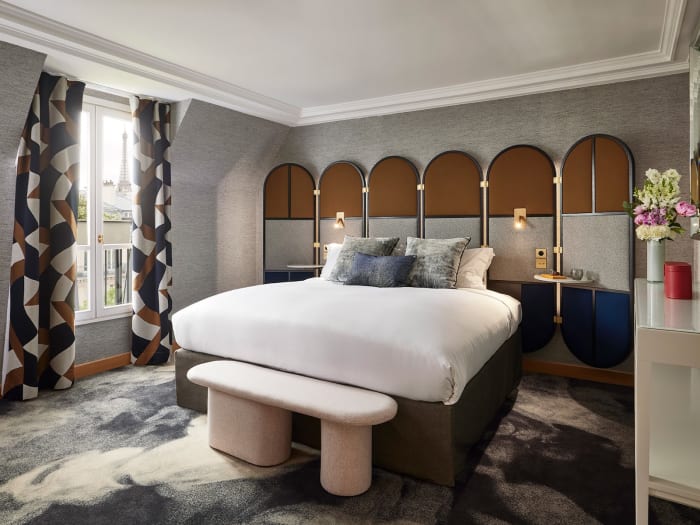
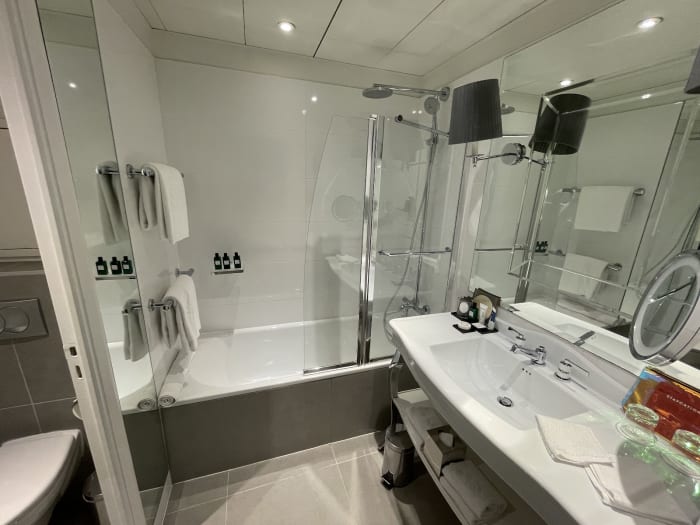
L’esprit des chambres et des suites s’inscrit dans la continuité de l’ensemble : élégance parisienne, lignes soignées, confort pensé pour une clientèle internationale habituée aux codes du grand hôtel. On y attend des volumes bien organisés, une literie de haut niveau, une attention portée à l’entretien quotidien, ainsi qu’un service de couverture qui participe de cette sensation de transition entre la ville et le repos. Rien d’ostentatoire dans cette approche ; plutôt une recherche d’équilibre entre raffinement, fonctionnalité et intimité.
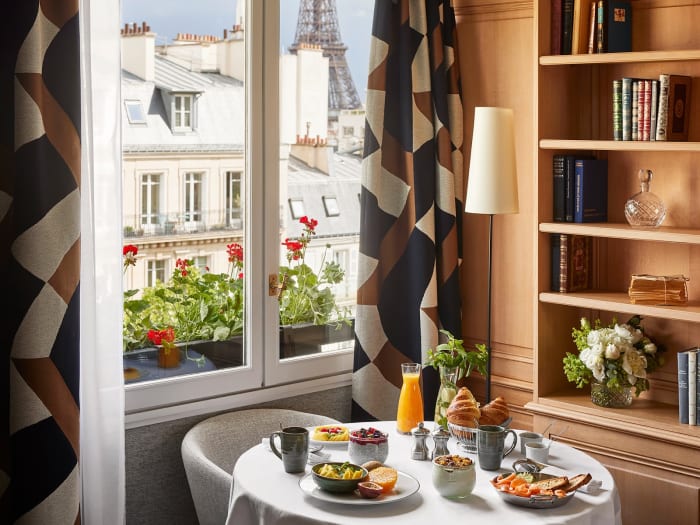
Pour beaucoup de voyageurs, la proximité de la Tour Eiffel soulève une autre question implicite : faut-il absolument une vue directe pour réussir son séjour ? Paris répond souvent autrement. Bien sûr, certaines chambres avec perspective sur un monument possèdent une force particulière. Mais l’expérience parisienne la plus convaincante tient souvent à la qualité du quartier, à la facilité des déplacements, au silence relatif une fois la porte refermée, à la possibilité de rejoindre à pied un musée, un restaurant ou un point de vue du soir. Dans cette logique, le Sofitel Paris Baltimore Tour Eiffel offre une réponse plus subtile à la recherche d’un hôtel avec vue sur la tour Eiffel : il place le monument dans le champ du séjour, sans réduire l’expérience à lui seul.
Le confort quotidien se lit aussi dans les services associés. Le ménage quotidien, la conciergerie disponible à toute heure, la réception 24h/24, la consigne à bagages, la blanchisserie ou le service de réveil dessinent un cadre fluide, particulièrement appréciable pour les courts séjours comme pour les escales plus longues. Les voyageurs d’affaires y trouvent la régularité nécessaire ; les couples en escapade, une logistique discrète qui laisse toute la place à la ville.
Dormir ici, c’est enfin adopter le tempo particulier de l’ouest parisien. Le matin, on part facilement vers le Trocadéro, les quais ou les musées voisins. En fin d’après-midi, on retrouve le quartier plus calme, presque résidentiel. Le soir, après les lumières de la Tour Eiffel ou un dîner dans les environs, le retour se fait sans rupture. Cette continuité entre dehors et dedans, entre Paris spectaculaire et Paris habitable, est l’un des privilèges les plus tangibles de l’adresse. Elle ne promet pas une mise en scène excessive ; elle offre quelque chose de plus rare dans une grande capitale : la sensation d’être bien situé, bien accueilli et véritablement bien logé.
Sofitel Paris Baltimore Tour Eiffel restaurant : Lordy’s Paris Club et le rythme du Bar LPC
Dans une adresse parisienne de cette nature, la restauration ne se résume jamais à une commodité. Elle participe du ton général du séjour, de la manière dont l’hôtel s’inscrit dans son quartier et du type de moments qu’il rend possibles. Au Sofitel Paris Baltimore Tour Eiffel, cette dimension s’organise autour de Lordy’s Paris Club, du LPC bar et du Bar LPC, autant d’espaces qui suggèrent une vie intérieure réelle, pensée pour les clients de passage comme pour ceux qui aiment retrouver, au sein même de l’hôtel, un lieu où prolonger la journée.
Lordy’s Paris Club donne d’abord une indication de style. Le nom évoque moins la solennité d’une table de cérémonie qu’une adresse urbaine, contemporaine, capable de parler aussi bien à une clientèle internationale qu’aux Parisiens de rendez-vous. Dans ce type d’hôtel, le restaurant joue un rôle charnière : il doit pouvoir accueillir un petit-déjeuner de travail, un déjeuner mesuré, un dîner plus installé, sans jamais perdre cette impression d’aisance qui distingue les bonnes maisons. Le cadre, dans un quartier aussi résidentiel que celui-ci, prend une importance particulière : on attend une atmosphère feutrée, une certaine tenue du service, et ce mélange de discrétion et de précision qui permet à chacun d’occuper l’espace à son rythme.
Le Bar LPC, lui, introduit une temporalité différente. Le bar d’hôtel parisien n’est pas seulement un lieu de consommation ; c’est souvent un sas entre la rue et la soirée, un endroit où l’on se retrouve avant un dîner, après un spectacle, ou simplement pour faire une pause dans la journée. Ici, un détail compte particulièrement : Le Goûter y est servi chaque jour de 15h à 17h. Dans une ville où l’art de la pause demeure un marqueur culturel fort, ce créneau dit beaucoup de l’esprit de la maison. Il invite à ralentir, à transformer un après-midi de visites ou de rendez-vous en moment plus élégant, presque domestique dans son confort, mais pleinement parisien dans son exécution.
Cette offre interne dialogue naturellement avec le quartier. La présence toute proche d’Alain Ducasse Baccarat rappelle que l’on séjourne dans une zone où la gastronomie et les arts décoratifs se rencontrent avec évidence. Pourtant, il est précieux qu’un hôtel de cette catégorie sache aussi proposer ses propres repères, sans obliger ses hôtes à sortir pour chaque instant du séjour. Un dîner à l’hôtel, un verre au bar, un goûter bien placé entre deux promenades : ces moments composent souvent la mémoire la plus fidèle d’une adresse.
La table du Sofitel Paris Baltimore Tour Eiffel ne cherche donc pas à détourner l’attention de Paris ; elle l’accompagne. Elle prolonge l’élégance du quartier, répond aux usages d’une clientèle mobile et inscrit l’hôtel dans une tradition très française : celle des maisons où l’on sait recevoir à toute heure, avec suffisamment de souplesse pour que chacun y trouve son propre rythme. Plus qu’un simple service, la restauration devient ici une manière de tenir le séjour, de lui donner une cadence et une continuité.
Voir la Tour Eiffel la nuit et vivre le Paris du 16ᵉ
Séjourner au Sofitel Paris Baltimore Tour Eiffel, c’est bénéficier d’un point de départ particulièrement convaincant pour répondre à une autre grande question des visiteurs : quel est le meilleur endroit pour voir la tour Eiffel la nuit ? Paris n’offre pas une réponse unique, et c’est ce qui fait son charme. Les abords du Trocadéro restent parmi les perspectives les plus évidentes, avec leur frontalité spectaculaire. Les quais, eux, proposent une relation plus mobile au monument, faite de reflets, de circulation et de cadrages changeants. Plus largement, tout ce secteur de l’ouest parisien permet d’approcher la Tour Eiffel comme un élément vivant du paysage urbain, et non comme une simple image figée.
Depuis l’hôtel, cette expérience se construit naturellement. On peut partir à pied en fin de journée, traverser un quartier encore animé mais jamais frénétique, rejoindre un point de vue, puis revenir après l’illumination dans une atmosphère plus calme. Cette possibilité de la marche est essentielle. Elle transforme la visite en séquence parisienne complète, où l’on passe sans rupture d’une rue résidentielle à une grande perspective, d’un musée à un dîner, d’un monument à un bar d’hôtel. Peu d’adresses offrent cette continuité avec autant d’évidence.
Le 16ᵉ arrondissement joue ici un rôle décisif. Longtemps associé à une certaine idée de la bourgeoisie parisienne, il conserve aujourd’hui ce mélange de réserve, de belles adresses et de respiration urbaine qui le rend si agréable à habiter, même brièvement. Les avenues y sont larges, les immeubles souvent majestueux sans être écrasants, les institutions culturelles nombreuses. Le Musée Guimet, tout proche, suffit à rappeler que le quartier ne se réduit pas à sa proximité avec la Tour Eiffel. Il propose aussi une autre forme de voyage, plus silencieuse, plus savante, qui enrichit le séjour.
C’est dans cette articulation entre icône mondiale et vie de quartier que l’hôtel prend tout son sens. On peut consacrer une journée entière aux grands classiques de Paris, puis choisir le lendemain une cadence plus lente : un musée le matin, un déjeuner dans le voisinage, un retour à l’hôtel en milieu d’après-midi, Le Goûter au bar, avant de ressortir pour voir la Tour Eiffel scintiller. Cette manière de composer son séjour, sans dépendre des transports à chaque étape, change profondément la perception de la ville.
Le Sofitel Paris Baltimore Tour Eiffel n’est donc pas seulement un hôtel proche d’un monument. Il permet d’habiter, le temps de quelques jours, un Paris de voisinage et de perspective, de culture et de promenade. Pour ceux qui cherchent à voir la Tour Eiffel la nuit sans renoncer à une adresse calme et bien tenue, le lieu offre un compromis rare : l’accès à l’icône, mais aussi la possibilité de s’en éloigner juste assez pour retrouver la ville réelle, celle qui se découvre à pied, à l’heure du soir, quand les façades prennent une autre densité et que le séjour commence vraiment à ressembler à Paris.
Conciergerie 24h/24 et services : le confort d’un grand hôtel haut de gamme
Dans l’hôtellerie de luxe, les services les plus importants sont souvent ceux que l’on remarque le moins. Ils ne cherchent pas à impressionner ; ils rendent le séjour plus fluide, plus calme, plus habitable. Au Sofitel Paris Baltimore Tour Eiffel, cette qualité se lit dans un ensemble de prestations qui relèvent moins du spectaculaire que d’une discipline du confort : conciergerie 24h/24, réception ouverte en permanence, ménage quotidien, service de couverture, consigne à bagages, blanchisserie, service de réveil, personnel multilingue. Pris séparément, chacun de ces éléments peut sembler attendu dans un établissement de cette catégorie. Ensemble, ils dessinent pourtant une expérience cohérente, celle d’un hôtel haut de gamme qui sait anticiper les rythmes variés de ses clients.
La conciergerie, notamment, reste l’un des grands marqueurs de l’hospitalité urbaine. À Paris, elle ne se limite pas à réserver une table ou organiser un transfert. Elle aide à composer un séjour en fonction du quartier, de la saison, du temps disponible, de la nature du voyage. Dans une adresse située entre les grands sites de l’ouest parisien et un tissu résidentiel plus discret, ce rôle prend tout son sens. Il peut s’agir d’orienter une promenade vers le meilleur itinéraire du soir, de suggérer un tempo de visite, d’aider à articuler un programme culturel avec les temps de repos. Le luxe, ici, réside dans cette capacité à simplifier sans standardiser.
La réception 24h/24 et la souplesse des services associés répondent quant à elles aux réalités très concrètes du voyage contemporain. Arrivées tardives, départs matinaux, escales courtes, horaires internationaux : un grand hôtel parisien doit savoir absorber ces contraintes sans les faire peser sur le client. La consigne à bagages permet de prolonger une dernière journée en ville ; la blanchisserie devient précieuse lors d’un séjour d’affaires ou d’un itinéraire européen plus long ; le service de couverture, souvent sous-estimé, réintroduit chaque soir une forme d’attention qui distingue encore les belles maisons des simples hébergements efficaces.
À la question de savoir si le Sofitel est un hôtel haut de gamme, ce sont précisément ces détails qui répondent le mieux. Le haut de gamme ne se mesure pas uniquement à l’adresse ou au décor, mais à la qualité de l’exécution quotidienne. Un personnel capable de passer d’une langue à l’autre avec naturel, une chambre remise en ordre avec régularité, une demande traitée rapidement à toute heure : voilà ce qui transforme un séjour confortable en véritable expérience d’hospitalité.
Dans le contexte parisien, où les journées peuvent être denses et les déplacements nombreux, cette fiabilité a une valeur particulière. Elle permet de vivre la ville intensément tout en sachant qu’un cadre stable attend au retour. Le Sofitel Paris Baltimore Tour Eiffel s’inscrit pleinement dans cette tradition du grand hôtel bien tenu : un lieu où le service n’interrompt jamais le séjour, mais le soutient en permanence, avec discrétion, précision et continuité.
Réserver le Sofitel Paris Baltimore Tour Eiffel pour un séjour parisien mesuré
Réserver le Sofitel Paris Baltimore Tour Eiffel, c’est faire un choix de style autant qu’un choix d’emplacement. Dans une ville où l’offre hôtelière de prestige est particulièrement abondante, toutes les adresses ne répondent pas au même désir de Paris. Certaines privilégient la théâtralité, d’autres la vie de palace, d’autres encore l’hyper-centralité. Celle-ci s’adresse à des voyageurs qui recherchent un équilibre plus nuancé : la proximité immédiate de la Tour Eiffel, la tenue d’un quartier résidentiel, la signature d’une grande marque française et la possibilité de vivre la capitale à un rythme soutenu sans sacrifier le repos.
Ce positionnement explique pourquoi l’hôtel séduit des profils très différents. Les couples y trouvent un cadre propice à une escapade élégante, structurée autour de promenades, de dîners et de vues nocturnes sur Paris. Les amateurs de culture apprécient la proximité du Musée Guimet et l’accès rapide à plusieurs institutions majeures de l’ouest parisien. Les voyageurs d’affaires, eux, bénéficient d’un environnement calme, d’un service continu et d’une logistique hôtelière fiable, autant d’éléments qui comptent lorsqu’un séjour alterne obligations professionnelles et temps de découverte.
Réserver cette adresse, c’est aussi comprendre ce qu’elle n’essaie pas d’être. Le Sofitel Paris Baltimore Tour Eiffel ne cherche pas à condenser tout Paris dans ses murs. Il propose plutôt une base élégante depuis laquelle la ville peut se déployer avec naturel. Cette nuance est essentielle. Elle distingue les hôtels que l’on choisit pour leur image de ceux que l’on choisit pour la qualité réelle du séjour qu’ils permettent. Ici, la promesse la plus juste tient dans la continuité : sortir facilement vers la Tour Eiffel ou le Trocadéro, revenir pour un moment au bar, repartir dîner, puis retrouver une chambre préparée avec soin et un service disponible à toute heure.
Pour ceux qui s’interrogent sur le meilleur hôtel avec vue sur la tour Eiffel ou sur l’hôtel le plus prestigieux de Paris, la réponse dépend toujours du type de voyage souhaité. Le Sofitel Paris Baltimore Tour Eiffel n’a pas besoin de se situer dans une compétition de prestige abstrait pour convaincre. Son intérêt est ailleurs : dans la cohérence d’une adresse bien placée, dans la qualité d’une hospitalité française contemporaine, dans la discrétion d’un luxe qui accompagne la ville au lieu de la surjouer.
C’est précisément ce qui en fait une réservation pertinente pour un séjour parisien mesuré, exigeant et confortable. On y choisit moins un décor qu’une manière d’habiter Paris pendant quelques jours. Une manière faite de distances justes, de services fiables, de pauses bienvenues et d’un rapport apaisé à l’une des villes les plus désirées au monde. Pour qui veut conjuguer la Tour Eiffel, le 16ᵉ arrondissement et la signature Sofitel dans une même expérience, l’adresse s’impose avec une évidence tranquille.