Histoire & héritage
Sur la côte ouest de la Barbade, à Saint James, le Fairmont Royal Pavilion s’inscrit dans une tradition hôtelière caribéenne où l’élégance ne repose pas sur l’ostentation, mais sur la relation directe entre architecture, climat et paysage. Ici, l’idée du luxe prend la forme d’une adresse posée face à la mer, pensée pour tirer parti de la lumière, des alizés et de la douceur du littoral. L’établissement appartient à cette famille d’hôtels balnéaires qui ont construit la réputation de la côte dite “Platinum Coast”, un rivage recherché pour ses plages calmes, ses couchers de soleil et son atmosphère plus résidentielle que tapageuse.
Le nom même de Royal Pavilion évoque une certaine idée du séjour insulaire : un refuge ouvert sur l’horizon, avec une allure classique et un sens marqué de l’hospitalité. Sous l’enseigne Fairmont, l’hôtel prolonge aussi un héritage de service codifié, attentif sans être envahissant, où la qualité de l’accueil compte autant que le décor. Ce qui frappe, dans cette adresse, n’est pas la démonstration, mais la continuité : celle d’un hôtel qui semble d’abord conçu pour permettre au paysage de tenir le premier rôle. La mer y est omniprésente, non comme simple toile de fond, mais comme élément structurant de l’expérience.
L’architecture caribéenne de la propriété participe à cette impression. Elle privilégie les lignes aérées, les circulations ouvertes, les volumes qui laissent passer la brise et les vues qui s’étirent vers l’océan. Les jardins tropicaux, eux, jouent un rôle essentiel dans l’identité du lieu. Ils ne sont pas seulement décoratifs : ils créent des transitions, filtrent la lumière, apportent de l’ombre et installent un rythme plus lent, presque domestique, entre les bâtiments et la plage. Dans un hôtel de ce type, l’héritage se lit moins dans un récit monumental que dans une manière de recevoir, dans une fidélité à l’esprit des grandes retraites balnéaires des Caraïbes.
Le Fairmont Royal Pavilion s’adresse ainsi à des voyageurs qui recherchent une forme de classicisme tropical. Couples en quête de tranquillité, habitués des séjours en bord de mer, amateurs de longues journées rythmées par la baignade, la lecture et les repas face à l’eau : tous trouvent ici une adresse qui privilégie la cohérence plutôt que l’effet. La réputation de la Barbade comme destination raffinée, anglophone et facile à vivre donne à l’ensemble un cadre culturel particulier. On y retrouve une hospitalité insulaire chaleureuse, une certaine retenue britannique dans le service, et un rapport très direct à la mer.
Dans le paysage hôtelier de l’île, l’établissement occupe donc une place identifiable : celle d’un refuge balnéaire haut de gamme, paisible, tourné vers l’océan et pensé pour des séjours où l’on vient d’abord ralentir. Son héritage n’est pas celui d’un palais urbain ni d’une demeure historique au sens européen du terme. Il relève plutôt d’une tradition caribéenne du séjour bien orchestré, où l’espace, la lumière et l’attention portée aux détails du quotidien construisent une mémoire durable du voyage.
L’établissement
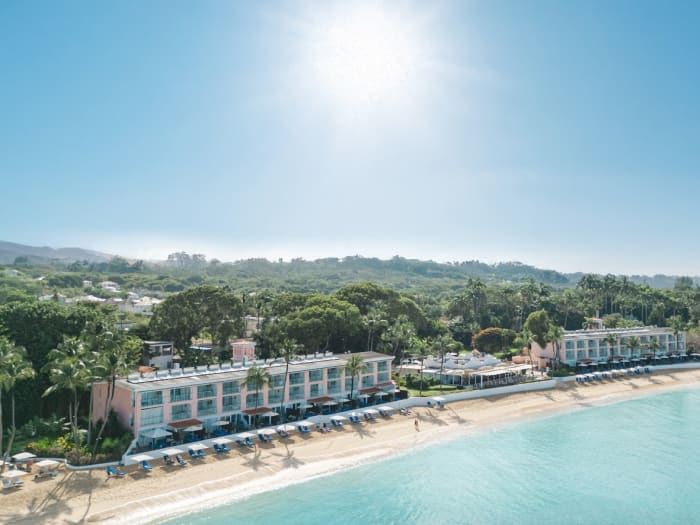
Le Fairmont Royal Pavilion se découvre d’abord comme un hôtel de bord de mer, au sens le plus littéral du terme. À Saint James, sur la côte ouest de la Barbade, il fait face à l’un des rivages les plus appréciés de l’île. La mer des Caraïbes y prend des teintes calmes et translucides, recherchées pour la baignade et les longues journées dehors. Cette implantation donne immédiatement le ton du séjour. Ici, tout semble orienté vers l’eau, la lumière et la sensation d’espace.
L’hôtel tire une grande partie de son caractère de cette relation continue avec l’océan. Les vues marines structurent l’expérience dès les espaces communs. On passe d’un jardin tropical à une terrasse, d’une circulation ouverte à un point de vue sur l’horizon. La frontière entre intérieur et extérieur semble volontairement assouplie. Le climat de la Barbade, tempéré par les alizés, s’y prête particulièrement bien. L’établissement en tire parti avec une architecture caribéenne qui privilégie la respiration, les avancées ombragées et une élégance simple, adaptée au littoral.
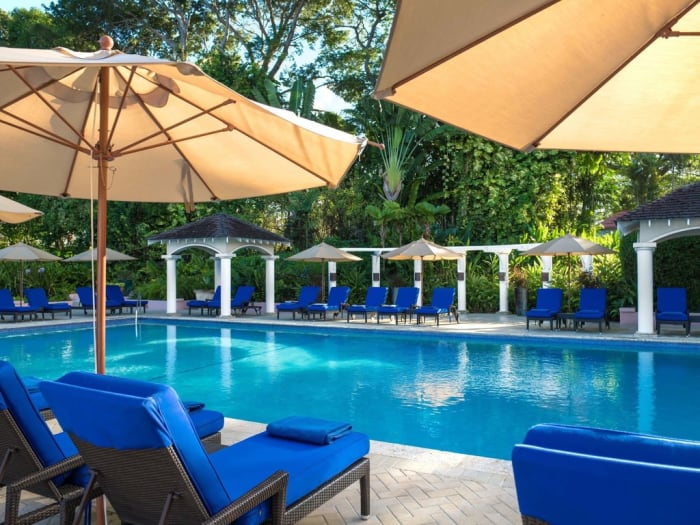
Les jardins luxuriants jouent un rôle essentiel dans la perception de la propriété. Ils apportent une profondeur végétale qui évite à l’hôtel de se réduire à une simple adresse de plage. Palmiers, feuillages tropicaux et massifs soigneusement entretenus composent un environnement qui isole visuellement sans enfermer. Cette présence végétale adoucit les lignes, crée des cheminements agréables et participe à une atmosphère paisible. Le sentiment qui domine n’est pas celui d’un grand resort spectaculaire, mais d’un lieu plus mesuré, où l’on peut facilement trouver son propre rythme.
Cette tonalité convient particulièrement aux couples et aux voyageurs venus chercher le calme. Le Fairmont Royal Pavilion ne semble pas conçu pour l’agitation permanente, mais pour des vacances où l’on alterne baignades, moments de repos, déjeuners face à la mer et promenades dans les jardins. Le service attentionné, associé à la signature Fairmont, soutient cette impression d’aisance discrète.
Le choix de Saint James renforce encore cette identité. La paroisse est l’une des plus connues de la Barbade pour son littoral, ses plages et sa réputation résidentielle. Elle permet de séjourner dans un environnement recherché tout en restant connecté à l’esprit de l’île. Dans ce contexte, le Fairmont Royal Pavilion apparaît comme une adresse cohérente, bien ancrée dans son paysage, qui fait de la simplicité bien orchestrée sa signature.
Chambres et suites
Au Fairmont Royal Pavilion, l’expérience des chambres et suites se lit d’abord dans la vue, la lumière et la proximité de la mer. Dans cette adresse balnéaire, le séjour tient à la manière dont la chambre prolonge le paysage. Les espaces laissent entrer le bleu, les reflets du soleil et le calme de la côte ouest de la Barbade.
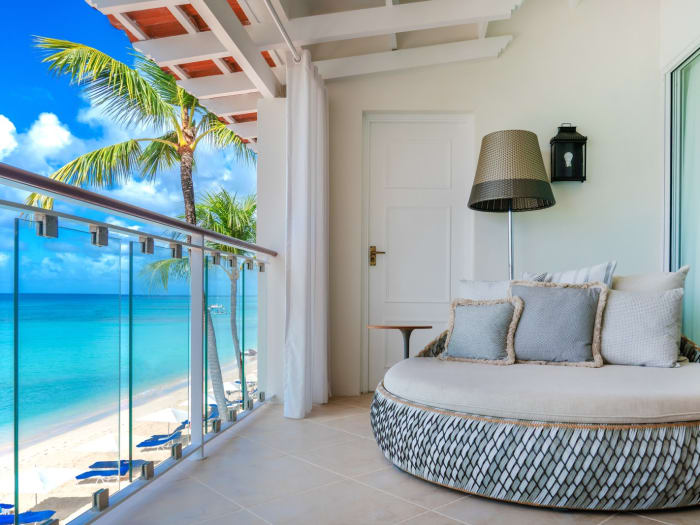
L’ensemble évoque un classicisme tropical maîtrisé. L’architecture caribéenne suggère des volumes ouverts, des circulations fluides et un rapport naturel à l’extérieur. Dans les chambres comme dans les suites, cela se traduit par de larges ouvertures, des terrasses ou balcons, des matières claires et une palette liée au sable, au bois et aux tonalités marines. Le décor accompagne le paysage.
Pour le voyageur, cette approche change la perception du séjour. La chambre devient un poste d’observation intime, un espace de retrait entre deux baignades, ou un salon privé pour lire et regarder la lumière sur l’eau. Dans un établissement à l’atmosphère paisible, cette dimension résidentielle compte beaucoup. Les couples y trouvent un cadre propice à un séjour lent, rythmé par les heures chaudes, les retours de plage et les soirées ouvertes sur la brise marine.
Le confort d’un hôtel 5 étoiles se prolonge dans des services comme le ménage quotidien, le service de couverture, la réception et la conciergerie à toute heure. Ces détails ont une incidence réelle sur l’expérience en chambre. Ils permettent de retrouver un espace toujours prêt, ordonné et accueillant. Cela compte particulièrement sous les tropiques, entre intérieur climatisé, terrasse et plage.
Les suites répondent au désir d’espace supplémentaire et d’une séparation plus nette entre les temps du séjour. Repos, lecture, préparation ou moments partagés y trouvent plus naturellement leur place. Dans un hôtel tourné vers les couples et les vacances tranquilles, elles offrent une manière plus ample d’habiter le lieu.
Ce qui distingue finalement les chambres et suites du Fairmont Royal Pavilion, c’est leur accord avec l’esprit général de la propriété. Le confort reste apaisé, directement relié à l’océan. Le luxe tient dans cette continuité : se réveiller avec la lumière des Caraïbes, retrouver le même horizon au fil de la journée, et sentir que la chambre prolonge le séjour en bord de mer.
La table
Dans un hôtel comme le Fairmont Royal Pavilion, la gastronomie ne se résume pas à la seule assiette : elle relève aussi de la mise en scène du repas, de la lumière à l’heure du petit-déjeuner, de la proximité de la mer au déjeuner, du rythme plus feutré du dîner lorsque la chaleur retombe. Faute d’éléments précis sur les restaurants ou sur une signature culinaire particulière, il est plus juste de lire l’expérience de table à travers ce que le lieu permet naturellement : une cuisine de séjour, pensée pour accompagner la vie au bord de l’eau, dans un cadre où l’océan reste le principal décor.
La Barbade possède une identité gourmande singulière dans les Caraïbes anglophones, nourrie de traditions créoles, d’influences britanniques et d’un rapport très direct aux produits de la mer. Dans une adresse de la côte ouest, on attend généralement une cuisine capable de faire dialoguer fraîcheur, simplicité apparente et précision d’exécution. Poissons et fruits de mer, fruits tropicaux, salades, grillades, desserts légers ou plus insulaires : ce registre s’accorde naturellement à un hôtel balnéaire haut de gamme où l’on cherche moins la démonstration que la justesse.
Le petit-déjeuner y tient souvent un rôle particulier. Dans ce type d’établissement, il marque l’entrée dans la journée et donne le ton du séjour. Face à l’océan, il devient un moment à part entière, presque un rituel. On y retrouve le plaisir des matinées lentes, de la lumière encore douce, d’un service attentif mais discret, et de cette sensation très caribéenne de commencer la journée dehors. Pour les couples, c’est souvent l’un des souvenirs les plus durables : non pas un repas spectaculaire, mais une succession de matins bien composés, dans un cadre qui suffit à donner de la profondeur au moment.
Le déjeuner, lui, s’inscrit dans le mouvement de la plage. Il accompagne les retours de baignade, les heures lumineuses, l’envie de prolonger le temps à l’extérieur. Dans un hôtel entouré de jardins luxuriants et ouvert sur la mer, la restauration de journée prend idéalement une forme souple, adaptée à ceux qui veulent passer sans rupture du sable à la table, puis de la table au transat. Cette fluidité est l’un des marqueurs d’un bon hôtel balnéaire : ne jamais compliquer ce qui peut rester simple et agréable.
Le dîner change naturellement de registre. À la tombée du jour, la côte ouest de la Barbade offre des couchers de soleil qui structurent la soirée autant que le repas lui-même. Le cadre devient plus intime, plus propice aux conversations prolongées, aux séjours en couple et aux moments où l’on prend le temps. Dans un établissement à l’atmosphère paisible, la table participe de cette transition vers une soirée plus calme, sans chercher à rivaliser avec le paysage.
En somme, la proposition gastronomique du Fairmont Royal Pavilion se comprend comme une extension de son art de vivre. Plus que l’affirmation d’une scène culinaire spectaculaire, elle semble répondre à une logique d’harmonie : bien manger, au bon moment, dans un environnement qui valorise la mer, la lumière et la détente. C’est une approche particulièrement cohérente pour les voyageurs qui choisissent la Barbade non pour collectionner les adresses, mais pour habiter pleinement un lieu, du premier café du matin au dernier verre face à l’horizon.
Bien-être & rythme insulaire
Au Fairmont Royal Pavilion, le bien-être tient d’abord au site et au rythme de la Barbade. En bord de mer, parmi les jardins tropicaux, le repos s’installe naturellement.
Ici, le séjour se règle sur des gestes simples. Passer de la chambre à la plage, profiter de la lumière, de l’air et du calme change la perception des journées.
La côte ouest de l’île s’y prête particulièrement. La mer y est souvent plus calme, et les journées s’organisent autour de la baignade, de la lecture et de la marche.
Dans cet environnement, le bien-être prend la forme d’une disponibilité retrouvée. Le service allège les contraintes pratiques et laisse plus de place au repos.
Les jardins participent pleinement à cette sensation. Ils apportent de la fraîcheur, invitent à la promenade et installent une distance bienvenue avec le rythme ordinaire.
Pour les couples, cette atmosphère paisible est particulièrement appréciable. Elle permet de composer ses journées librement, entre plage, ombre et fin d’après-midi face à la mer.
Le ménage quotidien, le service de couverture et la conciergerie disponible à toute heure renforcent discrètement cette qualité de repos. Ils évitent les frictions inutiles.
Le Fairmont Royal Pavilion se découvre ainsi comme une adresse de bien-être naturel. Son équilibre entre mer, jardins, architecture aérée et service attentif donne au séjour un rythme plus doux.
Conciergerie & services
La conciergerie accompagne le séjour avec une présence discrète et bien réglée. Elle facilite l’organisation sur place, des demandes pratiques aux attentions du quotidien.
Le service de majordome ajoute une dimension plus personnelle. Il apporte un suivi précis, avec ce sens du détail qui simplifie les journées.
À l’arrivée comme au départ, le transfert aéroport peut intégrer le Platinum Fast Track Service. Cette prestation est incluse dans le coût du transfert de luxe pour deux personnes.
Sur place, le stationnement est disponible, un point appréciable pour les voyageurs qui circulent librement sur l’île. L’ensemble compose un service fluide, pensé pour limiter les temps d’attente et alléger la logistique du séjour.
Ici, l’accompagnement reste mesuré. Il privilégie l’efficacité, la continuité et une forme de confort sans emphase, fidèle à l’esprit d’une adresse balnéaire bien tenue.
L’art de vivre à Saint James, Barbade
Séjourner au Fairmont Royal Pavilion, c’est aussi choisir une certaine idée de la Barbade, celle de la côte ouest et de Saint James. Cette partie de l’île évoque un art de vivre plus feutré. La beauté du littoral s’y conjugue avec une atmosphère résidentielle, des plages recherchées et un rapport direct à la mer.
Saint James concentre plusieurs des traits qui rendent la Barbade singulière dans les Caraïbes. L’île est anglophone, marquée par une histoire coloniale britannique encore perceptible dans certains usages. Elle demeure profondément créole dans son énergie, sa musique, sa cuisine et sa sociabilité. Cette double tonalité se ressent dans l’expérience du voyage.
Depuis un hôtel comme le Fairmont Royal Pavilion, l’art de vivre local commence souvent par des gestes simples. Marcher tôt sur la plage, observer la mer changer de couleur, s’attarder à table, laisser la fin d’après-midi s’étirer jusqu’au coucher du soleil. La côte ouest encourage ce relâchement maîtrisé. Elle invite à affiner son attention au cadre.
La Barbade possède aussi une forte culture maritime. Selon les conditions et les envies, les activités nautiques permettent d’approcher l’île autrement, depuis l’eau. Elles ajoutent au séjour une dimension plus active sans rompre son équilibre général. Saint James offre un environnement paisible, sans jamais être monotone.
L’art de vivre barbadien tient enfin à la qualité de l’accueil. Il y a dans l’île une chaleur relationnelle qui passe par une convivialité naturelle. Dans un hôtel haut de gamme, cette tonalité locale rencontre les standards d’un grand service international. On s’y sent à la fois pris en charge et libre.
Pour le voyageur, Saint James représente bien plus qu’une simple localisation. C’est une manière de vivre la mer sans précipitation, de goûter la Barbade par ses rythmes, ses lumières et son hospitalité. Le Fairmont Royal Pavilion s’inscrit dans cette logique, tourné vers l’horizon et le calme.
Réserver via MyConciergeHotel
Réserver le Fairmont Royal Pavilion via MyConciergeHotel, c’est aborder ce séjour à Saint James avec une logique de justesse plutôt que de simple transaction. Un hôtel de cette nature ne se choisit pas uniquement pour une catégorie ou une vue sur catalogue. Il se comprend à travers le type de voyage qu’il permet : une parenthèse balnéaire haut de gamme, tournée vers la mer, les jardins, le calme et une certaine idée du temps retrouvé. Notre rôle consiste précisément à vous aider à vérifier que cette promesse correspond à votre manière de voyager.
Pour un couple, par exemple, l’intérêt de l’adresse tient à son atmosphère paisible, à son implantation en bord de mer sur la côte ouest et à la continuité qu’elle offre entre chambre, plage et espaces extérieurs. Pour d’autres voyageurs, la priorité sera peut-être la facilité du service, la qualité de l’accueil à toute heure, ou la possibilité de profiter d’un séjour simple à organiser dans un environnement immédiatement lisible. Dans tous les cas, réserver avec accompagnement permet de poser les bonnes questions en amont : période de voyage, rythme souhaité, attentes en matière de tranquillité, intérêt pour les activités nautiques, besoin d’assistance logistique ou de conseils pratiques avant l’arrivée.
La Barbade connaît une saison particulièrement recherchée entre novembre et avril, comme le rappelle la description existante. Dans ces périodes, l’anticipation devient importante, d’autant plus pour une adresse appréciée des voyageurs en quête de soleil hivernal et de séjours à deux. Réserver tôt ne relève pas seulement d’une question de disponibilité ; cela permet aussi de mieux construire l’expérience globale, en pensant dès l’amont aux horaires d’arrivée, aux premiers jours sur place et aux demandes particulières qui peuvent faire la différence une fois sur l’île.
MyConciergeHotel apporte ici une valeur de lecture. Nous ne cherchons pas à surcharger le séjour d’options inutiles, mais à clarifier ce qui compte vraiment pour vous. Souhaitez-vous avant tout un hôtel où l’océan reste visible à chaque instant ? Un cadre propice au repos sans agitation ? Une adresse cohérente pour célébrer un voyage à deux ? Un accompagnement pour organiser les détails pratiques et profiter immédiatement de la plage à l’arrivée ? Ce sont ces nuances qui orientent une réservation réussie.
Notre approche consiste aussi à replacer l’hôtel dans son contexte. Le Fairmont Royal Pavilion n’est pas une adresse urbaine ni un resort pensé pour l’hyperactivité. C’est un refuge balnéaire de la côte ouest, à apprécier pour sa relation au paysage, son architecture caribéenne, ses jardins luxuriants et son service attentif. Le réserver dans de bonnes conditions, c’est donc s’assurer que l’on vient pour les bonnes raisons — et avec les bons repères.
En passant par MyConciergeHotel, vous bénéficiez d’une mise en perspective éditoriale et d’un accompagnement orienté vers la qualité du séjour. L’objectif est simple : faire en sorte que, dès votre arrivée à Saint James, tout soit déjà aligné avec ce que vous êtes venu chercher — la mer, le calme, la lumière et la sensation rare d’un voyage qui commence sans effort.