History & Heritage
Few London addresses embody the idea of a grand traditional hotel as naturally as The Savoy. Its name belongs to the city’s own vocabulary, alongside the West End theatres, the Thames embankments and the institutional facades of the Strand. What stands out is not merely the prestige attached to the property, but the way it forms part of a broader urban story: that of a capital where hotels have long served as social, diplomatic and cultural stages. The Savoy belongs to that rare category of establishments that do not simply host London; they help define its legend.
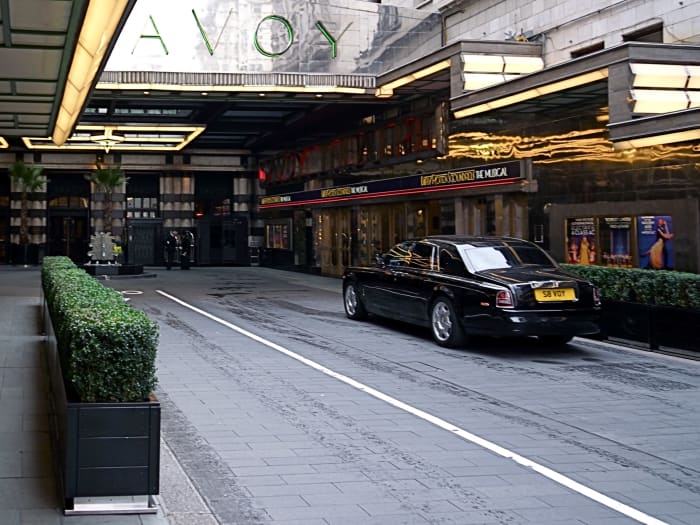
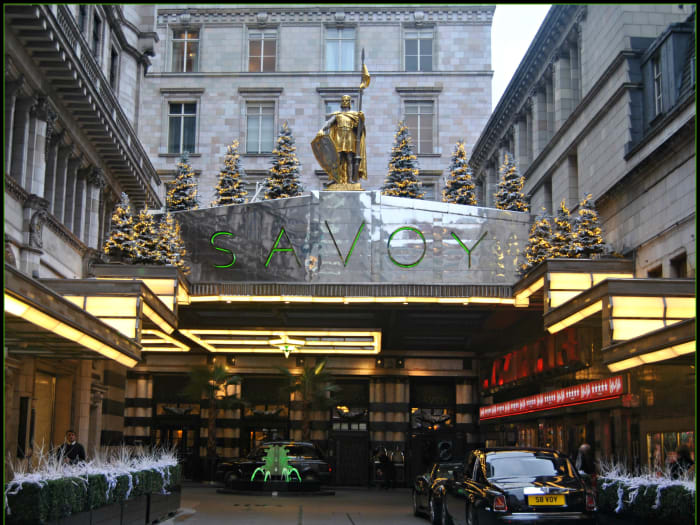
Its architecture and interiors play a central role in this impression of continuity. One senses a dialogue between classic elegance, generous volumes and more contemporary touches that keep the whole from feeling frozen in time. The hotel does not rely on nostalgia in an overt way; instead, it lets enduring codes speak for themselves through balanced proportions, noble materials, carefully judged decorative detail and a certain idea of ritual. In a house of this kind, heritage is never only about archives or a façade: it is visible in the way one arrives, the way one is received, and the way the public spaces unfold almost like a narrative.
The Savoy also belongs to a London tradition in which grand hotels have long been meeting places as much as places to stay. That dimension remains essential to its identity. Guests come not only to sleep here, but to reconnect with a particular city rhythm, a discreet sociability and a way of moving through London with greater ease. The lobby, lounges, restaurants and bars all contribute to this interior life that makes historic hotels landmarks for international visitors and local regulars alike.
Its Fairmont affiliation adds another layer: that of an international luxury hospitality group attentive to preserving the soul of heritage addresses while providing the standards of comfort expected today. At The Savoy, that balance matters greatly. The property retains the aura of an institution without becoming detached from contemporary habits. This is what explains its lasting appeal: a house rooted deeply enough in its past to remain instantly recognisable, yet alive enough to stay relevant.
Staying here therefore means choosing more than a five-star hotel. It means entering an address that says something meaningful about London: its taste for institutions, its sense of occasion, its relationship with service and elegance, and its ability to let history and modernity coexist within the same setting. For travellers drawn to hotel heritage, The Savoy is not merely a central base; it is an experience of continuity with the city itself.
The Property
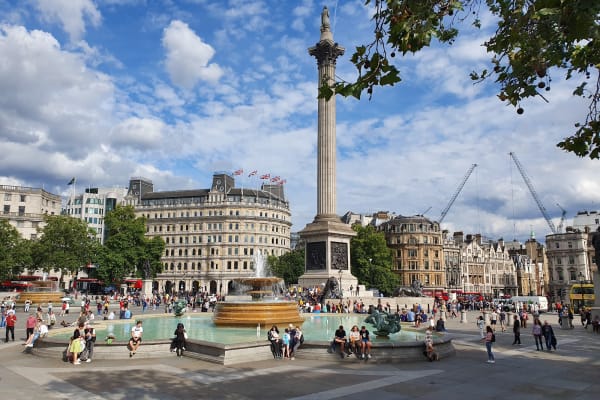
One of The Savoy’s greatest privileges lies in its setting, which allows guests to experience London within an exceptionally rich radius. Positioned close to the Thames in a lively, central area, the hotel stands at the meeting point of several versions of the capital: institutional London, cultural London, riverside London and the city of major shopping streets. This gives a stay here a rare quality: the ability to move easily between business engagements, heritage visits, theatre evenings and urban wandering without cumbersome logistics.
The immediate neighbourhood contributes greatly to the character of the address. This is a part of London where façades tell stories of centuries of change, and where theatres, clubs, institutions and restaurants create a vivid landscape from morning until late at night. For first-time visitors, that means straightforward access to many of the city’s major sights; for regulars, it promises a stay without dead time, where one can step out on foot, improvise a riverside detour, head to a performance or simply cross a few streets to shift atmosphere. The Savoy benefits fully from that energy while offering, inside, a sense of retreat and control.
That is one of its most subtle strengths: being in the heart of an intense London without absorbing its fragmentation. The hotel acts as an elegant filter between city and traveller. After the animation outside, guests return to ordered public spaces, a hushed atmosphere and service that restores rhythm and continuity. In a metropolis as dense as London, this ability to create transition between urban intensity and hotel comfort is essential. It helps explain why certain addresses become enduring refuges for business travellers and couples alike.
The property itself cultivates the aesthetic of a grand London hotel, where one expects poise, clarity and a degree of warmth. The public spaces are designed to be lived in at different moments of the day: early arrival, pause between meetings, return from a walk, pre-dinner drink, more formal supper. That versatility is a mark of quality. A great urban hotel is judged not only by its rooms, but by its ability to accompany the day in all its nuances. The Savoy appears designed precisely for that purpose.
For travellers seeking a central anchor point, the address offers a practical advantage: it simplifies London. Journeys are shorter, time is saved, and one can return easily to rest before going out again. For those after a more atmospheric experience, the proximity of the Thames adds a distinctly London dimension, almost cinematic in its shifting light, riverside perspectives and walks that make one feel part of the city rather than merely adjacent to it.
Rooms & Suites
In a hotel of this standing, a room is never merely functional; it must extend the identity of the house while delivering the calm and precision expected of a great urban stay. At The Savoy, that promise rests on a balance between classic codes and contemporary comfort. Guests find here what London does particularly well in historic hospitality: interiors that suggest tradition without sacrificing clarity, materials and finishes chosen for their lasting quality, and an atmosphere sufficiently restful to make one forget the city’s density just beyond the door.
Part of the appeal of an address like this lies in the range of expectations it can accommodate. Some travellers want above all a central, elegant and perfectly organised base from which to sleep well between busy days. Others seek a more enveloping experience, with additional space, a stronger sense of view, or the feeling of inhabiting London from a more residential setting. The rooms and suites of a grand hotel such as The Savoy typically respond to these different uses through a clear gradation of categories, from accommodation designed for efficiency to suites intended for a more expansive or ceremonial stay.
The style appears to follow the hotel’s broader logic: classic elegance enriched with more current touches. That often means restrained palettes, structured furniture, decorative elements chosen for coherence rather than effect, and particular attention to lighting, bedding and ergonomics. In a city where days can be long and tightly scheduled, such details matter more than one might think. A successful room is not only beautiful; it must allow one to recover, work, dress for the evening, enjoy a quiet coffee or extend a slow morning without friction.
Suites, in this kind of address, play a distinct role. They do not simply offer more square footage; they propose another way of staying. Guests look for greater privacy, clearer separation between the day’s different moments, sometimes a privileged perspective over the city or river, and a sense of installation closer to that of a reception apartment. For a romantic stay, a special occasion or a business trip requiring additional comfort, that category comes fully into its own.
Service naturally completes the in-room experience. Daily housekeeping, turndown service and a round-the-clock reception all contribute to the discreet continuity that distinguishes great hotels. Nothing need be demonstrative: luxury is measured in ease. Returning at the end of the day to a room restored to order, finding one’s belongings attended to with care, and knowing assistance is available at any hour—these are the details that turn a fine room into a true refuge.
Dining
In a grand London hotel, dining is never merely an additional service; it forms part of the property’s public identity. The Savoy belongs fully to that tradition in which one comes not only to stay, but to meet over a table, afternoon tea, a cocktail or dinner. This matters particularly in London, a city of appointments and social stages, where historic hotels have long played a central role in the art of receiving. Here, dining extends the architecture of the address: it expresses a certain idea of elegance, rhythm and urban pleasure.
What generally distinguishes houses of this level is their ability to offer several registers without losing coherence. Breakfast must be efficient enough for business travellers while remaining pleasurable for those who want to make the morning part of the stay itself. Lunch may serve as a discreet pause between meetings or a more settled moment after sightseeing. Dinner often takes on another tone: more dressed, more social, sometimes more festive depending on the setting. The bar, meanwhile, acts as a hushed theatre of London life, a place of transition between the city outside and the evening ahead.
At The Savoy, one may reasonably expect this plurality of uses. By virtue of its history and position, the hotel calls for a dining offer designed for a varied clientele: international residents, London regulars, couples on a city break and professionals in town for work. That implies consistency of execution, attentive service and an atmosphere sufficiently well judged that each guest feels at ease. In the best addresses, refinement never excludes clarity. One should be able to have a quick coffee, hold an important meeting, celebrate an occasion or extend the evening without the place losing its unity of tone.
Luxury hotel dining is also shaped by invisible details: the tempo of service, the quality of the welcome at a restaurant entrance, the way a table is laid, the acoustics of a room, the light at different hours of the day. These are the elements that give an address its character more than any spectacular formula. In a hotel like The Savoy, one expects precisely that discreet command, more enduring than fashion.
For the traveller, this means there is no need to leave the hotel constantly in order to experience London well. Some days call for an early start and a late return; others invite one to slow down, dine in-house, observe the life of the lobby from a lounge or begin the evening without changing address. Dining then becomes a structuring element of the stay.
Concierge & Services
The true mark of a great urban hotel lies not only in its décor or address, but in the quality of its daily service. At The Savoy, this matters all the more because the hotel attracts very different profiles: business travellers working to tight schedules, couples seeking an elegant city break, international visitors discovering London for the first time, and regulars expecting flawless execution. For all of them, the essential promise is the same: to make the city simpler, the stay smoother and each step more controlled.
The known services already suggest that logic. A 24-hour concierge and round-the-clock front desk form the basis of hospitality suited to an international capital where late arrivals, early departures and last-minute changes are common. Added to this are daily housekeeping, turndown service, luggage storage, laundry, wake-up service and multilingual staff. Taken individually, these may seem expected in a five-star hotel; brought together and properly delivered, they profoundly shape the experience of a stay.
The concierge is central here. In a city as dense as London, guiding a guest is not only about arranging a car or booking a table. It means understanding the rhythm of the trip, prioritising what matters, avoiding wasted time and proposing solutions suited to the neighbourhood, the season, the hour and the nature of the stay. A good concierge knows how to recommend a riverside walk, arrange access to a performance, suggest the best time to visit a major site or facilitate a day of meetings. In this context, luxury is as much about practical intelligence as it is about courtesy.
Housekeeping and in-room service also contribute to the sense of continuity. In a grand hotel, one expects the private space to be maintained with absolute discretion and reliable regularity. Turndown service in particular is not merely a traditional gesture; it marks the transition between day and evening, between outward activity and return to calm. This attention to the guest’s rhythm distinguishes houses that truly understand how their spaces are used.
Finally, the simplest logistical services are often the most appreciated. Being able to leave luggage before the room is ready or after check-out, have clothing cleaned promptly, request a dependable wake-up call before a train or flight, and be understood immediately by staff accustomed to an international clientele—all of this reduces the friction of travel. The Savoy appears to answer what one expects of a well-run London institution: precise, continuous hospitality that supports the stay without overplaying itself.
London Living from The Savoy
Staying at The Savoy also means adopting a particular way of living London. Not through a checklist of sights, but through a more nuanced, urban approach in which days are composed between culture, walks, appointments and dining. The hotel’s location encourages precisely that reading of the city. From here, London unfolds in sequences: a morning along the Thames, a visit to a major institution, lunch in the centre, a pause back at the hotel, then an evening at the theatre or in a bar. That fluidity matters, because it allows one to experience the capital not as an itinerary to complete, but as a setting to inhabit.
The relationship with the river plays an important role in this experience. The Thames is not merely a geographical marker; it structures the London imagination. Walking along its embankments, watching the light on the water, crossing a bridge to change perspective, following historic façades before reaching a livelier district—these simple gestures give the stay particular depth. From The Savoy, that dimension becomes naturally accessible.
Another major privilege of the area is its proximity to London’s cultural scene. Without listing institutions one by one, it is clear that the hotel lends itself especially well to stays shaped by theatre, exhibitions, concerts or heritage visits. One can go out in the late afternoon, reach a performance easily, then return late without the journey becoming a burden. For couples, this gives the stay a distinctly cinematic tone; for solo travellers, valuable freedom; for professionals, the possibility of adding a genuine city evening to a more utilitarian schedule.
London, however, is not defined only by its institutions. Its way of life also lies in its contrasts: the coexistence of old and contemporary, formal and relaxed, ritual and improvisation. The Savoy reflects that duality well. One may have a highly structured stay here, with bookings, meetings and dressed evenings; one may also choose a looser rhythm of late starts, aimless walks, pauses in the hotel lounges and dinners decided at the last minute. A good London address should accommodate both without ever seeming ill suited to either.
In that sense, The Savoy is not merely well located; it is a privileged vantage point on what is most enduring about London.
Book with MyConciergeHotel
Choosing The Savoy through MyConciergeHotel means approaching the property not as a simple hotel booking, but as the preparation of a coherent London stay. In a city where the hotel offer is abundant and where differences in location, atmosphere and rhythm have an immediate impact on the experience, the value of editorial and concierge guidance is real. The Savoy does not speak to every traveller in quite the same way: some will seek a grand classic for a first stay in London, others a central refuge for business, and others still the right setting for a couple’s escape. Booking intelligently therefore begins with clarifying how one intends to use the address.
MyConciergeHotel makes that finer reading possible. Beyond the five-star status and the property’s reputation, the aim is to identify the right length of stay, the most suitable room category, and the experiences worth arranging in advance in order to make the most of the location. In the case of The Savoy, that may mean favouring a room or suite according to the duration of the trip, anticipating busier summer or festive periods, planning cultural outings, or structuring arrivals and departures more comfortably. London rewards carefully prepared stays, especially when one wants to combine apparent spontaneity with seamless logistics.
The value of booking through a specialist also lies in the nature of great hotel institutions themselves. They offer much, but sometimes need to be read properly in order to reveal their full potential. A historic and central address such as The Savoy is not experienced in the same way whether one comes for forty-eight hours, for a week of meetings, for an anniversary or for a first discovery of the city. The role of editorial concierge guidance is then to turn a fine reservation into a well-composed stay.
Booking through MyConciergeHotel is ultimately about seeking continuity between the choice of hotel and the way one intends to live the destination. The Savoy calls for a London that is elegant, mobile, cultural and occasionally festive, yet never chaotic.