Histoire & positionnement
L’arrivée de Six Senses à Londres marque moins l’ouverture d’un simple hôtel urbain qu’une transposition, dans une grande capitale, d’une philosophie hôtelière d’abord associée au bien-être, au rythme juste et à une certaine idée du luxe conscient. Dans un paysage londonien déjà dense en grandes adresses, l’intérêt de cette maison tient précisément à ce déplacement de regard : ici, l’expérience ne se résume pas à une accumulation de signes extérieurs de prestige, mais à une manière de séjourner en ville sans se laisser absorber par son intensité. Le projet s’inscrit dans la continuité de l’identité Six Senses, connue pour articuler hospitalité haut de gamme, attention portée au corps, à l’environnement et à la qualité de l’expérience quotidienne.
À Londres, cette approche prend un relief particulier. La ville est l’une des plus stimulantes d’Europe, mais aussi l’une des plus rapides, des plus exigeantes et des plus saturées de sollicitations. Choisir une adresse comme Six Senses London, c’est donc souvent rechercher un point d’équilibre : rester connecté à la capitale, à ses quartiers, à ses institutions culturelles, à ses rendez-vous d’affaires ou à ses scènes gastronomiques, tout en retrouvant, au retour, une atmosphère plus contenue. C’est cette promesse de contraste qui structure le positionnement de l’hôtel. Le luxe y est contemporain, mais volontairement apaisé ; le service, attentif sans théâtralité ; l’esthétique, soignée sans froideur.
La marque apporte également avec elle un vocabulaire désormais bien identifié : durabilité concrète, bien-être intégré au séjour, design pensé pour la sensation autant que pour l’image, et attention portée aux usages réels des voyageurs. Dans une métropole comme Londres, cela signifie des espaces qui favorisent la respiration, des services qui simplifient les journées, et une manière de recevoir qui tient compte aussi bien des couples en escapade que des voyageurs d’affaires ou des habitués des grandes villes. On ne vient pas seulement ici pour dormir dans un bel hôtel, mais pour habiter Londres différemment, avec davantage de fluidité.
Cette adresse s’inscrit ainsi dans une évolution plus large de l’hôtellerie de luxe : celle qui ne sépare plus nettement l’hébergement, le soin, la restauration, la durabilité et l’expérience locale. Sans chercher à imiter les palaces historiques londoniens, Six Senses London propose une lecture plus actuelle de l’hospitalité haut de gamme, fondée sur le confort, la discrétion et la cohérence. Pour le voyageur, cela se traduit par une impression rare en ville : celle d’un refuge véritable, pensé non comme une parenthèse hors du monde, mais comme une manière plus équilibrée d’y circuler.
L'établissement et son ancrage londonien
Séjourner au Six Senses London, c’est choisir une adresse urbaine qui conjugue l’énergie de la capitale et une forme de retrait. Son emplacement dans un quartier animé facilite l’accès aux sites emblématiques de Londres. On peut organiser une journée dense, entre musées, rendez-vous, shopping, théâtre et promenades, sans multiplier les trajets. Dans une ville aussi vaste et polycentrique que Londres, cette facilité d’accès transforme concrètement l’expérience du séjour.
L’intérêt d’une telle implantation tient aussi à la nature même de Londres. Peu de villes offrent une telle diversité d’ambiances à l’échelle de quelques stations de métro. D’un quartier institutionnel à une enclave résidentielle, d’une grande artère commerçante à une rue plus discrète, la capitale britannique se découvre par strates. Une adresse bien située permet de naviguer entre ces mondes sans perdre de temps. Pour un premier séjour, cela aide à relier les incontournables. Pour un habitué, cela permet de composer un Londres plus personnel.
Le Six Senses London a été pensé comme un contrepoint à cette intensité. Son design contemporain crée une sensation de clarté et d’ordre. Dans une grande ville, le confort visuel et acoustique devient une composante majeure du luxe. Une ambiance paisible se construit par la circulation, les matières, la lumière et la manière dont les espaces communs accueillent. C’est souvent là que se joue la différence entre un hôtel spectaculaire et un hôtel réellement habitable.
Cette capacité à offrir une respiration au cœur d’un environnement dynamique convient à des profils variés. Les couples y trouvent une base élégante pour une escapade londonienne. Les voyageurs d’affaires profitent d’un cadre plus serein entre deux rendez-vous. Les amateurs de culture disposent d’un point de départ pratique pour rayonner dans la ville. La proximité des transports en commun renforce cette souplesse. À Londres, où l’on alterne volontiers marche, métro et voiture, cette connectivité participe directement à la qualité du séjour.
En définitive, l’établissement propose une manière claire d’habiter Londres. Son ancrage urbain s’accompagne d’une promesse de calme, de lisibilité et de confort. Pour beaucoup de voyageurs, c’est cette alliance qui définit aujourd’hui une grande adresse citadine.
Chambres et suites
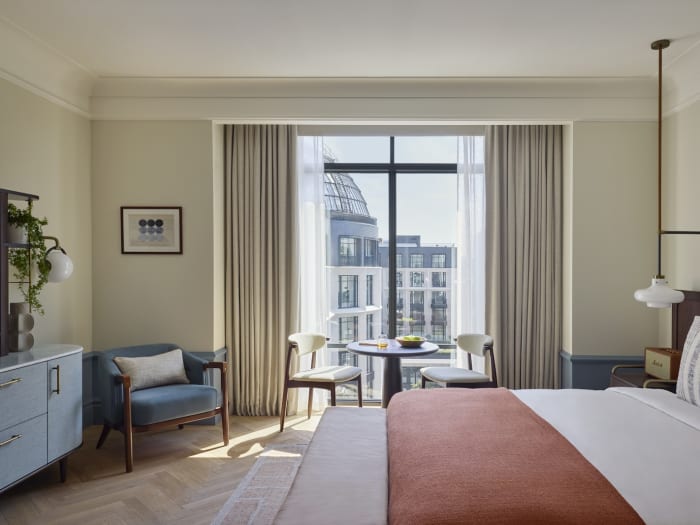
À Six Senses London, la chambre prolonge la philosophie de l’hôtel. Le design contemporain et l’atmosphère paisible y prennent une place centrale.
À Londres, où les journées peuvent être longues, le confort tient autant à l’esthétique qu’à la capacité à ralentir le rythme. Il repose aussi sur des gestes simples et une récupération réelle.
Les chambres et suites s’inscrivent dans une sobriété maîtrisée. Les lignes contemporaines privilégient l’équilibre plutôt que l’effet.
L’attention se porte sur une circulation fluide, un mobilier utile, une lumière travaillée et des matières choisies pour leur présence tactile. Une chambre réussie accompagne les usages du matin au soir.
L’identité Six Senses suggère une attention particulière à la qualité sensorielle du séjour. Cela se traduit par une ambiance calme, des tonalités apaisantes et une literie pensée pour la récupération.
Pour les voyageurs internationaux, cette cohérence compte. La chambre reste en continuité avec le reste de l’hôtel.
Les suites conviennent aux séjours prolongés, aux escapades à deux et aux voyages mêlant travail et temps personnel. Un espace plus généreux apporte respiration, intimité et confort.
Les services associés jouent aussi un rôle décisif. Service de chambre quotidien, couverture, blanchisserie et équipes disponibles en continu rendent le séjour plus fluide.
Les chambres et suites du Six Senses London suivent ainsi une logique claire. Offrir un refuge contemporain, calme et fonctionnel.
La table et les rythmes du séjour
Sans disposer ici de détails précis sur les restaurants, bars ou signatures culinaires de l’adresse, il reste possible de comprendre ce que la table représente dans l’univers d’un hôtel comme Six Senses London. Dans une maison centrée sur le bien-être, la restauration n’est généralement pas un simple service annexe ; elle participe à l’équilibre global du séjour. À Londres, où l’offre gastronomique extérieure est immense et où les journées peuvent s’étirer du petit-déjeuner d’affaires au dîner tardif, l’hôtel doit proposer une réponse souple, lisible et cohérente avec son identité.
La première attente concerne le tempo. Un grand hôtel urbain doit savoir accompagner des rythmes très différents : le café pris tôt avant une réunion, le déjeuner léger entre deux visites, le moment plus posé de l’après-midi, le dîner qui marque le retour au calme, ou encore l’envie de rester dans sa chambre après une journée chargée. Dans ce contexte, la qualité de l’expérience culinaire ne se mesure pas seulement à la sophistication de la carte, mais à la justesse de l’offre. Le vrai luxe consiste souvent à trouver, au bon moment, quelque chose de bien exécuté, servi avec précision et sans complication inutile.
L’approche Six Senses, telle qu’elle est généralement perçue, invite à imaginer une attention particulière portée à la fraîcheur, à l’équilibre et à la sensation de légèreté. Cela ne signifie pas une cuisine austère ; au contraire, les meilleures tables d’hôtels bien-être savent concilier plaisir, lisibilité des produits et confort digestif. Dans une ville comme Londres, cette orientation a du sens : elle permet de soutenir l’énergie du séjour sans l’alourdir. Pour les voyageurs qui alternent rendez-vous, marche et sorties culturelles, cette cohérence alimentaire devient rapidement appréciable.
Le cadre joue lui aussi un rôle essentiel. Dans un hôtel au design contemporain et à l’ambiance paisible, les espaces de restauration ont vocation à prolonger cette impression de calme maîtrisé. On y recherche moins l’effet spectaculaire que la qualité de présence : une salle où l’on peut réellement converser, un service attentif mais discret, une atmosphère qui convient aussi bien à un repas à deux qu’à un moment solitaire avec un journal ou un ordinateur. Dans l’hôtellerie de luxe actuelle, la table doit être capable d’accueillir des usages multiples sans perdre son identité.
Enfin, la restauration participe à la mémoire du lieu. Même lorsqu’un voyageur choisit de dîner souvent à l’extérieur, il garde le souvenir d’un petit-déjeuner bien pensé, d’un room service fiable, d’un verre pris dans un cadre serein ou d’un repas simple mais juste au retour d’une longue journée. Pour Six Senses London, la table s’inscrit vraisemblablement dans cette logique : nourrir le séjour avec cohérence, offrir des repères de qualité et accompagner l’expérience urbaine sans jamais la surjouer.
Spa & bien-être
Six Senses London affirme sa singularité par une approche centrée sur le bien-être. Il est recommandé de réserver les soins à l’avance.
À Londres, cette orientation n’a rien d’accessoire. Le spa urbain devient un moyen de retrouver du temps, du silence et de l’attention à soi.
La force d’un hôtel comme celui-ci tient à l’intégration du bien-être à l’ensemble du séjour. Il ne s’agit pas d’ajouter quelques cabines de soins.
Le séjour se pense aussi en termes de récupération, d’équilibre et de qualité de présence. Cela concerne l’atmosphère, le design et le rythme des espaces.
Cela touche aussi l’accompagnement du personnel. La cohérence entre les chambres, la restauration et les installations de soin compte tout autant.
Dans le contexte londonien, cette promesse prend une valeur concrète. Après une journée dense, le retour vers un espace consacré au soin change la texture du voyage.
Un massage, un rituel personnalisé ou un moment de détente peuvent suffire à rééquilibrer une journée. Une parenthèse silencieuse y contribue aussi.
C’est aussi pourquoi il vaut mieux anticiper les réservations. Un bon spa en ville compte parmi les cœurs de l’expérience.
L’identité Six Senses suggère une vision du bien-être moins standardisée. L’approche se veut plus individualisée, attentive aux besoins du moment.
Pour certains, il s’agira de récupération physique. Pour d’autres, de sommeil, de détente mentale, de remise en mouvement ou d’un recentrage plus global.
Le luxe tient ici à la capacité d’adaptation et à la qualité de l’écoute.
Le spa contribue aussi à redéfinir la relation à la ville. Le voyageur peut alterner intensité et relâchement, activité et pause.
Cette alternance rend le séjour plus durable, plus agréable et souvent plus mémorable. Au Six Senses London, le bien-être s’inscrit comme un principe d’hospitalité.
Conciergerie & services
Dans l’hôtellerie haut de gamme, la qualité d’une adresse se lit souvent dans ce qui ne se voit pas immédiatement. La continuité du service, la disponibilité des équipes et la capacité à répondre vite comptent autant que le reste.
Au Six Senses London, plusieurs fondamentaux dessinent cette ambition. Conciergerie 24h/24, réception 24h/24, service de chambre quotidien, service de couverture, consigne à bagages, blanchisserie, service de réveil et personnel multilingue.
Pris séparément, ces éléments peuvent sembler attendus dans un 5 étoiles. Ensemble, ils dessinent une promesse précise. Celle d’un séjour fluide dans une ville où les horaires et les déplacements changent sans cesse.
La conciergerie tient ici une place particulière. À Londres, elle ne sert pas seulement à réserver une voiture ou une table. Elle devient un outil d’orchestration du séjour.
Dans une capitale où l’offre culturelle, gastronomique et événementielle est immense, son rôle consiste à filtrer, hiérarchiser et ajuster. Elle aide à construire une journée réaliste, à éviter les pertes de temps et à trouver une solution de dernière minute.
La réception ouverte en continu répond à une réalité très londonienne. Arrivées tardives, départs matinaux, décalage horaire et changements de programme. Pour les voyageurs internationaux comme pour les professionnels, savoir que l’hôtel reste opérationnel à toute heure change la relation au séjour.
Le même raisonnement vaut pour la consigne à bagages. Elle se révèle précieuse lors d’une arrivée avant l’heure de check-in ou d’un dernier après-midi en ville avant un vol.
Les services d’étage participent à cette même logique de confort. Le housekeeping quotidien garantit une chambre toujours nette. Le service de couverture introduit une transition douce vers la nuit. La blanchisserie devient essentielle dès que le séjour se prolonge ou que l’on voyage léger.
Quant au personnel multilingue, il joue un rôle discret mais déterminant dans la qualité de l’échange, surtout dans une adresse internationale.
Les services du Six Senses London relèvent moins d’une liste standard que d’une attention continue. Ils permettent au voyageur de consacrer son énergie à la ville, à son travail, à ses proches ou à son repos.
L'art de vivre londonien selon Six Senses
Londres récompense les voyageurs qui composent leur propre rythme. Les grands classiques comptent, mais l’expérience se joue souvent dans l’équilibre.
Le Six Senses London s’y prête bien. Son accès aux sites emblématiques facilite les déplacements. Son atmosphère paisible évite de transformer le séjour en course.
C’est sans doute là sa pertinence londonienne. Musées, parcs, quartiers commerçants, scènes culinaires, marchés, théâtres et promenades architecturales se découvrent mieux avec de vraies pauses.
Un hôtel qui l’intègre devient plus qu’un hébergement. Il règle le tempo du séjour. On part tôt, on revient se poser, on repart dîner, puis la soirée se prolonge sans contrainte.
Pour un couple, l’adresse accompagne un séjour mêlant culture, shopping, détente et dîners choisis. Pour un voyageur d’affaires, elle préserve une part de bien-être.
Pour un habitué de Londres, elle offre une manière plus calme d’habiter la capitale quelques jours. Le luxe tient alors moins à l’effet qu’à la maîtrise du rythme.
Une approche durable ajoute une dimension à cet art de vivre. En ville, elle engage une manière plus responsable de concevoir l’hospitalité, les ressources, les usages et le confort.
Lorsqu’elle est traitée avec sérieux, elle change subtilement la relation au lieu. On séjourne dans un hôtel attentif à bien recevoir, avec davantage de conscience.
Vivre Londres depuis Six Senses, c’est choisir une version plus équilibrée de la capitale. Active, sans être épuisante. Raffinée, sans ostentation. Contemporaine, sans froideur.
Réserver via MyConciergeHotel
Réserver le Six Senses London via MyConciergeHotel, c’est aborder cette adresse avec une logique d’accompagnement plutôt qu’avec une simple transaction. Pour un hôtel dont l’expérience repose largement sur le bien-être, la fluidité et la personnalisation du séjour, cette différence compte. Un voyage à Londres se construit rarement autour de la seule chambre : il implique des horaires d’arrivée parfois complexes, des attentes spécifiques en matière de calme, de rythme, de soins, de restauration, de transports ou d’organisation sur place. Passer par un interlocuteur capable de comprendre ces priorités permet d’aligner plus finement l’hôtel avec le séjour réellement souhaité.
Cette valeur ajoutée est particulièrement sensible dans une grande capitale. Londres demande souvent des arbitrages : faut-il privilégier une arrivée matinale, optimiser un départ tardif, prévoir du temps au spa, organiser des déplacements, anticiper certaines réservations, ou simplement s’assurer que le séjour conservera une part de légèreté malgré un agenda dense ? Dans ce contexte, la réservation assistée prend tout son sens. Elle ne consiste pas seulement à confirmer une catégorie de chambre, mais à penser l’expérience dans son ensemble, avec une attention portée aux détails qui changent concrètement la qualité du voyage.
Pour le Six Senses London, quelques points méritent d’être anticipés. Le premier concerne naturellement le bien-être : comme le rappelle le conseil du Concierge, les créneaux de soins peuvent se remplir rapidement, en particulier le week-end. Réserver en amont permet de sécuriser les moments les plus recherchés et d’éviter qu’un séjour conçu pour ralentir ne se heurte à des disponibilités limitées. Le second point concerne le rythme londonien lui-même : selon la durée du séjour, le motif du voyage et les priorités de chacun, il peut être utile de calibrer l’expérience pour qu’elle reste équilibrée, sans surcharger les journées.
MyConciergeHotel apporte précisément cette lecture éditoriale et pratique. L’objectif n’est pas de surpromettre, mais d’aider à faire les bons choix : durée idéale, séquence du séjour, attention particulière à certains services, intérêt d’une suite pour plus d’espace, ou simple rappel des éléments qui comptent vraiment dans cette adresse — calme, design contemporain, accès facile à la ville, engagement durable, approche bien-être. Cette mise en perspective est précieuse pour les voyageurs exigeants qui veulent gagner du temps sans renoncer à la précision.
Au fond, réserver par notre intermédiaire revient à prolonger l’esprit même de l’hôtel : moins de friction, plus de cohérence, et une expérience pensée avec soin avant même l’arrivée. Dans une ville aussi intense que Londres, cette préparation fait souvent toute la différence entre un bon séjour et un séjour parfaitement tenu.