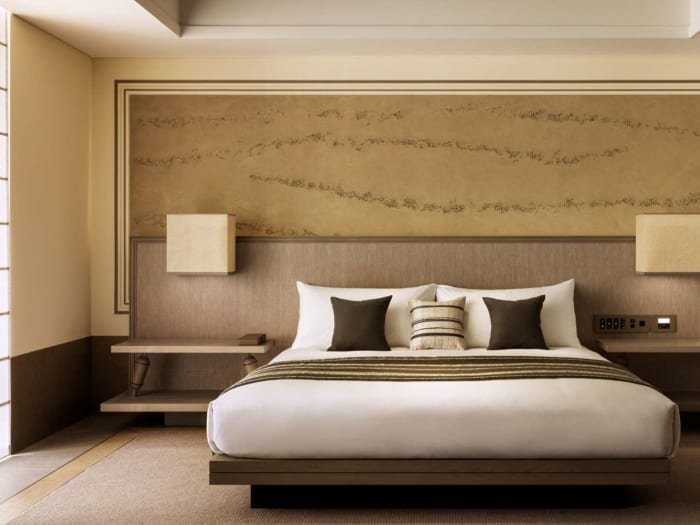
Janu Tokyo à Azabudai Hills : une adresse au cœur de Tokyo
Janu Tokyo s’inscrit dans un Tokyo de mouvement, de contrastes et de précision, avec cette qualité rare d’offrir un point d’ancrage immédiatement lisible dans une ville souvent déroutante pour le visiteur. L’hôtel se trouve au cœur de la capitale japonaise, dans un environnement qui permet de rejoindre avec fluidité les attractions majeures, les quartiers commerçants et les centres d’affaires. Cette centralité n’a rien d’abstrait : elle change la manière d’habiter Tokyo. On ne séjourne pas ici pour s’isoler du rythme urbain, mais pour l’aborder avec davantage de calme, de clarté et de confort.
L’adresse est étroitement associée à Azabudai Hills, un nom qui revient souvent lorsqu’on cherche Janu Tokyo ou que l’on s’interroge sur ce qu’est réellement l’hôtel. Cette implantation dit beaucoup de son positionnement. D’un côté, l’énergie d’un quartier contemporain, pensé pour la circulation, les rencontres et la vie quotidienne haut de gamme ; de l’autre, une atmosphère intérieure qui choisit la retenue plutôt que l’effet. Le voyageur qui arrive à Janu Tokyo découvre ainsi une version de la métropole plus apaisée, sans perdre le sentiment d’être au centre des choses.
La question “Janu Tokyo, c’est quel type d’hôtel ?” trouve ici une réponse concrète. C’est un 5 étoiles urbain qui mise sur l’expérience globale plutôt que sur la seule démonstration décorative. Le design contemporain, souvent mentionné par les voyageurs, ne cherche pas à impressionner par excès. Il travaille plutôt les volumes, la lumière et la circulation entre les espaces communs. Le résultat est une ambiance calme, presque enveloppante, particulièrement appréciable dans une ville où l’intensité visuelle et sonore peut être permanente.
Cette relation entre l’hôtel et la ville est l’un de ses traits les plus convaincants. Tokyo n’est pas un décor lointain aperçu depuis une tour ; elle reste présente, accessible, tangible. On peut envisager une journée de rendez-vous, de shopping, de visites culturelles ou de promenades de quartier, puis retrouver en fin d’après-midi des espaces conçus pour ralentir le tempo. C’est sans doute ce qui explique l’attrait de l’adresse pour des profils très différents : couples en escapade, voyageurs d’affaires, habitués des grandes capitales asiatiques, familles en quête d’un service structuré.
Le classement de l’hôtel dans The World’s 50 Best Hotels 2025 a renforcé sa visibilité internationale, mais l’intérêt de Janu Tokyo ne tient pas seulement à cette reconnaissance. Il tient à une forme de justesse. Dans une ville qui compte de nombreuses adresses de grand standing, l’hôtel se distingue par sa capacité à faire coexister urbanité, convivialité et sérénité. Les espaces communs, pensés pour favoriser les échanges, participent de cette identité. On y ressent moins la solennité d’un palace classique que l’élégance d’un lieu où l’on peut aussi bien se retrouver à deux que prolonger une conversation professionnelle ou commencer la soirée autour d’un verre.
Pour qui cherche un hôtel à Tokyo bien situé, avec un accès simple aux quartiers vivants et une vraie cohérence de style, Janu Tokyo apparaît comme une adresse particulièrement actuelle. Il parle à ceux qui veulent vivre la ville sans subir sa densité, et qui attendent d’un grand hôtel non seulement du service, mais une manière d’ordonner le séjour. Dans cette perspective, l’emplacement n’est pas un simple argument pratique : il devient le premier luxe.
Quel est l’esprit de Janu Tokyo ? Design contemporain et sociabilité maîtrisée
Lorsque l’on se demande ce qu’est Janu Tokyo, la réponse ne se limite ni à une adresse ni à un classement. L’hôtel affirme surtout un ton. Son identité repose sur un design contemporain à l’atmosphère apaisante, associé à des espaces communs conçus pour la convivialité. Cette combinaison mérite qu’on s’y arrête, car elle structure profondément l’expérience du séjour. Dans bien des établissements urbains haut de gamme, les parties communes servent de vitrine. Ici, elles jouent un rôle plus subtil : elles organisent la vie du lieu.
Le vocabulaire esthétique semble privilégier la netteté des lignes, la sensation d’espace et une forme de douceur visuelle. Rien n’indique une volonté de surcharge ou d’ostentation. Au contraire, tout suggère une recherche d’équilibre entre sophistication et lisibilité. C’est une manière très contemporaine d’envisager le luxe hôtelier : non plus comme accumulation, mais comme qualité de perception. On comprend rapidement que l’apaisement promis par l’hôtel n’est pas un slogan. Il naît de choix concrets dans la manière d’éclairer, de faire circuler, de ménager des respirations entre les usages.
Cette approche est particulièrement pertinente à Tokyo. Dans une ville où l’espace est précieux et où l’intensité urbaine peut être constante, un hôtel qui sait produire du calme sans se couper du monde acquiert une vraie singularité. Janu Tokyo ne cherche pas à reconstituer un refuge hors sol. Il propose plutôt une transition harmonieuse entre la densité de la métropole et le besoin de repos du voyageur. On y entre sans rupture théâtrale, mais avec le sentiment très net de changer de tempo.
Les espaces pensés pour socialiser constituent l’autre pilier de cette identité. Le mot est important. Il ne s’agit pas seulement de disposer de salons ou d’un bar, mais de créer des lieux où la rencontre paraît naturelle. Cette sociabilité maîtrisée répond à une évolution du voyage de luxe : beaucoup de voyageurs souhaitent aujourd’hui des hôtels qui permettent autant l’intimité que l’échange. Un rendez-vous informel, un apéritif prolongé, une conversation de fin de journée, un moment partagé avant de sortir dîner en ville — l’hôtel semble avoir été pensé pour accueillir ces séquences avec fluidité.
Cela explique aussi pourquoi l’adresse convient aussi bien aux couples qu’aux voyageurs d’affaires. Les premiers y trouvent une atmosphère élégante, contemporaine et peu démonstrative, favorable à une parenthèse à deux. Les seconds bénéficient d’un environnement qui facilite les transitions entre travail, réception et détente. Quant aux familles, elles peuvent apprécier cette organisation claire des espaces et la qualité d’un service attentif, capable d’adapter le séjour sans rigidité apparente.
Le service personnalisé, souvent relevé par les voyageurs, s’inscrit logiquement dans cette vision. Dans un hôtel de cette catégorie, l’attention ne se mesure pas seulement à la disponibilité, mais à la capacité de lire le bon niveau de présence. Savoir intervenir sans envahir, accompagner sans alourdir, anticiper sans théâtraliser : c’est souvent là que se joue la différence entre un grand hôtel agréable et une adresse réellement mémorable. Janu Tokyo semble cultiver précisément cette forme de précision discrète.
Au fond, l’esprit du lieu pourrait se résumer ainsi : une hospitalité urbaine de nouvelle génération, où le raffinement passe par la qualité des ambiances, la justesse des interactions et l’intelligence des espaces. Pour le voyageur qui cherche à comprendre ce qui distingue Janu Tokyo dans le paysage hôtelier de la capitale japonaise, c’est sans doute la réponse la plus juste. L’hôtel ne mise pas sur l’effet immédiat, mais sur une sensation durable de cohérence.
Janu Tokyo restaurants : une table cosmopolite entre Canton, Edomae et bar d’auteur
Parmi les recherches les plus fréquentes autour de l’adresse, la question des restaurants de Janu Tokyo revient avec insistance — et elle n’a rien d’anecdotique. Dans un grand hôtel contemporain, la restauration ne constitue plus un simple service annexe ; elle participe pleinement de l’identité du lieu. Ici, l’offre connue dessine déjà une cartographie intéressante, à la fois urbaine, internationale et très ancrée dans des gestes culinaires précis. Avec quatre adresses annoncées, l’hôtel compose un ensemble qui semble pensé pour accompagner plusieurs rythmes de séjour : déjeuner d’affaires, dîner de destination, comptoir plus intime, ou verre travaillé avec sérieux en fin de soirée.
Hu Jing donne le ton avec une proposition cantonaise portée par le Chef Yamaguchi. Le conseil le plus souvent retenu concerne le canard rôti signature, ce qui laisse entendre une cuisine attachée à la maîtrise des classiques autant qu’à leur mise en scène. Dans un contexte hôtelier, la cuisine cantonaise a cette vertu particulière d’être à la fois raffinée, lisible et profondément conviviale. Elle convient aussi bien à un repas formel qu’à une table partagée. On imagine volontiers Hu Jing comme l’une de ces salles où l’on vient autant pour la précision de l’exécution que pour le plaisir très direct d’une cuisine de textures, de jus et de découpes justes.
Autre registre, autre tempo : Iigura s’oriente vers un sushi de style Edomae, servi au comptoir, avec un menu saisonnier de sashimis et de petites assiettes. Cette mention suffit à situer l’expérience. Le comptoir, dans la culture japonaise, n’est pas un simple dispositif esthétique ; il engage une relation plus immédiate entre le geste, le produit et le convive. Le style Edomae, lui, appelle la précision, la retenue et le respect de la saison. Pour le voyageur étranger, c’est souvent l’une des formes les plus éloquentes de la gastronomie tokyoïte : une cuisine qui paraît minimaliste, mais dont chaque détail compte. Dans un hôtel international, proposer un tel format signale une volonté de ne pas lisser l’expérience locale.
Le Janu Bar complète cet ensemble avec une identité plus libre, guidée par la maîtrise technique de Shuzo Nagumo et par des associations de saveurs décrites comme éclatantes. Le bar, dans un hôtel de cette nature, est souvent le lieu où se révèle le mieux l’esprit de la maison. On y mesure le niveau de précision, mais aussi la capacité à produire une ambiance. Un grand bar d’hôtel ne sert pas seulement des cocktails : il met en scène une certaine manière d’occuper la soirée, entre rendez-vous, observation et relâchement. À Janu Tokyo, cette dimension semble pleinement assumée.
Ce qui rend l’ensemble convaincant, c’est moins l’accumulation des styles que leur cohérence. La table cantonaise, le comptoir de sushi Edomae et le bar d’auteur répondent à des attentes distinctes, mais racontent tous la même idée du luxe contemporain : diversité, exigence technique, et capacité à faire du repas un moment de séjour à part entière. Pour les voyageurs qui cherchent un hôtel où l’on peut dîner sans quitter les lieux tout en gardant une vraie sensation de destination, l’adresse marque des points.
La curiosité autour de l’afternoon tea, des desserts ou des attentions de célébration témoigne aussi d’une attente plus large : celle d’un hôtel capable d’accompagner les moments personnels, des retrouvailles aux anniversaires, des escapades romantiques aux pauses gourmandes. Sans promettre ce qui doit rester réservé au cas par cas, on peut dire que l’environnement s’y prête particulièrement bien. Dans une métropole où l’offre gastronomique est immense, Janu Tokyo a l’intelligence de ne pas rivaliser par dispersion. Il propose au contraire une sélection resserrée, lisible et suffisamment distinctive pour donner envie de rester à table.
Conciergerie 24h/24 et services : la précision discrète d’un grand hôtel de Tokyo
Dans une ville aussi dense et mobile que Tokyo, la qualité d’un séjour dépend souvent de détails que l’on remarque à peine lorsqu’ils sont bien exécutés. C’est là que les services d’un grand hôtel prennent tout leur sens. Janu Tokyo dispose d’une conciergerie 24h/24 et d’une réception ouverte en continu, auxquelles s’ajoutent un service de chambre quotidien, le service de couverture, la consigne à bagages, la blanchisserie, le nettoyage à sec et le service de réveil. Pris séparément, ces éléments relèvent du standard attendu dans l’hôtellerie de haut niveau. Pris ensemble, ils dessinent surtout une promesse de fluidité.
La conciergerie, en particulier, joue un rôle central dans une capitale où l’abondance de choix peut devenir une forme de complexité. Réserver une table, organiser des déplacements, ajuster un programme, recommander un quartier selon l’heure du jour ou le type de voyage, aider à transformer une courte escale en itinéraire cohérent : ce sont souvent ces interventions discrètes qui donnent au séjour sa véritable qualité. Dans un hôtel comme Janu Tokyo, on attend moins un service spectaculaire qu’une capacité à simplifier la ville sans l’appauvrir.
La réception 24h/24 répond à une réalité très concrète du voyage international. Arrivées tardives, départs matinaux, décalage horaire, modifications de dernière minute : Tokyo accueille des voyageurs venus de tous les fuseaux, et l’hôtel doit savoir absorber cette diversité de rythmes. Le fait de pouvoir compter à toute heure sur une équipe disponible change immédiatement le ressenti du séjour, surtout lors d’un premier passage dans la ville. Cette continuité du service contribue à l’impression de sécurité et d’aisance qui distingue les bonnes adresses des grandes adresses.
Le housekeeping quotidien et le service de couverture relèvent quant à eux d’un confort plus silencieux, mais essentiel. Dans un hôtel urbain, où l’on sort beaucoup et où les journées peuvent être longues, retrouver une chambre remise en ordre avec rigueur participe à la sensation de repos. Le luxe, ici, ne se manifeste pas par l’apparat, mais par la constance. Une chambre qui suit votre rythme, un retour facilité, des effets personnels gérés avec soin : autant de gestes qui allègent la charge mentale du voyage.
La blanchisserie et le nettoyage à sec sont particulièrement précieux pour les séjours d’affaires, les étapes prolongées ou les voyageurs qui enchaînent plusieurs destinations. Ils permettent de maintenir une forme de continuité élégante sans transformer le séjour en logistique. De même, la consigne à bagages s’avère indispensable dans une ville où l’on souhaite souvent profiter de quelques heures supplémentaires avant un vol ou après un check-out. Ce service, apparemment simple, peut faire la différence entre une journée morcelée et une journée encore pleinement utilisable.
On comprend alors pourquoi l’hôtel séduit aussi bien les couples, les professionnels et les familles. Chacun y trouve des bénéfices différents, mais tous profitent de la même architecture de service : disponibilité, discrétion, adaptabilité. C’est souvent ce qui répond indirectement à une autre question fréquente des voyageurs : faut-il absolument tout planifier à l’avance ? Dans un lieu bien tenu, certaines réservations restent naturellement souhaitables, surtout pour les tables ou les périodes de forte demande, mais la présence d’une conciergerie compétente redonne de la souplesse au séjour.
Au fond, les services de Janu Tokyo racontent une certaine idée de l’hospitalité contemporaine. Ils ne cherchent pas à se rendre visibles à tout prix. Leur ambition est plus subtile : rendre la ville plus simple, l’emploi du temps plus léger et le séjour plus continu. Dans une métropole où chaque minute compte, cette précision discrète vaut souvent autant qu’un grand décor.
Séjourner à Janu Tokyo : pour quels voyageurs, et dans quel rythme de ville ?
Certains hôtels se définissent d’abord par leur décor, d’autres par leur histoire, d’autres encore par la puissance de leur scène gastronomique. Janu Tokyo, lui, semble se définir par l’usage que l’on peut en faire. C’est une adresse pensée pour différents types de voyageurs, mais sans dilution de caractère. Les couples, les voyageurs d’affaires et les familles y sont explicitement à leur place ; ce qui est plus rare, c’est que cette polyvalence ne paraisse pas contradictoire. Elle tient à une organisation du lieu qui favorise à la fois le retrait, la circulation et la convivialité.
Pour un couple, l’intérêt de l’hôtel réside dans une forme d’élégance calme. Le design contemporain, loin d’imposer une atmosphère trop solennelle, crée un cadre propice à une escapade urbaine raffinée. On peut imaginer des journées passées à explorer Tokyo, puis un retour dans des espaces où l’on retrouve immédiatement une sensation de respiration. Le soir, la présence d’un bar soigné ou d’une table sur place évite de transformer chaque moment en déplacement supplémentaire. Dans une ville immense, cette capacité à condenser le confort sans réduire l’expérience est précieuse.
Pour les voyageurs d’affaires, l’adresse répond à d’autres attentes. La centralité, l’accès simple aux quartiers actifs, la réception et la conciergerie disponibles en continu, ainsi que l’ambiance des espaces communs, permettent de passer d’un rendez-vous à un autre avec une certaine fluidité. Mais l’essentiel est peut-être ailleurs : dans la possibilité de préserver un peu de qualité de séjour au milieu d’un agenda dense. Un grand hôtel d’affaires n’est pas seulement un lieu pratique ; c’est un lieu qui évite l’usure. Janu Tokyo semble comprendre cette exigence contemporaine, où le confort psychologique compte autant que l’efficacité logistique.
Les familles, quant à elles, peuvent trouver dans l’hôtel un cadre structuré et rassurant. Sans faire du séjour familial un argument tapageur, l’adresse paraît suffisamment flexible pour accueillir différents rythmes de journée, gérer les besoins de service et offrir une base confortable dans une ville qui peut impressionner. Pour des parents, la valeur d’un hôtel bien situé et bien organisé est immense : moins de temps perdu en trajets complexes, plus de facilité à revenir se reposer, davantage de liberté pour moduler le programme selon l’énergie de chacun.
Cette adaptabilité rejoint une autre interrogation fréquente : faut-il réserver Janu Tokyo à l’avance ? Pour une adresse de cette visibilité, la réponse pratique est généralement oui, surtout si l’on vise des périodes de forte affluence, des événements locaux ou certaines expériences de restauration. Mais au-delà de la réservation elle-même, ce que l’hôtel offre, c’est la possibilité de mieux composer son séjour. Il convient à ceux qui aiment planifier, tout comme à ceux qui veulent garder des marges de spontanéité, à condition d’être accompagnés avec méthode.
Le rythme idéal d’un séjour ici n’est ni celui du marathon touristique ni celui du repli complet. Janu Tokyo semble plutôt convenir à une manière plus mature de découvrir la ville : choisir quelques axes, alterner intensité et pauses, accepter que Tokyo se révèle par séquences. Une matinée consacrée à un quartier, un déjeuner sur place ou à proximité, un retour en fin d’après-midi, un verre au bar, un dîner sans traverser toute la ville — cette cadence mesurée correspond bien à l’esprit de l’hôtel.
C’est peut-être là sa vraie réussite. Dans une capitale qui pousse souvent à l’accumulation d’expériences, Janu Tokyo propose une autre lecture du voyage urbain : plus fluide, plus habitée, plus attentive à la qualité des transitions. On n’y séjourne pas seulement pour dormir au centre de Tokyo, mais pour mieux régler la ville à sa propre mesure.
Janu Tokyo : une adresse contemporaine déjà installée dans le paysage du luxe
Les questions les plus souvent posées à propos de l’hôtel reviennent à quelques fondamentaux : Janu Tokyo appartient à quelle famille hôtelière ? Quand a-t-il ouvert ? Pourquoi suscite-t-il autant d’attention ? Sans entrer dans une chronologie inutilement détaillée, il est clair que l’adresse s’inscrit dans une génération récente de l’hôtellerie de luxe internationale, celle qui cherche moins à reproduire les codes du palace classique qu’à proposer une hospitalité plus sociale, plus contemporaine et plus urbaine.
Cette orientation se lit dans tous les éléments connus de l’hôtel. Le design contemporain n’est pas ici un simple choix décoratif ; il est le signe d’un positionnement. L’époque n’attend plus seulement des grands hôtels qu’ils impressionnent. Elle leur demande d’être habitables, intelligents, lisibles, capables de répondre à des usages multiples sans perdre leur singularité. Janu Tokyo semble avoir été pensé dans cette logique. Son atmosphère apaisante, ses espaces communs conçus pour les échanges et son service personnalisé dessinent le portrait d’une adresse en phase avec les attentes actuelles du voyage haut de gamme.
Le fait d’avoir été classé dans The World’s 50 Best Hotels 2025 a naturellement accéléré sa notoriété. Ce type de reconnaissance agit comme un révélateur : il attire l’attention d’un public international déjà familier des grandes ouvertures, des nouvelles marques et des adresses qui comptent dans les capitales mondiales. Mais la visibilité ne suffit jamais à installer durablement un hôtel. Ce qui compte ensuite, c’est la cohérence entre la promesse et l’expérience vécue. Dans le cas de Janu Tokyo, cette cohérence semble reposer sur un trio particulièrement solide : emplacement central, style contemporain assumé, et qualité relationnelle du service.
La question de l’ouverture intéresse souvent parce qu’elle permet de situer l’hôtel dans le temps. Un établissement récent n’a pas le poids d’un héritage centenaire ; il doit construire sa légitimité autrement. Cela peut devenir un avantage lorsqu’il parvient à exprimer clairement une vision du séjour. Janu Tokyo paraît relever de cette catégorie. Il ne s’appuie pas sur la nostalgie, mais sur la pertinence. Il ne cherche pas à convoquer un âge d’or imaginaire de l’hôtellerie ; il propose une lecture actuelle du luxe, adaptée à des voyageurs qui veulent à la fois du confort, du style et une certaine liberté de mouvement.
Cette modernité n’exclut pas l’intemporalité. Au contraire, les hôtels qui vieillissent le mieux sont souvent ceux qui ont compris que la sophistication durable passe par la mesure. Une ambiance trop liée à un effet de mode se démode vite ; une atmosphère fondée sur la qualité des volumes, des matières, de la lumière et du service conserve sa force plus longtemps. C’est dans cette perspective que Janu Tokyo paraît intéressant. Il donne l’impression d’avoir été conçu non pour faire événement pendant une saison, mais pour s’installer dans la durée comme l’une des adresses de référence du Tokyo contemporain.
Pour le voyageur, cette position est lisible. Séjourner ici, ce n’est pas rechercher le cérémonial d’un grand hôtel historique, ni l’excentricité d’un lieu conceptuel. C’est choisir une adresse qui parle le langage international du luxe actuel tout en restant profondément ancrée dans sa ville. À Tokyo, où l’offre haut de gamme est aussi riche que diverse, cette clarté constitue déjà une forme de distinction.
En somme, Janu Tokyo répond à la curiosité qu’il suscite par une proposition simple à formuler, mais difficile à réussir : être un grand hôtel de son temps, sans agitation, sans surcharge, et avec assez de personnalité pour compter immédiatement dans le paysage.
Réserver Janu Tokyo : ce qu’il faut savoir avant le séjour
Réserver un hôtel comme Janu Tokyo ne consiste pas seulement à choisir une catégorie de chambre et des dates. Dans une ville aussi active que Tokyo, la préparation du séjour influence fortement l’expérience sur place. Plusieurs questions reviennent d’ailleurs régulièrement : faut-il réserver à l’avance, quel budget prévoir pour une nuit, y a-t-il un dress code, et à quel type de voyage l’adresse convient-elle le mieux ? Sans figer ce qui dépend des saisons et des disponibilités, quelques repères permettent d’aborder le séjour avec davantage de justesse.
La première recommandation est simple : anticiper. L’hôtel bénéficie d’une forte visibilité internationale, renforcée par son classement dans The World’s 50 Best Hotels 2025, et son emplacement au cœur de Tokyo en fait une option naturelle pour de nombreux voyageurs. Réserver en amont est particulièrement pertinent si le séjour coïncide avec des périodes de forte activité dans la ville, des événements locaux, ou si l’on souhaite organiser certaines expériences de restauration. Cette anticipation ne relève pas d’un réflexe anxieux ; elle permet au contraire de préserver une forme de liberté une fois sur place.
La question du prix par nuit est fréquente, mais elle appelle une réponse nuancée. Dans l’hôtellerie 5 étoiles de Tokyo, les tarifs varient selon la saison, le niveau de demande, la catégorie choisie et les avantages inclus. Plus qu’un chiffre isolé, il faut envisager un budget global cohérent avec le type de séjour recherché. Un hôtel comme Janu Tokyo se choisit autant pour son emplacement, son atmosphère et la qualité de ses services que pour la chambre elle-même. La valeur d’une nuit se mesure donc aussi au temps gagné, au confort ressenti et à la facilité avec laquelle l’hôtel permet de vivre la ville.
Le dress code est une autre interrogation récurrente, notamment pour les restaurants et le bar. Dans ce type d’adresse, l’élégance décontractée constitue généralement le registre le plus approprié. On évite les tenues trop informelles dans les espaces de soirée, non par rigidité, mais parce que le cadre appelle naturellement une certaine tenue. Tokyo est une ville où le sens du contexte compte beaucoup ; choisir une allure soignée, simple et contemporaine permet de circuler avec aisance entre l’hôtel, les tables et les rendez-vous.
Pour ceux qui prévoient un court séjour, l’hôtel se prête bien à une escapade d’une ou deux nuits, à condition de ne pas vouloir tout voir. Son intérêt réside précisément dans sa capacité à structurer une visite plus sélective. Mieux vaut choisir quelques quartiers, réserver une table, ménager des temps de pause et utiliser l’hôtel comme base active plutôt que comme simple point de chute. Cette approche donne souvent une impression plus riche de Tokyo qu’une course permanente d’un site à l’autre.
L’adresse convient particulièrement aux couples, aux voyageurs d’affaires et aux visiteurs qui apprécient les hôtels où l’on peut autant sortir que rester. C’est un point important au moment de réserver. Certains établissements ne prennent sens qu’à travers leur destination ; d’autres fonctionnent comme des mondes autonomes. Janu Tokyo semble occuper une position intermédiaire très séduisante : assez ancré dans la ville pour encourager l’exploration, assez complet pour que l’on ait plaisir à y revenir tôt.
En définitive, bien réserver Janu Tokyo, c’est surtout comprendre ce que l’on vient y chercher. Si l’on souhaite une adresse centrale, contemporaine, calme sans être distante, avec une vraie attention portée aux espaces communs et à la restauration, le choix devient particulièrement cohérent. Il ne reste alors qu’à organiser le séjour avec un peu d’avance, afin de laisser ensuite à Tokyo le soin de surprendre.