History & heritage
At Dove Mountain, luxury is expressed less through display than through a measured relationship with the landscape. In this part of southern Arizona, desert, mountains and light set the pace. The Ritz-Carlton Dove Mountain belongs to the tradition of the modern American resort: international standards of service, yet a strong sense of place. Here, heritage is not that of an urban palace or aristocratic residence, but of the American West shaped by open spaces, outdoor living and architecture designed to sit naturally within a mineral environment.
As part of The Ritz-Carlton, the hotel draws on a hospitality culture known for polished service, attention to detail and consistency throughout the guest experience. In Marana, that signature takes on a particular tone. The setting does not call for excess; it calls for restraint. Desert-inspired lines, natural materials, earthy colours and wide openings towards the surrounding mountains create an atmosphere that seeks not to dominate the site, but to belong to it.
The property’s identity also lies in the way it interprets the idea of retreat. In this region of Arizona, travellers are not simply looking for a comfortable room or a list of facilities. They come for a controlled sense of remoteness, for silence, for broad horizons, for the rare feeling that time slows as the sun moves across the ridges. The Ritz-Carlton Dove Mountain is shaped around that experience: a stay that moves between activity and contemplation, between morning hikes, golf, wellness treatments and long late afternoons facing the mountains.
Its heritage is therefore one of balance: between sophistication and visual simplicity, between international standards and regional character, between resort life and immersion in a desert landscape. This explains the hotel’s appeal to different kinds of guests: couples seeking a quiet interlude, families drawn by space and outdoor pursuits, and business travellers looking for focus without sacrificing comfort.
In the wider imagination of American luxury, Arizona occupies a category of its own. It is neither coast nor city, nor the conventional mountain retreat. It is a luxury of light, distance and nature. The Ritz-Carlton Dove Mountain offers a coherent interpretation of that idea, without unnecessary folklore. The hotel fully embraces its Marana setting and turns it into an experience in itself: one in which the landscape is not merely a backdrop, but the very fabric of hospitality.
The Establishment
Staying at The Ritz-Carlton Dove Mountain means entering a unique geography, that of a resort set in a tranquil natural setting in Marana. The mountains remain a constant horizon.
From the moment of arrival, the prevailing impression is one of space. The environment feels ample, open, almost breathable. This sensation plays a significant role in the overall experience of the hotel. It shapes the light in the common areas, the openness of the terraces, the rhythm of the days, and the perception of silence.
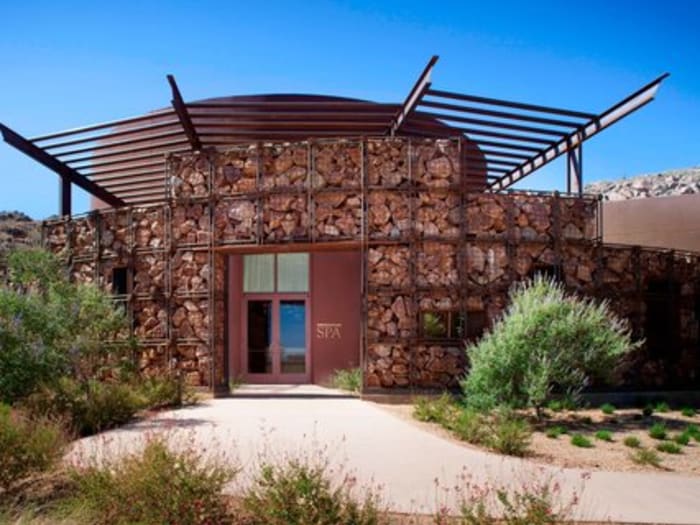
The architecture, inspired by the desert, plays a central role here. It employs a visual vocabulary that is coherent with the site. Low volumes, a mineral palette, and materials respond to the colours of the earth, rocks, and local vegetation. The result is a warm, understated, and legible aesthetic. Comfort is firmly rooted, designed so that the eye is never disconnected from the landscape. This continuity between indoors and outdoors is one of the successes of the establishment.
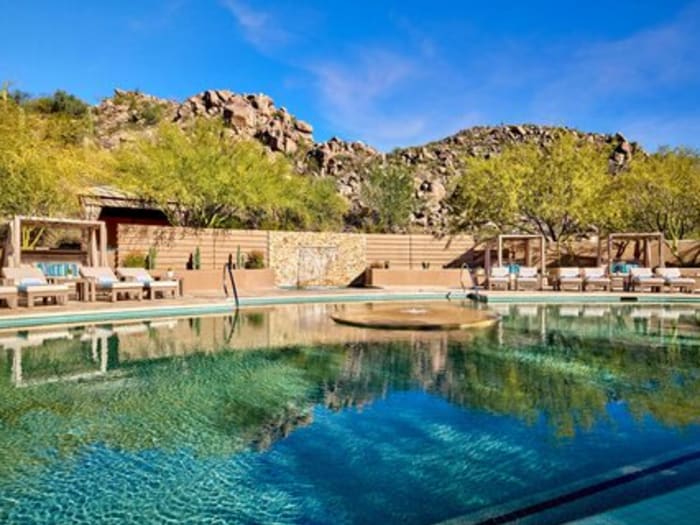
The views of the surrounding mountains are among the most immediate privileges of the stay. They change throughout the hours. In the morning, the clarity can seem almost graphic. By the end of the day, the contours take on softer gradients. Here, the weather and light become integral components of the experience. A coffee facing the landscape, a walk in the surroundings, a return to calm in the common areas, followed by dinner in the evening coolness, often suffice to give the stay its coherence.
The positioning of the hotel suits those seeking a comfortable retreat without excessive isolation. Marana offers just the right degree of remoteness. It allows for disconnection while enjoying a fully equipped resort. The site is equally suited for a long weekend or an extended stay. This is particularly true for travellers wishing to alternate between outdoor activities and relaxation. The presence of hiking trails and golf courses on-site enhances this autonomy. One can spend several days here without feeling as though they are going in circles.
What ultimately distinguishes the establishment is its atmosphere. The materials, light, and volumes create a sense of refuge. The hotel seems designed for various uses of the stay, without prioritising clientele. A couple can find the intimacy they seek. A family finds the necessary space. A business traveller finds the tranquillity conducive to work. This versatility is part of the quality of the place.
Rooms and suites
At a resort such as The Ritz-Carlton Dove Mountain, a room must do more than provide comfort; it must extend the landscape and offer a calm counterpoint to the visual intensity of the desert. This is often where a property of this kind succeeds or fails: in its ability to make accommodation feel restorative, quiet and aesthetically coherent. Here, the traveller’s expectation is straightforward. After a hike, a round of golf, a day of work or simply several hours spent outdoors, one looks for a place where temperature, light, materials and service combine to create an immediate sense of ease.
The spirit of the rooms and suites naturally follows the hotel’s wider architectural language. One can expect a palette in tune with the desert, restrained tones, clean lines and careful attention to the relationship between indoors and outdoors. In this setting, the view is never incidental. When a hotel benefits from such surroundings, the opening towards the surrounding mountains becomes an essential part of the in-room experience, adding depth to the stay, especially in the early morning and at dusk.
Comfort in a hotel of this category is also measured by the quality of everyday use. Daily housekeeping, turndown service, a 24-hour front desk and concierge, luggage storage and laundry are not mere conveniences; they shape a stay that feels smooth and unforced. For the guest, this means a room that remains ordered and welcoming, ready for an afternoon rest as much as for a late return after dinner. That continuity of service is particularly valuable in a resort where days can be active.
Suites, meanwhile, tend to suit longer or more expansive stays: family travel, the need for additional space, or a more residential rhythm. In such a wide-open environment, generous proportions take on particular meaning. Guests do not come only to sleep; they come to inhabit the desert for a while, with all that implies in terms of time spent looking out, reading, working or gathering with family. The appeal of a suite here lies as much in the possibility of slowing down as in comfort itself.
For couples, the attraction of the rooms and suites lies in the sense of discreet retreat. For families, it lies in the ease of a stay where everyone has room. For business travellers, it is the promise of an environment conducive to focus, away from urban noise. In every case, the ideal room at Dove Mountain is one that keeps the guest connected to the site while offering shelter when needed: enjoying the light without the heat, contemplating the ridges without sacrificing privacy, recovering silence without feeling cut off. That sense of balance, more than decorative effect, is what gives the accommodation its value.
Dining
In a setting as distinctive as Dove Mountain, dining takes on a particular role. It is not merely a hotel restaurant experience; it shapes the way one inhabits the place from morning to night. The desert imposes its own rhythm, light and temperature, and the table naturally adapts to that. Breakfast does not serve the same purpose as it does in a city: it opens the day, often before an outdoor activity or a restful morning. Lunch may become a pause for refreshment and shade. Dinner, meanwhile, accompanies the transformation of the landscape, when the heat recedes and the mountains take on deeper tones.
Without venturing into unconfirmed details about specific venues or culinary signatures, one can say that a five-star hotel of this category is expected to perform on several levels: quality of execution, consistency, a strong sense of setting and the ability to suit different kinds of stay. At Dove Mountain, that likely means an offering designed as much for leisure travellers as for families, couples and business guests. Some will want a composed dinner, others a simpler meal between activities, and others still a convivial moment on a terrace with a view. The real luxury here lies in making all these scenarios feel natural and effortless.
The setting is, of course, decisive. In a desert resort, dining with the ridges in view or in spaces open to the outdoors changes the very perception of the meal. Morning light emphasises the clarity of the landscape; evening light brings a softer, almost cinematic quality. This relationship with the surroundings is not incidental. It is part of the pleasure of dining, just as much as service or cuisine. A good meal in this context is also a moment of observation: the colours of the sky, the shadows on the rock, the gradual passage from day to night.
Service, in keeping with the Ritz-Carlton spirit, matters just as much. In a destination where guests often come to slow down, discreet precision is more valuable than display. One expects a team able to follow the guest’s rhythm, knowing when to advise and when simply to let the landscape speak. That sense of timing is essential, especially for couples’ stays or dinners that extend the day without interrupting its calm.
Dining at Dove Mountain should ultimately be understood as part of the wider wellness experience. After a hike or a round of golf, after a treatment or a day of meetings, the meal becomes a transition. It helps move from activity to rest, from full sun to the quiet of evening. In a property of this kind, gastronomic success depends not only on sophistication, but on the harmony between place, hour, service and the traveller’s frame of mind. That coherence, more than any signature effect, gives the stay its depth.
Spa & Well-being
Well-being at The Ritz-Carlton Dove Mountain is intrinsically linked to its surroundings. Here, the spa extends the landscape and invites guests to enter at a leisurely pace.
The desert, with its silence, dry air, and clear light, already induces a sense of decompression. The treatments enhance this feeling, giving it a more conscious form.
In this environment, well-being often begins before the spa appointment. It starts with a morning walk, a few moments spent gazing at the mountains, or simply taking a breath.
The resort provides a setting conducive to those looking to balance activity and recovery. A hike can be followed by relaxation, and a day of meetings can be complemented by a treatment.
The spa caters to various expectations, offering technical quality and an atmosphere in harmony with the desert.
This atmosphere reflects the site's characteristics: mineral tones, controlled freshness, filtered light, and a serene relationship with time.
The traveller seeks not just a service but a transition. The treatment helps to release the tension accumulated from travel, climate, or the pace of daily life.
For couples, the spa becomes part of a retreat for two. For solo travellers, it offers a moment of re-centering.
For families, it provides a breath of fresh air during an active stay. For business travellers, it rebalances a professional trip.
At Dove Mountain, well-being engages in a dialogue with the views, silence, air quality, and desert-inspired architecture.
In Marana, the luxury of well-being also lies in the option to do nothing. To extend the calm after a treatment. To let one’s gaze wander over the terrain.
The Ritz-Carlton Dove Mountain offers this active rest, where one finally ceases to be scattered. The spa is one of the most evident conduits for this experience.
Concierge & Services
In luxury hospitality, the most valuable services are often the most discreet. At The Ritz-Carlton Dove Mountain, comfort relies equally on the natural setting and the quality of service.
The property offers a 24-hour concierge, a 24-hour reception, daily room service, a turndown service, luggage storage, laundry services, wake-up calls, and a multilingual team. Together, these elements provide coherence to the stay.
In a destination resort, the concierge goes beyond handling one-off requests. It helps to pace the stay. In Marana, it can guide a day filled with hiking, golf, relaxation, and dining.
The reception, available at all hours, provides discreet security. It simplifies late arrivals, early departures, and returns after a long day. Luggage storage is also useful for early arrivals or late departures.
Laundry services take on significance in a stay that combines outdoor activities, desert climate, and business travel. They ensure a constant level of comfort without practical constraints.
Daily room service and the turndown service enhance the sense of order typical of grand establishments. After a day outdoors, returning to a refreshed space alters the rhythm of the stay.
The wake-up call service aligns with this logic. It supports an early departure for an activity, a meeting, or the gentler hours of the day.
Finally, the presence of multilingual staff underscores the international vocation of the property. It facilitates communication and contributes to a seamless hospitality experience, without any fanfare.
The Art of Living in Marana
Understanding The Ritz-Carlton Dove Mountain requires an understanding of Marana and a certain idea of southern Arizona. Here, the art of living is based on space, light, relief, and time.
The desert does not reveal itself immediately. It unfolds to those who are willing to slow down.
Marana attracts travellers in search of relaxation, escape, and mental clarity. The landscape structures the stay. The mountains guide the gaze. The light dictates the hours.
Mornings invite movement, with milder temperatures. Midday calls for retreat and rest. Late afternoons reopen the terraces, walks, and dinners.
Hiking, golf, and wellness treatments encapsulate the local lifestyle. Hiking provides a direct reading of the territory. Golf immerses one in the landscape for several hours. Wellness turns the desert into a place of re-centering.
For a European visitor, Marana offers a distinct change of scenery. Luxury takes on a different expression here. One does not come to hop from one address to another; one comes to experience a territory.
Watching the light change on the mountains, setting out early for a walk, returning to rest, dining at leisure, and then repeating the next day: this is a good way to embrace the local art of living.
The best time to visit is between October and April, when temperatures are milder. The experience of Marana is closely tied to the climate. Choosing the right moment allows for full enjoyment of the outdoors.
The Ritz-Carlton Dove Mountain acts as a mediator between the traveller and this Arizonian way of life. Comfortable enough to reassure, yet open enough to not obscure the desert.
Booking via MyConciergeHotel
Booking The Ritz-Carlton Dove Mountain through MyConciergeHotel means preparing for a stay where balance is as important as the location. In Marana, a resort experience is different from that of an urban hotel. The choice of dates, pace, room, and priorities directly influences the experience. This is where editorial and concierge support becomes invaluable.
The first consideration is the season. The best period extends from October to April, when temperatures are milder. In the desert, the quality of the stay largely depends on the use of outdoor spaces. If your plans favour hiking, golf, moments on the terrace, or open areas, it is advisable to plan the trip around this climatic window. Booking in advance also allows for better accommodation choices and anticipation of special requests.
The second consideration concerns the style of stay desired. For a couple's trip, tranquillity, views, leisurely time, wellness treatments, and unhurried meals are often prioritised. For a family, the focus will be more on space, logistical fluidity, and a balance between activities and rest. For a business trip, it is essential to maintain conditions for concentration while enjoying a more inspiring environment than a standard city hotel. In each case, the benefit of a supported reservation is to clarify expectations in advance.
MyConciergeHotel can also assist in considering the details that make all the difference: arrival and departure times, luggage management, the balance between rest and activities, prioritising a wellness treatment or a golf slot. In a comprehensive resort, the risk is not a lack of options but rather not organising them correctly. A good piece of advice often involves lightening the schedule rather than overloading it. Dove Mountain reveals itself better when given space.
Booking in advance allows for the best offers and personalised services. Anticipating is not just about seeking a better rate; it is about gaining more latitude to shape a stay in your image. In a place where landscape, light, and rhythm matter just as much, preparation is part of the journey. Booking via MyConciergeHotel is to choose a more attentive and thoughtful approach to your stay.