Histoire & esprit des lieux
À Marrakech, certaines adresses se distinguent moins par l’effet d’annonce que par une manière de composer avec la ville, sa lumière et ses traditions décoratives. L’Hôtel Palais Ronsard appartient à cette famille d’établissements qui privilégient l’atmosphère, la mesure et le goût du détail. Son identité s’inscrit dans un imaginaire clairement marocain, lisible dans l’architecture traditionnelle, dans le rapport au jardin et dans cette façon de ménager des espaces de retrait à l’écart de l’agitation urbaine. Plus qu’un simple hôtel, il se présente comme une maison d’hospitalité pensée pour ralentir le rythme, retrouver une forme de silence et vivre Marrakech autrement.
Le nom même de Palais évoque une certaine idée de la demeure d’apparat, mais ici l’esprit n’est pas celui d’un décor figé. Il s’agit plutôt d’une relecture contemporaine du raffinement marocain, où l’on retrouve les codes qui ont façonné l’art de recevoir dans le pays : importance des patios et des jardins, circulation fluide entre intérieur et extérieur, usage des matières artisanales, goût pour les volumes ombragés et les perspectives apaisées. Le résultat n’est pas une démonstration, mais un cadre cohérent, où chaque élément semble conçu pour servir le confort visuel et la sérénité du séjour.
L’appartenance à Relais & Châteaux inscrit également l’adresse dans une tradition internationale de maisons indépendantes attachées à la qualité de l’accueil, à l’ancrage local et à une certaine idée du voyage de caractère. Dans ce contexte, le luxe ne se résume pas à l’accumulation d’équipements : il se mesure à la constance du service, à la discrétion des équipes, à la capacité d’un lieu à créer une expérience personnelle. Pour un voyageur habitué aux grandes métropoles hôtelières, cette nuance compte. Elle fait la différence entre un séjour standardisé et une parenthèse réellement habitée.
Marrakech, de son côté, fournit un arrière-plan culturel d’une richesse rare. Ville de palais, de jardins, de remparts et de souks, elle a toujours entretenu un dialogue étroit entre architecture et climat, entre intimité domestique et théâtralité des espaces. Séjourner dans une adresse comme le Palais Ronsard permet de retrouver cette logique ancienne : derrière des lignes maîtrisées et des décors soignés, tout est pensé pour protéger, rafraîchir, filtrer la lumière et offrir des lieux de pause. Cette fidélité à une grammaire marocaine donne au séjour une profondeur particulière, surtout pour les voyageurs sensibles à l’histoire des formes et à l’élégance des traditions vivantes.
L’esprit des lieux tient enfin à sa promesse essentielle : offrir un refuge. Dans une destination aussi désirée que Marrakech, cette notion n’a rien d’accessoire. Après les couleurs denses de la médina, les jardins historiques, les galeries, les terrasses et l’énergie de la ville rouge, revenir dans un hôtel au calme change la perception du voyage. Le Palais Ronsard se comprend ainsi comme un contrepoint : un lieu de respiration qui permet de profiter de Marrakech sans en subir la cadence. C’est cette tension équilibrée entre immersion culturelle et retrait choisi qui fonde, en profondeur, le caractère de l’adresse.
L’établissement
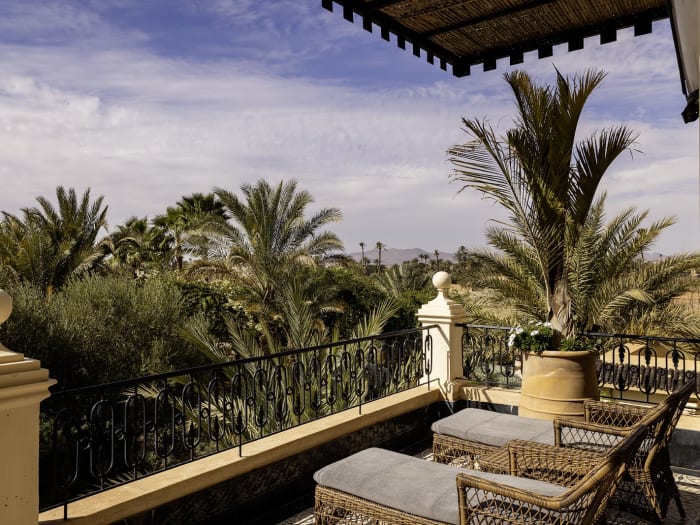
Le premier trait marquant du Palais Ronsard tient à son cadre. À Marrakech, où l’intensité urbaine fait partie du charme du voyage, trouver une adresse au calme constitue un véritable privilège. L’hôtel cultive précisément cette qualité rare : celle d’un refuge préservé, enveloppé de jardins luxuriants, où le séjour se déploie dans une temporalité plus lente. Cette présence végétale n’est pas un simple décor. Elle structure l’expérience, adoucit la lumière, crée des respirations visuelles et participe à cette sensation immédiate d’être à distance du tumulte.
L’architecture traditionnelle marocaine joue ici un rôle central. Sans chercher l’ostentation, elle installe un vocabulaire familier aux grandes demeures du pays : lignes équilibrées, espaces protégés, circulation pensée autour du confort thermique et de l’intimité, travail des textures et des ombres. Dans une ville où l’extérieur peut être éclatant, l’art de l’hospitalité passe souvent par la maîtrise de l’intérieur. Le Palais Ronsard semble l’avoir bien compris, en proposant des lieux qui invitent autant à la contemplation qu’au repos. Le regard y trouve des repères apaisants : perspectives sur la végétation, volumes mesurés, atmosphère feutrée.
Le rapport entre bâti et jardin est particulièrement important dans la culture marocaine, et cette adresse en donne une lecture convaincante. Les jardins luxuriants autour de l’hôtel ne servent pas seulement à embellir les abords ; ils prolongent l’architecture et en deviennent presque une pièce supplémentaire. Ils offrent des parcours, des points d’arrêt, des moments de fraîcheur, et composent ce sentiment de retraite qui fait souvent défaut dans les établissements trop urbains. Pour les voyageurs qui viennent à Marrakech autant pour l’énergie de la ville que pour la possibilité de se ressourcer, cet équilibre est précieux.
L’hôtel s’adresse naturellement à une clientèle en quête de tranquillité : couples, voyageurs hédonistes, amateurs d’adresses discrètes ou habitués des maisons où le service se fait oublier sans jamais manquer. La mention Relais & Châteaux renforce cette lecture. On y retrouve l’idée d’une maison de caractère, plus attentive à la cohérence de l’expérience qu’à l’effet de masse. Cela se ressent généralement dans la manière d’accueillir, dans le soin porté aux espaces communs et dans cette impression que l’on séjourne dans un lieu pensé pour être vécu, non simplement traversé.
Choisir le Palais Ronsard, c’est donc choisir une certaine manière d’habiter Marrakech. Non pas en plein flux, mais dans un rapport plus contemplatif à la destination. On part explorer la médina, les palais historiques, les jardins emblématiques, les musées ou les quartiers créatifs ; puis l’on revient dans un environnement où le calme reprend ses droits. Cette alternance entre intensité culturelle et retrait apaisé est l’un des grands luxes du voyage à Marrakech. Dans cette perspective, l’établissement ne se contente pas d’être une base confortable : il devient une composante essentielle du séjour, presque un lieu à part entière dans la cartographie intime du voyageur.
Chambres et suites
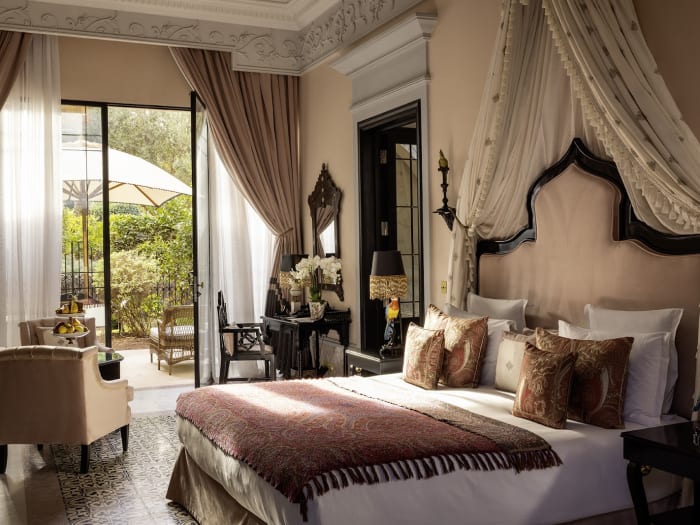
Dans une adresse comme le Palais Ronsard, la chambre n’est pas seulement un lieu où dormir : elle constitue le prolongement naturel de la promesse de calme formulée dès l’arrivée. Même sans multiplier les effets, tout laisse imaginer une conception du confort fondée sur l’espace, l’intimité et la continuité esthétique avec le reste de la maison. Dans l’hôtellerie de caractère à Marrakech, la réussite d’une chambre tient souvent à un dosage subtil : préserver l’âme marocaine sans tomber dans le décor thématique, offrir un luxe tangible sans rompre avec la sensation de retraite domestique. C’est précisément ce type d’équilibre que l’on attend ici.
L’architecture traditionnelle marocaine se prête particulièrement bien à cet exercice. Elle privilégie les volumes protecteurs, les ouvertures pensées pour la lumière plutôt que pour l’exposition, les matières qui absorbent la chaleur visuelle et créent un sentiment d’enveloppement. Dans une chambre réussie, ces éléments ne se lisent pas comme des références décoratives isolées, mais comme une ambiance d’ensemble. Le séjour gagne alors en profondeur : on ne se contente pas d’occuper une belle pièce, on habite un espace cohérent avec la ville et son climat.
Pour les voyageurs sensibles au repos véritable, plusieurs dimensions comptent. D’abord, le silence. Une adresse au calme à Marrakech prend ici tout son sens, car la qualité du sommeil et des temps de retrait conditionne largement la perception du séjour. Ensuite, la relation à l’extérieur. Dans un hôtel entouré de jardins luxuriants, la vue, la présence du végétal et la sensation d’être protégé par la nature participent au confort autant que le mobilier ou la literie. Enfin, il y a le rythme propre de la journée marocaine : matinées douces, heures lumineuses, fin d’après-midi plus contemplative, soirées lentes. Une chambre bien pensée accompagne ces moments plutôt qu’elle ne les contrarie.
Les couples trouveront naturellement dans ce type d’adresse un cadre propice à un séjour à deux. L’intimité, la retenue du service, l’ambiance paisible et l’esthétique marocaine composent un décor favorable à une expérience plus personnelle du voyage. On peut y imaginer un réveil tranquille, un temps de lecture à l’ombre, une pause après la médina, puis une soirée prolongée dans une atmosphère feutrée. Pour les voyageurs réguliers du segment 5 étoiles, ce sont souvent ces usages simples, mais parfaitement servis, qui définissent la qualité réelle d’une chambre.
Au fond, les chambres et suites du Palais Ronsard doivent se comprendre comme des espaces de décélération. Elles ne cherchent pas à rivaliser avec l’exubérance de Marrakech ; elles en offrent la contrepartie apaisée. C’est une nuance importante. Dans beaucoup de destinations, l’hôtel sert de point d’appui. Ici, il devient aussi un lieu où l’on choisit de rester, de prendre son temps, de laisser la journée se déployer sans programme trop serré. Lorsqu’une chambre permet cela, elle dépasse la simple fonction d’hébergement pour devenir l’un des souvenirs les plus durables du séjour.
La table
Dans l’univers des maisons Relais & Châteaux, la table occupe souvent une place déterminante, non comme simple service annexe, mais comme expression à part entière du lieu. Au Palais Ronsard, même sans détailler une carte précise, on peut raisonnablement attendre une approche fidèle à cet esprit : une cuisine pensée comme un moment de séjour, attentive au cadre, au rythme de la journée et au plaisir d’être à table dans un environnement préservé. À Marrakech, cette dimension prend une résonance particulière, tant la ville entretient un rapport charnel à l’hospitalité, aux parfums, aux épices, aux saisons et aux repas partagés.
Le vrai luxe, ici, tient sans doute à la manière dont la gastronomie s’inscrit dans l’atmosphère générale de l’hôtel. Un petit-déjeuner pris dans la douceur matinale, entouré de jardins ; un déjeuner léger entre deux explorations ; un dîner dans une ambiance plus feutrée après l’intensité de la ville : ces séquences façonnent la mémoire du voyage autant que les visites elles-mêmes. Dans une adresse au calme, la table devient un espace de transition, presque de recentrage, où l’on retrouve le temps long que Marrakech sait offrir à ceux qui acceptent de ralentir.
Le contexte marocain invite naturellement à une cuisine de sensations. Sans présumer de plats particuliers, on pense à une relation subtile entre produits, herbes, agrumes, épices et modes de cuisson qui privilégient la profondeur plutôt que l’effet. Dans les meilleures maisons, la gastronomie marocaine ou d’inspiration méditerranéenne se distingue par l’équilibre : générosité sans lourdeur, parfums nets, attention portée aux textures et à la température des mets. Pour une clientèle internationale, l’enjeu n’est pas seulement de découvrir une tradition culinaire, mais de la rencontrer dans une version lisible, élégante et adaptée au tempo d’un séjour haut de gamme.
Le décor joue également un rôle essentiel. Dans un hôtel marqué par l’architecture traditionnelle marocaine et la présence du jardin, l’expérience de table gagne en densité lorsqu’elle dialogue avec le lieu. Ombres portées, lumière de fin de journée, silence relatif, service discret : autant d’éléments qui donnent au repas sa tonalité. On ne vient pas seulement manger, on vient habiter un moment. Cette idée est particulièrement importante à Marrakech, où les plus belles adresses savent transformer un simple dîner en scène de douceur, sans jamais forcer la mise en scène.
Pour les voyageurs en couple ou pour ceux qui conçoivent le séjour comme une parenthèse de ressourcement, la table du Palais Ronsard a donc vocation à prolonger l’expérience de sérénité. Elle accompagne les journées plutôt qu’elle ne les surcharge. Elle permet aussi de choisir : rester à l’hôtel pour savourer pleinement son atmosphère, ou alterner entre découvertes extérieures et retour à une adresse où l’on sait que le dîner, le thé ou le petit-déjeuner seront servis dans un cadre cohérent avec le reste du séjour. Dans une maison de cette nature, la gastronomie n’est jamais isolée ; elle participe de l’art de vivre général, avec cette retenue précieuse qui distingue les lieux vraiment bien tenus.
Spa & bien-être
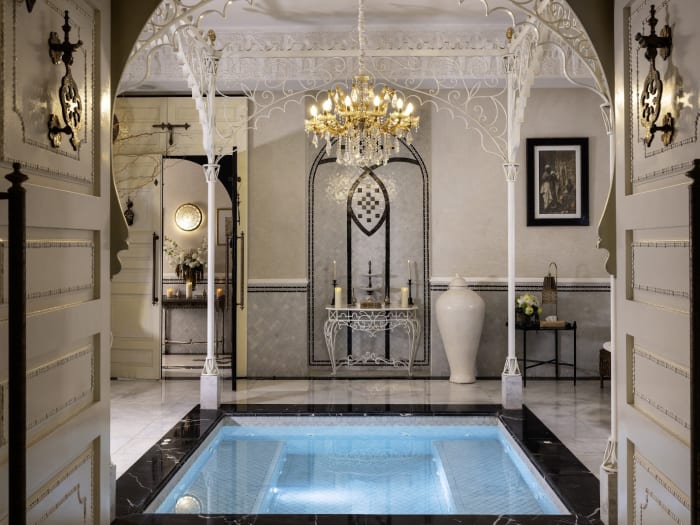
À Marrakech, la notion de bien-être ne relève pas d’une tendance récente ; elle s’inscrit dans une longue culture du soin, du bain, des rituels de purification et du temps accordé au corps. Dans une adresse comme le Palais Ronsard, cette dimension trouve naturellement sa place, d’abord par l’atmosphère générale de l’hôtel. Avant même tout soin, le calme, les jardins luxuriants, l’architecture protectrice et la qualité du silence agissent déjà comme une forme de décompression. C’est souvent le signe des maisons les plus abouties : le bien-être n’y commence pas à la porte du spa, mais dès l’instant où l’on entre dans le lieu.
Le voyage à Marrakech alterne volontiers intensité et relâchement. On marche dans la médina, on traverse des souks animés, on visite des palais, des jardins, des musées, on s’expose à la lumière, aux contrastes, aux parfums, au mouvement. Puis vient le besoin de ralentir. Un hôtel au calme répond précisément à cette nécessité. Le Palais Ronsard semble offrir ce contrepoint essentiel, où l’on peut retrouver un rythme plus lent, se reposer, lire, nager, prendre le temps d’un soin ou simplement laisser la journée se déposer. Dans cette perspective, le bien-être n’est pas un programme imposé, mais une disponibilité retrouvée.
Dans l’imaginaire marocain, les rituels de soin sont souvent associés à des gestes enveloppants, à la chaleur, à la vapeur, aux senteurs, aux matières naturelles et à une certaine lenteur des protocoles. Sans présumer des détails de la carte, on peut attendre d’une maison de ce niveau une approche attentive à cette tradition, éventuellement revisitée dans un cadre plus contemporain. Ce qui compte, pour le voyageur exigeant, n’est pas seulement la technicité du soin, mais la cohérence de l’expérience : qualité de l’accueil, sérénité des espaces, discrétion du service, sensation d’être pris en charge sans rupture avec l’esprit du lieu.
Le jardin joue ici encore un rôle fondamental. Dans les hôtels où le végétal est omniprésent, le repos prend une texture particulière. On récupère mieux lorsque le regard peut se poser sur des feuillages, lorsque les circulations ménagent des respirations, lorsque l’extérieur participe à l’apaisement intérieur. Cette relation entre nature et récupération est particulièrement précieuse à Marrakech, où la lumière et la chaleur donnent au moindre espace ombragé une valeur presque sensorielle. Le bien-être se construit alors autant dans les interstices du séjour que dans les moments explicitement dédiés au soin.
Pour les couples comme pour les voyageurs solos, le Palais Ronsard apparaît ainsi comme une adresse propice à une parenthèse de ressourcement. On y vient pour découvrir Marrakech, bien sûr, mais aussi pour retrouver une qualité de présence à soi que les grands voyages urbains ne permettent pas toujours. Un temps de massage, une pause au bord de l’eau, une matinée sans agenda, une fin d’après-midi dans le jardin : ces moments simples deviennent essentiels lorsqu’ils sont soutenus par un cadre juste. C’est là, souvent, que se loge le luxe véritable d’un séjour bien-être.
Conciergerie & services
Dans l’hôtellerie 5 étoiles, la qualité d’un séjour se mesure souvent à ce qui ne se voit pas immédiatement : fluidité de l’arrivée, précision de l’accueil, capacité à anticiper un besoin, discrétion des équipes, constance du service au fil des jours. Le Palais Ronsard, avec sa conciergerie 24h/24 et sa réception ouverte en continu, s’inscrit clairement dans cette logique de disponibilité permanente. Pour le voyageur, cela signifie une chose simple mais essentielle : pouvoir compter sur une présence fiable, à toute heure, qu’il s’agisse d’organiser une arrivée tardive, de gérer un départ matinal, de demander une recommandation ou de résoudre un imprévu sans friction.
La promesse d’une maison Relais & Châteaux repose en grande partie sur cette qualité de service. Elle ne consiste pas à multiplier les interventions, mais à rendre le séjour plus lisible, plus souple et plus personnel. Le service de chambre quotidien, le service de couverture, la consigne à bagages, la blanchisserie ou encore le service de réveil participent de cette architecture invisible du confort. Pris isolément, ces éléments peuvent sembler attendus dans cette catégorie d’hôtel ; réunis dans une maison bien tenue, ils produisent pourtant une différence sensible. Le voyage devient plus léger, plus simple, mieux accompagné.
À Marrakech, la conciergerie joue un rôle particulièrement important. La ville offre une densité d’expériences remarquable, mais elle demande aussi une certaine orchestration : transferts, réservations, choix des horaires, sélection d’itinéraires, conseils sur le rythme idéal des visites selon la saison. Dans ce contexte, un concierge disponible peut faire gagner un temps précieux et surtout éviter les erreurs de tempo. C’est d’autant plus vrai pour les voyageurs qui souhaitent conjuguer découverte et repos. Une bonne conciergerie ne remplit pas un agenda ; elle compose un séjour équilibré, en tenant compte des envies, de l’énergie du moment et de la recherche de tranquillité qui motive souvent le choix de cette adresse.
La présence d’un personnel multilingue, lorsqu’elle est assurée, contribue également à la qualité de l’expérience internationale. Elle facilite les échanges, réduit les malentendus et permet une relation plus naturelle avec les équipes. Dans une destination très fréquentée comme Marrakech, cette fluidité linguistique est loin d’être anecdotique : elle participe au sentiment d’être accueilli avec justesse, sans rigidité ni approximation. Pour une clientèle exigeante, ce confort relationnel compte autant que le confort matériel.
Au fond, les services du Palais Ronsard doivent être compris comme le prolongement de son atmosphère paisible. Ils ne cherchent pas à occuper l’espace, mais à soutenir le séjour avec précision. C’est une forme d’élégance discrète, particulièrement appréciable dans les maisons qui valorisent le calme. Le bon service n’interrompt pas l’expérience ; il la rend plus fluide. À Marrakech, où l’on peut passer en quelques heures de l’effervescence des souks à la quiétude d’un jardin, cette continuité est précieuse. Elle permet au voyageur de se sentir accompagné sans jamais perdre sa liberté.
L’art de vivre à Marrakech
Séjourner au Palais Ronsard, c’est aussi adopter une certaine manière de vivre Marrakech. La ville ne se résume pas à une liste de sites ; elle se découvre par strates, par contrastes, par moments choisis. Il y a bien sûr la médina, ses ruelles, ses souks, ses portes, ses places et cette intensité visuelle qui fait de chaque promenade une expérience sensorielle dense. Il y a aussi les jardins historiques, les palais, les musées, les galeries, les terrasses, les quartiers plus résidentiels, les ateliers d’artisans et les tables où l’on s’attarde. Marrakech se comprend moins dans la course que dans l’alternance : sortir, voir, sentir, puis revenir au calme.
C’est là que le positionnement de l’hôtel prend tout son sens. Une adresse paisible permet d’aborder la ville sans précipitation. On peut organiser ses journées autour de quelques séquences bien choisies plutôt que d’accumuler les visites. Le matin, lorsque la lumière est encore douce, se prête aux jardins, aux palais ou aux déambulations dans les quartiers anciens. Les heures les plus chaudes appellent une pause, un déjeuner tranquille, un retour à l’hôtel ou un temps de repos. En fin d’après-midi, Marrakech retrouve une autre énergie : les couleurs changent, les terrasses s’animent, les remparts prennent une tonalité plus chaude. Cette chorégraphie quotidienne fait partie du plaisir du séjour.
Le printemps et l’automne sont souvent considérés comme des périodes particulièrement agréables pour découvrir la ville, en raison d’un climat plus tempéré. Mais au-delà de la saison, tout dépend du rythme que l’on adopte. Les voyageurs qui profitent le mieux de Marrakech sont souvent ceux qui acceptent de ménager des respirations. Dans cette perspective, un hôtel entouré de jardins luxuriants n’est pas seulement un hébergement confortable ; il devient un outil de lecture de la destination. Il rappelle que Marrakech est aussi une ville de retraits, de patios, d’ombres, d’eaux et de jardins, autrement dit une ville conçue pour équilibrer l’intensité par la fraîcheur et l’intimité.
Pour les couples, cette approche est particulièrement séduisante. Elle autorise un voyage plus sensible, fait de promenades, de pauses, de repas prolongés et de retours à l’hôtel avant la soirée. Pour les voyageurs plus expérimentés, elle permet d’éviter l’écueil d’une Marrakech consommée trop vite. La ville gagne à être approchée avec mesure, en laissant place à l’imprévu, à l’observation et au plaisir simple d’un thé, d’un jardin ou d’une conversation. C’est souvent dans ces instants secondaires, en apparence, que se loge le souvenir le plus juste.
Le Palais Ronsard accompagne cette vision d’un Marrakech plus nuancé. Il ne cherche pas à concurrencer la ville, mais à en offrir la chambre d’écho apaisée. On y retrouve ce que l’on vient chercher ici au fond : la beauté des formes, la richesse d’une culture de l’accueil, le goût des matières, l’importance du jardin, et cette capacité rare à faire coexister l’énergie et le repos. L’art de vivre marrakchi, lorsqu’il est bien compris, tient précisément à cet équilibre. Et c’est cet équilibre qu’une adresse au calme permet de saisir pleinement.
Réserver via MyConciergeHotel
Réserver le Palais Ronsard via MyConciergeHotel, c’est aborder le séjour avec une logique de conseil plutôt que de simple transaction. Pour une adresse de cette nature, le choix de la chambre, le bon tempo du voyage, l’organisation de l’arrivée et la préparation des temps forts comptent presque autant que la réservation elle-même. Marrakech est une destination généreuse, mais elle se vit mieux lorsqu’elle est pensée avec justesse : horaires de vol, transfert depuis l’aéroport, durée idéale du séjour, équilibre entre découvertes et moments de repos, demandes particulières à signaler en amont. Une réservation bien accompagnée permet précisément d’ordonner ces éléments sans alourdir l’expérience.
L’un des premiers points d’attention concerne l’arrivée. Dans une ville que l’on découvre parfois pour la première fois, prévoir son transfert à l’avance reste un choix particulièrement judicieux. Cela simplifie l’atterrissage, évite les incertitudes logistiques et permet d’entrer immédiatement dans le rythme du séjour. Pour une adresse au calme comme le Palais Ronsard, cette fluidité initiale a son importance : elle conditionne la qualité de la première impression et donne le ton d’un voyage placé sous le signe de la sérénité. C’est un détail en apparence, mais les voyageurs expérimentés savent qu’il fait souvent toute la différence.
Réserver avec accompagnement permet aussi d’ajuster le séjour au profil du voyageur. Un couple en escapade ne recherchera pas la même cadence qu’un amateur d’art et d’architecture ou qu’un habitué de Marrakech venu surtout pour se reposer. Certains souhaiteront privilégier les matinées de visite et les retours précoces à l’hôtel ; d’autres voudront laisser plus de place aux déjeuners, aux jardins, au bien-être ou aux dîners tranquilles. Dans tous les cas, une approche sur mesure aide à tirer parti de ce que l’hôtel offre de plus précieux : son atmosphère paisible, son cadre végétal et sa capacité à servir de refuge après la ville.
MyConciergeHotel peut également s’inscrire comme interface utile entre le désir du client et le tempo réel du séjour. Cela signifie, très concrètement, aider à formuler les demandes importantes avant l’arrivée, à anticiper certains besoins pratiques, à clarifier les priorités et à éviter les programmes trop chargés. Dans une destination aussi riche que Marrakech, le risque n’est pas de manquer d’idées, mais d’en prévoir trop. Or le Palais Ronsard se prête particulièrement bien à un voyage plus respiré, où l’on accepte de consacrer du temps à l’hôtel lui-même.
Choisir cette voie de réservation, c’est donc privilégier une expérience plus cohérente, plus fluide et plus personnelle. Le luxe contemporain ne réside pas seulement dans le niveau de l’adresse, mais dans la qualité de préparation du séjour. Lorsqu’elle est bien pensée, la réservation devient déjà une première forme d’hospitalité. Et pour une maison marquée par le calme, les jardins et l’élégance discrète, cette préparation en amont permet d’entrer dans le voyage avec la bonne disposition : celle qui consiste à profiter pleinement de Marrakech, sans jamais renoncer au confort d’un véritable refuge.