Une adresse née d’un rapport intime au paysage
À Monteverde, certaines adresses se contentent d’offrir un point de vue sur la forêt nuageuse ; d’autres semblent avoir été pensées à partir d’elle. Hotel Belmar appartient à cette seconde catégorie. Ici, l’expérience ne repose pas sur une démonstration de luxe spectaculaire, mais sur une manière plus subtile d’habiter un territoire d’exception. Le bâtiment s’inscrit dans un environnement préservé, avec une architecture qui cherche moins à dominer le relief qu’à s’y accorder. Cette relation au site donne le ton dès l’arrivée : l’hôtel ne se présente pas comme un refuge coupé du monde, mais comme une porte d’entrée vers l’un des écosystèmes les plus singuliers du Costa Rica.
Monteverde occupe depuis longtemps une place particulière dans l’imaginaire des voyageurs attirés par la nature. La région est associée à la forêt nuageuse, à une biodiversité remarquable et à une culture de la préservation qui a façonné son identité. Dans ce contexte, Hotel Belmar s’inscrit avec cohérence dans une tradition locale où l’hospitalité ne peut être dissociée de l’attention portée au vivant. Son engagement en faveur de l’écotourisme n’apparaît pas comme un argument décoratif ; il structure la manière dont le séjour est pensé, depuis l’intégration du bâti dans le paysage jusqu’aux activités proposées autour de l’observation de la faune et des sentiers environnants.
Cette approche explique aussi l’atmosphère de la maison. Le ton est chaleureux, sans rigidité, avec ce sens de l’accueil qui privilégie la qualité de présence plutôt que l’apparat. On vient ici pour ralentir, pour retrouver une échelle plus juste, pour laisser la météo, la lumière et les sons de la forêt redessiner le rythme de la journée. Le brouillard qui monte, l’humidité légère du matin, le passage des oiseaux, les ouvertures sur la canopée : autant d’éléments qui participent à une forme de luxe devenu rare, celui d’une immersion réelle.
Le fait d’avoir été cité par Travel + Leisure World’s Best 2025 éclaire la place qu’occupe aujourd’hui l’hôtel dans le paysage hôtelier international, mais l’essentiel est ailleurs. Ce qui marque ici, c’est la constance d’une vision. Hotel Belmar ne cherche pas à reproduire les codes interchangeables de l’hôtellerie haut de gamme mondiale ; il affirme au contraire une identité ancrée dans Monteverde, dans sa topographie, dans son climat et dans sa biodiversité. Cette fidélité au lieu donne au séjour une profondeur particulière. On ne se contente pas d’y dormir confortablement : on y entre dans un milieu, dans une atmosphère, dans une manière de voyager où la beauté du cadre et la conscience écologique avancent ensemble.
Pour les couples, l’adresse a quelque chose d’intimiste, presque contemplatif. Pour les familles, elle ouvre un terrain d’exploration concret, fait de promenades, d’observations et de découvertes partagées. Dans les deux cas, l’hôtel réussit ce que peu d’établissements parviennent à faire avec justesse : transformer la nature environnante en expérience quotidienne, sans jamais la réduire à un simple décor.
L’établissement, entre forêt nuageuse et horizon ouvert
Le premier privilège d’un séjour à Hotel Belmar tient à son implantation. Monteverde n’est pas une destination que l’on aborde comme une station balnéaire ou une capitale culturelle ; c’est un territoire d’altitude, de reliefs, de brumes et de lisières, où le regard se perd dans les couches successives de végétation. L’hôtel tire pleinement parti de cette géographie. Les vues sur la forêt nuageuse comptent parmi ses signatures les plus évidentes, mais elles ne se résument pas à un panorama fixe. Ici, le paysage change d’heure en heure, parfois de minute en minute, selon la lumière, le vent et la densité des nuages. Cette mobilité du décor donne au séjour une qualité presque méditative.
L’architecture participe directement à cette expérience. Plutôt que d’imposer une présence ostentatoire, le bâtiment semble chercher l’équilibre avec son environnement. Les lignes, les volumes et les ouvertures sont pensés pour accueillir le dehors : la végétation, l’air, les sons, les variations climatiques. Cette intégration au paysage n’a rien d’anecdotique ; elle conditionne la manière dont on habite les lieux. On passe naturellement du refuge intérieur à la contemplation extérieure, sans rupture. Le confort se mesure alors autant à la qualité des espaces qu’à leur capacité à laisser entrer Monteverde dans le quotidien.
Ce rapport au site fait aussi de l’hôtel un excellent point de départ pour découvrir la région. Les sentiers alentour, l’observation des oiseaux et les excursions proposées permettent d’approcher la biodiversité locale sans artifices. Monteverde attire depuis longtemps naturalistes, photographes et voyageurs sensibles aux milieux préservés. Hotel Belmar parle à ce même public, tout en restant accessible à ceux qui découvrent pour la première fois la forêt nuageuse. L’adresse offre un cadre suffisamment accueillant pour ne jamais intimider, mais assez ancré dans son environnement pour nourrir une vraie curiosité.
L’atmosphère générale reste marquée par une sensation d’espace et de calme. Même lorsque la météo se fait plus dense, avec ses nappes de brume et ses pluies passagères, le lieu conserve une douceur particulière. C’est précisément ce climat, parfois changeant, qui fait le charme de Monteverde. Il rappelle que l’on séjourne dans un écosystème vivant, non dans un décor figé. Les journées sèches, souvent recherchées entre décembre et avril, offrent des conditions idéales pour explorer les environs ; les autres périodes révèlent une forêt plus humide, plus intense, souvent très expressive pour qui aime observer les détails du paysage.
Dans cette partie du Costa Rica, la notion de luxe prend une définition singulière. Elle ne tient pas seulement à la qualité du service ou au confort de l’hébergement, bien présents, mais à la possibilité d’habiter un lieu sans le consommer trop vite. Hotel Belmar invite à cette forme d’attention. On y apprend à regarder plus longtemps, à écouter davantage, à accepter que le brouillard masque un instant ce qu’il révélera mieux quelques minutes plus tard. Peu d’hôtels savent transformer leur situation géographique en véritable langage d’hospitalité ; ici, c’est l’un des traits les plus convaincants de l’expérience.
Chambres et suites : le confort comme prolongement de la nature
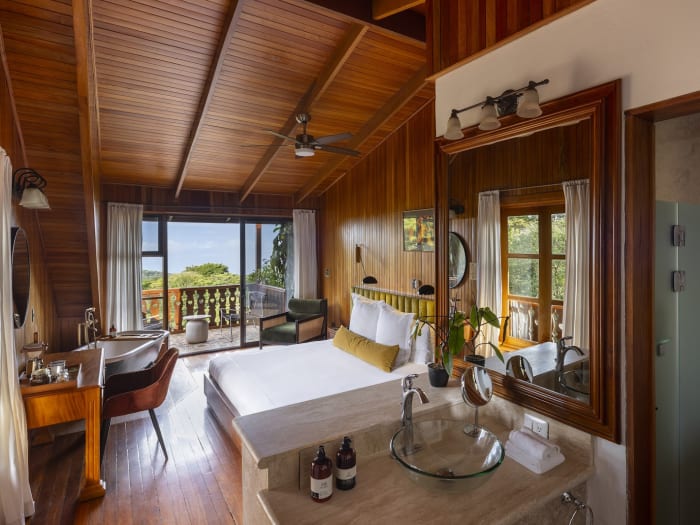
À Hotel Belmar, l’hébergement semble pensé comme une interface douce entre l’intimité d’une chambre et la présence continue du paysage. Dans une destination aussi fortement marquée par son environnement, il aurait été facile de surjouer les codes rustiques ou, à l’inverse, de proposer un luxe déconnecté du lieu. L’intérêt de l’adresse tient justement à un équilibre plus fin. Le confort y apparaît comme un prolongement de l’expérience extérieure, non comme une parenthèse qui en annulerait les sensations. Après une randonnée, une sortie d’observation ou simplement une matinée passée à regarder les nuages glisser sur la forêt, on retrouve un espace conçu pour le repos, la lecture et le silence.
L’atmosphère des chambres et suites s’accorde avec le ton général de la maison : chaleureuse, accueillante, sans rigidité. Le service quotidien, le soin apporté à la préparation des espaces et la présence d’une équipe attentive participent à cette impression de fluidité. Rien n’est ici pensé pour distraire du cadre ; tout semble au contraire inviter à mieux l’habiter. Les ouvertures sur l’extérieur, lorsqu’elles donnent sur la végétation ou les reliefs de Monteverde, deviennent de véritables éléments de séjour. On ne ferme pas la porte sur la nature : on continue à la percevoir, à travers la lumière, l’humidité de l’air, les sons lointains et parfois le passage des oiseaux.
Cette relation entre intérieur et extérieur convient particulièrement bien au rythme de Monteverde. Les journées commencent souvent tôt, avec une lumière claire et une activité animale plus intense. Revenir ensuite dans sa chambre n’a rien d’un retrait ; c’est une autre manière de poursuivre l’expérience, plus calme, plus introspective. Le soir, lorsque la température baisse et que la forêt s’assombrit, le sentiment de refuge prend davantage d’importance. C’est là que le confort prend tout son sens : literie accueillante, espace ordonné, ambiance propice au repos, attention discrète du personnel.
L’hôtel s’adresse aussi bien aux couples qu’aux familles, ce qui suppose une certaine souplesse dans la manière d’envisager le séjour. Les premiers y trouveront un cadre favorable à la déconnexion et à la contemplation. Les secondes apprécieront la possibilité d’alterner temps de repos et exploration, sans jamais perdre le sentiment d’être dans un lieu cohérent. Dans les deux cas, les chambres jouent un rôle essentiel : elles permettent de ralentir entre deux activités, de trier ses impressions, de regarder la météo changer et de se préparer à repartir sur les sentiers.
Dans une région où l’essentiel se passe souvent dehors, la réussite d’un hôtel tient à sa capacité à ne pas banaliser le retour à l’intérieur. Hotel Belmar y parvient avec justesse. Les chambres et suites n’essaient pas de rivaliser avec la forêt nuageuse ; elles offrent plutôt le cadre nécessaire pour en prolonger les effets. Cette retenue est précieuse. Elle donne au séjour une continuité rare, où le confort n’interrompt jamais la relation au lieu, mais la rend plus profonde, plus reposée et plus durable.
La table : une pause gourmande au rythme de Monteverde
Dans un hôtel aussi étroitement lié à son environnement, la restauration ne peut être un simple service annexe. Elle participe au récit du séjour, à sa cadence, à sa manière d’alterner exploration et repos. Hotel Belmar propose deux lieux complémentaires : Restaurante Celajes et Juice Bar + Tea Room. À eux deux, ils dessinent une approche de la gourmandise en accord avec Monteverde, où l’on recherche moins la mise en scène que la justesse du moment, la fraîcheur et le plaisir de s’attarder face au paysage.
Restaurante Celajes constitue naturellement le cœur de cette expérience. Le nom lui-même évoque le ciel, les lumières changeantes, les horizons qui se découvrent puis se voilent au-dessus de la forêt nuageuse. Dans un tel cadre, le repas prend une dimension particulière. On s’y installe autant pour manger que pour prolonger la sensation d’être à Monteverde, pleinement. Le déjeuner peut y faire office de pause entre deux sorties ; le dîner, lui, accompagne souvent le retour au calme, lorsque la journée se resserre autour des impressions accumulées dehors. L’intérêt d’une table comme celle-ci tient à sa capacité à laisser le lieu parler sans le surcharger.
Le Juice Bar + Tea Room introduit un registre différent, plus léger, plus spontané, parfaitement adapté à l’esprit de la destination. C’est le genre d’espace que l’on apprécie après une marche, au retour d’une excursion ou dans l’intervalle d’une journée volontairement lente. Boissons fraîches, parenthèse autour du thé, moment de lecture ou simple observation du temps qui passe : ce second lieu de restauration apporte une souplesse bienvenue au séjour. Il correspond aussi à une attente très contemporaine des voyageurs, qui ne souhaitent pas que chaque repas relève d’un cérémonial, mais qui restent attentifs à la qualité du cadre et à la cohérence de l’ensemble.
À Monteverde, l’appétit est souvent lié à l’activité physique, à l’air plus vif de l’altitude, aux départs matinaux et aux longues promenades. La table prend alors une fonction presque réparatrice. Elle réunit, réconforte, permet de faire une pause avant de repartir. Pour les couples, elle peut devenir un moment de contemplation partagée ; pour les familles, un temps de rassemblement simple après les découvertes de la journée. Dans les deux cas, l’essentiel réside dans cette sensation de continuité : on ne quitte jamais vraiment l’expérience du lieu lorsque l’on passe à table.
Ce qui distingue la proposition de Hotel Belmar, c’est justement cette cohérence discrète. Les espaces de restauration semblent pensés pour accompagner la vie du séjour plutôt que pour s’imposer comme des destinations séparées. On y retrouve la même idée d’hospitalité que dans le reste de l’établissement : attention, chaleur, simplicité maîtrisée. Dans une région où la nature occupe le premier rôle, la meilleure table est souvent celle qui sait s’effacer juste assez pour laisser la forêt, la lumière et le climat continuer à écrire la scène. Ici, cette retenue donne au plaisir de manger une élégance très actuelle.
Conciergerie et services : une hospitalité attentive, tournée vers l’expérience
L’un des mérites de Hotel Belmar est de comprendre que, dans une destination de nature, le service ne se mesure pas seulement à l’efficacité des opérations quotidiennes, mais à la manière dont il facilite l’accès au territoire. L’hôtel met à disposition une réception ouverte 24h/24 ainsi qu’une conciergerie 24h/24, un atout particulièrement appréciable dans une région où les journées commencent souvent tôt et où les programmes peuvent évoluer selon la météo, les envies ou les départs en excursion. Cette disponibilité permanente crée un sentiment de fluidité très précieux : le séjour paraît accompagné, jamais contraint.
Les services essentiels sont bien présents et participent à ce confort discret qui fait la différence sur plusieurs nuits. Service de chambre quotidien, service de couverture, consigne à bagages, blanchisserie, service de réveil : autant d’éléments qui, pris séparément, relèvent de l’évidence dans l’hôtellerie haut de gamme, mais qui prennent ici une valeur particulière parce qu’ils soutiennent un mode de voyage actif. À Monteverde, on part tôt pour profiter de la lumière, on revient parfois avec des vêtements marqués par l’humidité des sentiers, on apprécie de retrouver une chambre préparée avec soin après plusieurs heures passées dehors. Le service accompagne donc très concrètement la réalité du lieu.
La présence d’un personnel multilingue ajoute à cette sensation d’accueil ouvert. Dans une destination internationale comme Monteverde, où se croisent voyageurs naturalistes, familles en itinérance et couples en quête de déconnexion, la qualité de l’échange compte autant que la rapidité de la réponse. Un bon hôtel de nature ne se contente pas d’organiser ; il oriente, rassure, suggère le bon rythme, aide à choisir entre une sortie matinale, une promenade plus libre ou un temps de repos face au paysage. Cette intelligence de l’accompagnement est souvent ce qui transforme un séjour agréable en expérience vraiment mémorable.
L’hôtel se distingue aussi par la cohérence entre ses services et son engagement en écotourisme. Ici, l’assistance apportée au voyageur ne vise pas à le couper de son environnement, mais à l’y relier plus justement. Les activités proposées autour de l’observation des oiseaux, des randonnées et de la découverte de la biodiversité locale trouvent naturellement leur prolongement dans le travail de la conciergerie. Réserver une excursion, organiser une journée, adapter un programme au climat ou au profil des voyageurs : tout cela relève d’un service qui comprend que le luxe, dans un lieu comme celui-ci, consiste souvent à rendre l’expérience plus lisible et plus sereine.
Pour les familles, cette qualité d’encadrement simplifie l’organisation et permet de profiter pleinement de la destination. Pour les couples, elle libère du temps et de l’énergie, en laissant davantage de place à l’imprévu heureux. Dans tous les cas, Hotel Belmar défend une idée juste de l’hospitalité : être présent sans être envahissant, précis sans froideur, disponible sans ostentation. C’est une manière de servir qui convient particulièrement bien à Monteverde, où le vrai privilège n’est pas d’être diverti à tout moment, mais de pouvoir vivre la nature avec confort, clarté et attention.
L’art de vivre à Monteverde : ralentir, observer, comprendre
Séjourner à Hotel Belmar, c’est aussi adopter, le temps de quelques jours, une autre manière d’habiter le voyage. Monteverde impose un rythme qui lui est propre. On y vient moins pour accumuler les adresses que pour se rendre disponible à un milieu : la forêt nuageuse, ses reliefs, ses brumes, sa faune, sa lumière changeante. L’art de vivre local repose largement sur cette attention au vivant. Il ne s’agit pas seulement de voir la nature, mais d’apprendre à la lire, à reconnaître ses signes, à accepter qu’elle se révèle par touches plutôt que dans l’instantanéité.
L’observation des oiseaux illustre parfaitement cette disposition d’esprit. Dans beaucoup de destinations, elle serait proposée comme une activité parmi d’autres ; ici, elle devient une manière d’entrer dans le paysage. Se lever tôt, écouter avant de regarder, suivre un mouvement dans la canopée, comprendre que la patience fait partie du plaisir : Monteverde enseigne une forme de présence très particulière. Les sentiers alentour prolongent cette expérience. Marcher dans cette région, ce n’est pas seulement se déplacer ; c’est traverser des variations de température, d’humidité, de lumière et de végétation qui donnent au territoire toute sa densité.
Hotel Belmar s’accorde naturellement à cette philosophie. Son engagement en écotourisme, son intégration au paysage et la place donnée aux activités de découverte créent un cadre propice à un séjour plus conscient. On n’est pas ici dans une logique de consommation rapide du décor. Au contraire, tout invite à prendre le temps : celui d’une randonnée guidée, d’un arrêt pour observer la forêt, d’un retour à l’hôtel pour déjeuner ou se reposer, puis d’une nouvelle sortie lorsque la lumière change. Cette alternance entre mouvement et contemplation est sans doute l’une des grandes réussites d’un séjour à Monteverde.
La destination convient aussi bien aux voyageurs très actifs qu’à ceux qui cherchent avant tout une forme de retrait. Les premiers trouveront dans les environs un terrain d’exploration riche, avec de nombreuses possibilités de marche et de découverte naturaliste. Les seconds apprécieront la capacité du lieu à offrir du calme sans ennui, grâce à la présence constante du paysage. Regarder les nuages s’accrocher à la forêt, écouter la pluie tomber, sentir l’air se rafraîchir en fin de journée : autant d’expériences simples qui redonnent de la valeur au temps non occupé.
C’est peut-être là que réside le véritable art de vivre de Monteverde. Dans cette faculté à réconcilier curiosité et lenteur, activité et silence, confort et conscience du milieu. Hotel Belmar en offre une traduction particulièrement juste. L’adresse permet de découvrir la région, bien sûr, mais aussi de se laisser transformer par elle, ne serait-ce qu’un peu. On repart souvent avec des images très nettes — une trouée de lumière dans la brume, un oiseau aperçu au détour d’un sentier, une terrasse ouverte sur la forêt — mais aussi avec quelque chose de plus durable : le souvenir d’un séjour qui a remis l’attention au centre du voyage.
Réserver via MyConciergeHotel : organiser un séjour juste, au bon rythme
Choisir Hotel Belmar, c’est choisir une destination où la qualité du séjour dépend autant du lieu lui-même que de la manière dont on l’aborde. Monteverde n’est jamais tout à fait une escapade improvisée. L’altitude, le climat, la saison, le désir d’observer la faune ou de marcher dans de bonnes conditions invitent à préparer son voyage avec un minimum de précision. Réserver via MyConciergeHotel permet justement d’aborder cette adresse avec davantage de cohérence, en pensant le séjour non comme une simple succession de nuits, mais comme une expérience à construire autour du bon tempo.
Pour certains voyageurs, l’enjeu principal sera de privilégier la saison sèche, souvent recherchée entre décembre et avril, afin de profiter de conditions plus lisibles pour les activités extérieures. Pour d’autres, l’intérêt résidera dans une approche plus contemplative, où la forêt nuageuse se découvre aussi dans ses variations d’humidité, ses matinées voilées et ses lumières diffuses. Dans les deux cas, l’essentiel est de calibrer le séjour selon ses attentes : davantage de randonnées, plus de temps consacré à l’observation des oiseaux, alternance entre excursions et moments de repos, ou encore voyage en couple versus parenthèse familiale. Une réservation bien pensée change profondément la qualité de l’expérience.
L’intérêt d’un accompagnement dédié tient aussi à la capacité d’ordonner les priorités. À Monteverde, tout ne se joue pas dans l’accumulation d’activités. Il est souvent plus judicieux de prévoir quelques temps forts bien choisis, puis de laisser de l’espace à l’imprévu : une matinée plus claire que prévu, un besoin de ralentir, une envie de prolonger un déjeuner ou de repartir marcher en fin d’après-midi. Hotel Belmar se prête particulièrement bien à cette souplesse, grâce à son implantation, à son atmosphère et à son offre d’activités liées à la nature. Encore faut-il organiser le séjour de manière à préserver cette respiration.
Réserver cette adresse avec discernement, c’est aussi comprendre à qui elle convient. Les couples y trouveront une expérience de déconnexion élégante, centrée sur le paysage, la tranquillité et une certaine intimité. Les familles y verront une base confortable pour découvrir la biodiversité du Costa Rica dans un cadre accessible et stimulant. Les voyageurs déjà familiers des lodges de nature apprécieront la cohérence écologique de l’ensemble ; ceux qui découvrent ce type d’expérience y trouveront une introduction rassurante, portée par des services solides et une hospitalité attentive.
Au fond, bien réserver Hotel Belmar revient à respecter ce que Monteverde a de plus précieux : son rythme propre. Il ne s’agit pas d’y plaquer un programme trop dense, mais de composer un séjour capable de laisser place à l’observation, au repos et à la surprise. C’est dans cet équilibre que l’adresse révèle le meilleur d’elle-même. Lorsqu’elle est pensée avec justesse, l’escapade prend une tonalité rare : celle d’un voyage où le confort, la nature et le temps retrouvé cessent d’être des promesses abstraites pour devenir une réalité vécue, du premier regard sur la forêt jusqu’au départ.