Histoire & héritage
À Lunéville, le Château d’Adomenil s’inscrit dans une tradition française où l’hospitalité ne se réduit pas à l’hébergement, mais relève d’une certaine idée du séjour. Le nom même de château annonce un rapport particulier au temps : celui d’une demeure qui a traversé les époques, conservant dans ses lignes, ses volumes et son environnement paysager une part de la mémoire locale. Sans chercher l’effet de musée, l’adresse cultive cette présence historique avec mesure. Elle rappelle qu’en Lorraine, l’architecture de caractère dialogue souvent avec la vie quotidienne, les saisons, la table et le paysage.
L’intérêt d’un lieu comme celui-ci tient précisément à cet équilibre. On n’y vient pas seulement pour dormir dans une belle bâtisse, mais pour habiter, le temps d’un séjour, un décor façonné par des usages anciens et réinterprété pour un confort contemporain. Le château historique à Lunéville ne se présente pas comme un monument figé ; il se lit plutôt comme une maison de tradition, où l’élégance naît de la continuité. Les façades, les perspectives sur le parc, les circulations intérieures et les espaces communs composent un ensemble cohérent, pensé pour accueillir sans rompre le lien avec l’esprit d’origine.
Son affiliation à Relais & Châteaux éclaire cette identité. Dans l’univers hôtelier français, cette appartenance renvoie à une certaine exigence de caractère, de singularité et de qualité d’accueil. Elle suggère aussi une attention portée à la gastronomie, au sens du détail et à l’ancrage territorial. Au Château d’Adomenil, cette dimension n’est pas un simple label ; elle trouve un prolongement naturel dans l’atmosphère générale, où l’on perçoit un attachement à l’art de recevoir à la française. Rien d’ostentatoire ici : la distinction procède davantage des matières, des proportions, du calme et de la manière dont le service accompagne le séjour.
Lunéville, de son côté, apporte une profondeur supplémentaire à l’expérience. La ville évoque immédiatement un patrimoine lorrain raffiné, lié à l’histoire des ducs et à une tradition d’élégance discrète. Séjourner dans ses environs immédiats, dans une demeure historique entourée d’un parc, permet de ressentir cette continuité entre culture locale et hospitalité de haut niveau. Le château devient alors un point d’entrée sensible vers une région de savoir-faire, de paysages et de patrimoine.
Ce qui marque enfin, dans l’héritage du Château d’Adomenil, c’est sa capacité à faire coexister mémoire et simplicité. Le passé y est présent, mais jamais pesant. Il sert de cadre à une expérience actuelle, tournée vers le repos, la table, le service et la qualité du temps passé sur place. Pour les voyageurs qui recherchent une adresse de caractère sans théâtralité excessive, cette retenue constitue sans doute l’une des formes les plus convaincantes du luxe hôtelier français.
L’établissement
Le Château d’Adomenil se distingue d’abord par son implantation. À Lunéville, dans un environnement plus calme que démonstratif, l’adresse prend place au sein d’un parc paisible et de jardins entretenus qui jouent un rôle essentiel dans l’expérience du séjour. Ici, le paysage n’est pas un simple décor périphérique : il structure le rythme des journées, invite à ralentir et donne à l’ensemble une respiration rare. Dès l’arrivée, cette relation entre la demeure et son environnement végétal installe une sensation de retrait, presque de suspension, particulièrement appréciable pour les voyageurs qui cherchent à conjuguer confort haut de gamme et vraie tranquillité.
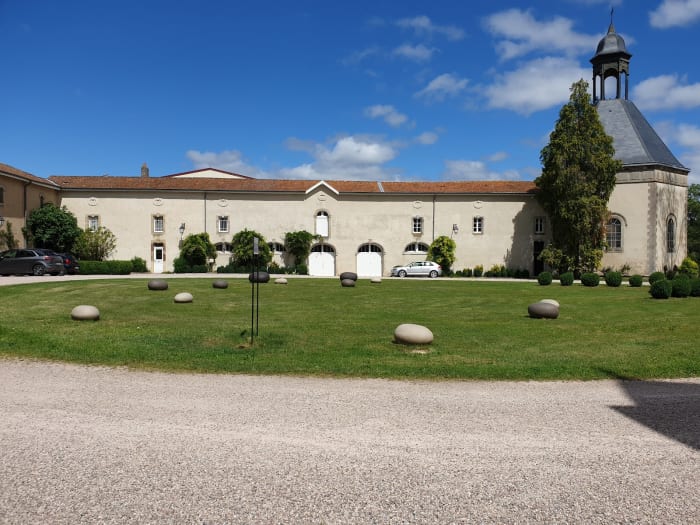
L’architecture historique participe naturellement à cette impression. Le château possède ce type de présence que l’on remarque sans qu’elle ait besoin d’être appuyée. Les volumes, la composition des façades, l’allure générale du bâtiment et l’inscription dans le parc composent une silhouette immédiatement lisible. On retrouve là l’un des charmes durables des grandes maisons françaises : une élégance qui tient moins à l’ornement qu’à l’équilibre. Le lieu semble pensé pour durer, et cette stabilité visuelle produit un effet très particulier sur le visiteur. Elle apaise.
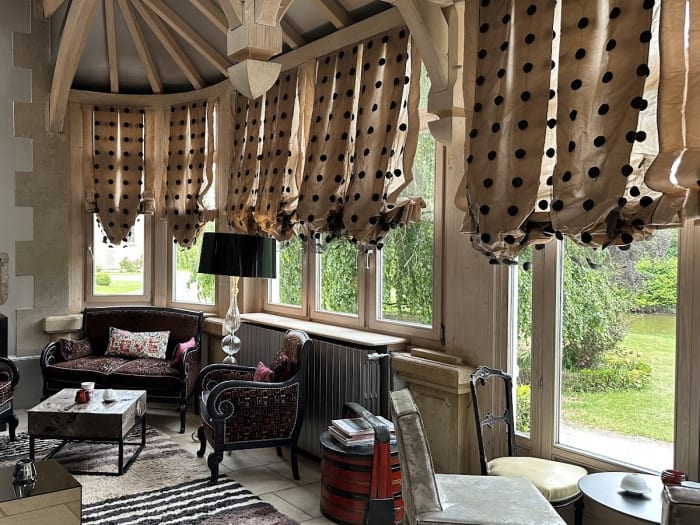
À l’intérieur, les espaces communs prolongent cette cohérence. Ils sont décrits comme élégants et chaleureux, ce qui résume bien l’esprit de l’adresse. L’élégance, ici, n’exclut pas l’accueil ; la chaleur n’implique pas la familiarité. Tout repose sur une juste mesure, celle qui permet à un hôtel de standing de rester habitable. Les salons, les circulations et les lieux de passage ont vocation à accompagner différents usages : lecture, conversation, attente avant le dîner, retour d’une promenade ou simple moment de pause. Cette qualité d’usage est souvent ce qui distingue les maisons les mieux tenues des établissements simplement spectaculaires.
L’atmosphère générale est clairement inspirée de l’art de vivre français, mais dans une version sereine et non démonstrative. On y retrouve l’importance accordée au cadre, à la lumière, à la table, au service et à la continuité entre intérieur et extérieur. Le parc devient alors une extension naturelle des espaces de vie, tandis que les jardins offrent un contrepoint plus ordonné, propice à la promenade ou à la contemplation. Selon la saison, le séjour change de tonalité : l’été met en valeur les extérieurs et les activités de plein air à proximité, tandis que les périodes plus fraîches renforcent le sentiment de refuge qu’offre la demeure.
Ce qui fait la singularité de l’établissement, au fond, c’est cette capacité à réunir plusieurs attentes sans les opposer : le charme d’un château historique, le calme d’un domaine arboré, le niveau de service d’un 5 étoiles et la convivialité feutrée d’une maison de caractère. Couples, voyageurs en solo ou familles peuvent y trouver des usages différents du même lieu. Les uns y verront un refuge romantique, les autres une base élégante pour découvrir Lunéville et la Lorraine, d’autres encore un hôtel où l’on vient avant tout pour se reposer et bien dîner. Cette polyvalence, lorsqu’elle est portée par une identité claire, est l’un des signes d’une adresse durable.
Chambres et suites
Dans une demeure de cette nature, les chambres et suites occupent une place particulière : elles doivent à la fois prolonger le caractère historique du lieu et répondre aux attentes d’un hôtel 5 étoiles contemporain. Au Château d’Adomenil, on peut raisonnablement attendre de cet équilibre qu’il privilégie le confort, le calme et la cohérence esthétique plutôt qu’une démonstration décorative. Le séjour prend ici tout son sens lorsque la chambre devient un véritable espace de retraite, capable d’offrir autant un repos profond après une journée de route ou de visite qu’un cadre propice à la lenteur, à la lecture ou à un matin prolongé.
Le premier luxe, dans un château entouré d’un parc, reste souvent la sensation d’espace et de silence. Même sans multiplier les effets, une chambre bien pensée dans ce contexte tire parti de la lumière naturelle, des vues sur les jardins ou sur la propriété, et d’une certaine épaisseur du bâti qui participe à l’intimité. On imagine volontiers des volumes où le passé se lit dans les proportions, tandis que l’aménagement veille à préserver une vraie facilité d’usage. C’est l’un des enjeux les plus subtils de l’hôtellerie de caractère : faire en sorte que l’histoire soit perceptible, sans jamais compliquer le confort quotidien.
Dans l’esprit de l’adresse, l’élégance semble relever d’une forme de classicisme tempéré. Cela signifie généralement des matières choisies avec soin, un mobilier en accord avec l’architecture, des tonalités apaisantes et une attention particulière portée à la qualité du sommeil. Les voyageurs sensibles aux détails apprécieront aussi ce qui ne se voit pas immédiatement mais change l’expérience : une chambre bien entretenue chaque jour, un service de couverture en soirée, une organisation fluide et une atmosphère qui reste constante du début à la fin du séjour. Ces éléments de service, confirmés dans les équipements connus, participent pleinement au sentiment de confort haut de gamme.
Les chambres et suites d’un château comme celui-ci s’adressent à plusieurs types de voyageurs. Les couples y recherchent souvent un cadre intime, avec cette part de romantisme qu’apporte naturellement une demeure historique au milieu d’un parc. Les voyageurs en solo, eux, y trouvent une forme de refuge élégant, propice à la déconnexion et à un rapport plus personnel au lieu. Quant aux familles, elles peuvent apprécier la sécurité d’un environnement paisible, l’espace extérieur et la possibilité de séjourner dans un cadre qui ne sacrifie ni le raffinement ni la simplicité.
Plus encore que la taille ou la catégorie, c’est la sensation générale qui compte ici : celle d’une chambre inscrite dans un ensemble harmonieux. On n’y cherche pas nécessairement l’effet spectaculaire, mais une qualité de présence. Dormir au Château d’Adomenil, c’est prolonger l’expérience du parc, de la table et de l’accueil dans un espace privé où l’on retrouve la même retenue, la même attention et le même sens du détail. Pour beaucoup de voyageurs, c’est précisément cette continuité qui transforme une belle nuit d’hôtel en véritable séjour.
La table
Au Château d’Adomenil, la gastronomie compte parmi les centres de gravité du séjour. La cuisine s’appuie sur des produits locaux. Elle s’inscrit dans une tradition française exigeante, où la table reflète le territoire autant qu’un savoir-faire. Dans une maison affiliée à Relais & Châteaux, cette dimension engage aussi le rythme, l’accueil, la salle et le service.
La place accordée aux produits locaux suppose une attention aux saisons, aux approvisionnements et à la lisibilité des saveurs. À Lunéville, en Lorraine, elle peut prendre la forme d’une cuisine ancrée dans son territoire, attentive aux traditions régionales. Le luxe tient ici à la justesse. Un produit bien choisi, une cuisson précise, un assaisonnement maîtrisé, une carte pensée pour accompagner le séjour.
Le décor compte aussi. Dîner dans un château historique modifie la perception du repas. Le cadre ajoute une profondeur particulière, lorsqu’il reste au service de l’expérience. L’élégance s’exprime alors avec retenue, dans une atmosphère propice à la conversation et à l’attention portée à l’assiette.
Le matin, le petit-déjeuner prolonge cette philosophie. Il met le jour en route avec douceur. Un café face aux jardins ou le calme du parc participent au charme du lieu. La qualité se mesure souvent à une simplicité bien exécutée. Produits soignés, service attentif, tempo juste.
La table du Château d’Adomenil relie ainsi plusieurs dimensions du séjour : le territoire, l’héritage, le plaisir et l’hospitalité. La cuisine devient une manière de comprendre le lieu par le goût.
Conciergerie & services
Dans l’hôtellerie de caractère, la qualité du service se juge souvent à la constance de l’attention. Le Château d’Adomenil relève de cette logique.
Les équipements connus mentionnent une conciergerie 24h/24, une réception ouverte en continu, un service de chambre quotidien et un service de couverture.
S’y ajoutent une consigne à bagages, une blanchisserie, un service de réveil et un personnel multilingue.
Pris ensemble, ces éléments dessinent une organisation pensée pour rendre le séjour fluide, discret et rassurant.
La réception et la conciergerie disponibles à toute heure jouent un rôle déterminant. Elles conviennent autant aux voyageurs de loisir qu’aux hôtes en itinérance.
Arriver tard, repartir tôt, demander une recommandation ou ajuster un programme devient plus simple. Cette continuité de présence renforce aussi le confort du séjour.
Le service de chambre quotidien et le service de couverture participent à un confort silencieux. Ces gestes d’hospitalité changent la perception d’un séjour.
Retrouver sa chambre remise en ordre et préparée pour la nuit compte. Dans un château historique, cette précision du service renforce la cohérence d’ensemble.
La consigne à bagages, la blanchisserie et le réveil offrent une vraie souplesse. Ils permettent de voyager plus léger et d’organiser son séjour plus librement.
Le personnel multilingue rappelle aussi que l’art de recevoir passe par la clarté de l’échange. C’est un point qui compte pour mettre chacun à l’aise.
Au-delà de la liste, l’essentiel tient à la manière dont ces services sont délivrés. Un personnel attentif et professionnel fait souvent la différence.
Dans les meilleures maisons, l’attention n’est ni envahissante ni mécanique. Elle repose sur la précision, la discrétion et le sens du bon tempo.
Pour un couple, un voyageur solo ou une famille, cette qualité de service reste souvent la part la plus décisive de l’expérience.
L’art de vivre à Lunéville
Séjourner au Château d’Adomenil, c’est aussi approcher Lunéville par le prisme d’un certain art de vivre. La ville et ses environs appartiennent à cette France de l’Est où le patrimoine ne se réduit pas à des monuments isolés, mais s’inscrit dans une culture plus large du paysage, de la table, des savoir-faire et des rythmes saisonniers. Dans ce contexte, le château agit comme une interface idéale : il offre le confort et le recul nécessaires pour découvrir la région sans précipitation, puis y revenir avec le sentiment d’avoir trouvé un point d’ancrage.
Lunéville évoque naturellement un héritage architectural et historique important. Pour le voyageur, cela signifie qu’un séjour peut s’organiser autour de promenades patrimoniales, de découvertes culturelles et d’excursions dans un environnement où la mémoire demeure très présente. Mais l’intérêt du lieu ne tient pas seulement à ce que l’on visite ; il réside aussi dans la manière dont on habite le temps sur place. Prendre le matin lentement, sortir dans le parc, déjeuner sans hâte, partir explorer les environs, revenir pour un moment de repos avant le dîner : cette succession de gestes simples compose une expérience profondément liée à l’idée française du séjour réussi.
L’été est signalé comme une saison particulièrement agréable, notamment grâce aux activités de plein air à proximité. Cela correspond bien à la nature de l’adresse. Un domaine entouré de jardins entretenus prend alors toute sa dimension, et l’on comprend pourquoi les voyageurs apprécient autant le cadre serein du château. Les beaux jours invitent à privilégier les circulations douces, les pauses en extérieur, les fins d’après-midi prolongées et les retours tardifs à table après une journée passée entre patrimoine et nature. Cette qualité de saison est importante : elle fait du séjour une expérience sensible, pas seulement un simple hébergement.
L’art de vivre à Lunéville, tel qu’on peut le ressentir depuis le Château d’Adomenil, repose sur la mesure. Rien n’y semble forcé. Le raffinement vient de l’accord entre le lieu, le service, le paysage et la cuisine. Pour les couples, cela peut prendre la forme d’une escapade romantique où le silence du parc et le dîner deviennent les temps forts. Pour un voyageur solo, c’est l’occasion d’un retrait élégant, propice à la lecture, à l’observation et à la déconnexion. Pour une famille, c’est la possibilité d’un séjour dans un cadre structuré mais apaisé, où chacun trouve son rythme.
Ce qui rend cette expérience durable en mémoire, c’est peut-être justement son absence d’effets inutiles. Le Château d’Adomenil n’impose pas une vision spectaculaire du luxe ; il propose une manière plus française, plus intériorisée, de l’éprouver. À Lunéville, cela prend la forme d’un séjour où l’on redécouvre le prix du calme, de la continuité et des plaisirs bien ordonnés. Dans un paysage hôtelier souvent dominé par l’instantané et la mise en scène, cette fidélité à une élégance tranquille possède une valeur particulière.
Réserver via MyConciergeHotel
Réserver le Château d’Adomenil via MyConciergeHotel, c’est aborder cette adresse avec le bon niveau d’accompagnement. Une maison de caractère comme celle-ci ne se choisit pas uniquement sur une catégorie ou une localisation. Elle se comprend à travers le type de séjour qu’elle permet. Pour certains voyageurs, l’enjeu sera de privilégier une parenthèse romantique dans un cadre historique. Pour d’autres, il s’agira de construire une étape élégante en Lorraine, avec une vraie place accordée à la table et au repos. D’autres encore voudront profiter d’un environnement calme, propice à la déconnexion, tout en conservant les standards de service d’un 5 étoiles. C’est précisément dans cette lecture fine du séjour que l’accompagnement prend tout son sens.
L’adresse se prête particulièrement bien à des réservations pensées en amont. Anticiper paraît cohérent pour une maison affiliée à Relais & Châteaux et appréciée pour son atmosphère paisible. Réserver à l’avance permet de sécuriser les dates souhaitées. Cela aide aussi à mieux organiser l’ensemble de l’expérience. Rythme du séjour, horaires d’arrivée et de départ, repas sur place, besoins spécifiques liés au confort ou à la composition du voyage. Dans un lieu où la qualité du temps compte autant que celle des prestations, cette préparation améliore sensiblement l’expérience finale.
MyConciergeHotel peut également aider à positionner le séjour selon la bonne temporalité. La semaine convient aux voyageurs sensibles à la tranquillité. Un week-end pourra mieux répondre à une échappée courte, centrée sur le cadre, le dîner et la sensation d’être ailleurs sans partir loin des grands axes régionaux. L’été se prête particulièrement bien au parc, aux jardins et aux activités de plein air à proximité.
Réserver via un service de conciergerie éditoriale, c’est aussi bénéficier d’un regard plus nuancé sur l’adresse. Le Château d’Adomenil n’est pas un hôtel spectaculaire au sens contemporain du terme. Sa force réside dans la cohérence, la sérénité, la qualité de la table, l’attention du service et le charme d’un château historique à Lunéville. Présenté ainsi, il s’adresse naturellement aux voyageurs qui valorisent l’authenticité du cadre autant que le niveau de confort. Cette adéquation entre le lieu et le profil du voyageur est essentielle pour garantir un séjour réussi.
En somme, choisir cette adresse via MyConciergeHotel revient à privilégier une approche plus juste du luxe hôtelier français. Une approche informée, mesurée et centrée sur l’expérience réelle. Pour un couple, un voyageur solo ou une famille en quête d’un séjour raffiné dans un environnement paisible, le Château d’Adomenil offre une proposition claire. Encore faut-il la réserver au bon moment, avec les bonnes attentes et la bonne lecture du lieu. C’est là que l’accompagnement fait toute la différence.